Exercise Guide
Walking backward might sound unusual—but science suggests it is one of the most underrated exercises available. Often overlooked, this simple movement activates different muscles, challenges your brain, and improves balance and posture. Whether you’re in rehabilitation or just looking to level up your fitness, retro-walking offers high rewards with low impact.
1. Activates Hidden Muscle Groups

Forward walking relies on specific muscle dominance. Reversing the direction recruits “new players” for stability and power:
- Glutes: Work harder to stabilize the hips.
- Quads: Engage more intensely than in forward motion.
- Tibialis Anterior: The front of the shins fire up to support each step.
- Core: Constant activation to maintain center of gravity.
2. Boosts Cardiovascular Health
Because it is less mechanically efficient than forward walking, backward motion puts a higher demand on your heart and lungs.
3. Eases Chronic Knee Pain

For those with osteoarthritis or general knee strain, walking backward is a game-changer. It strengthens the quadriceps without the high joint-shearing force found in forward steps.
Participants in clinical studies reported less stiffness and improved mobility after just six weeks of retro-walking.
4. Increases Flexibility and Mobility
Walking backward provides a dynamic stretch for the hamstrings and calves. Experts at the University of Nevada found significant improvements in hamstring flexibility in just four weeks of daily 10-minute sessions.
5. Corrects Slouching & Posture
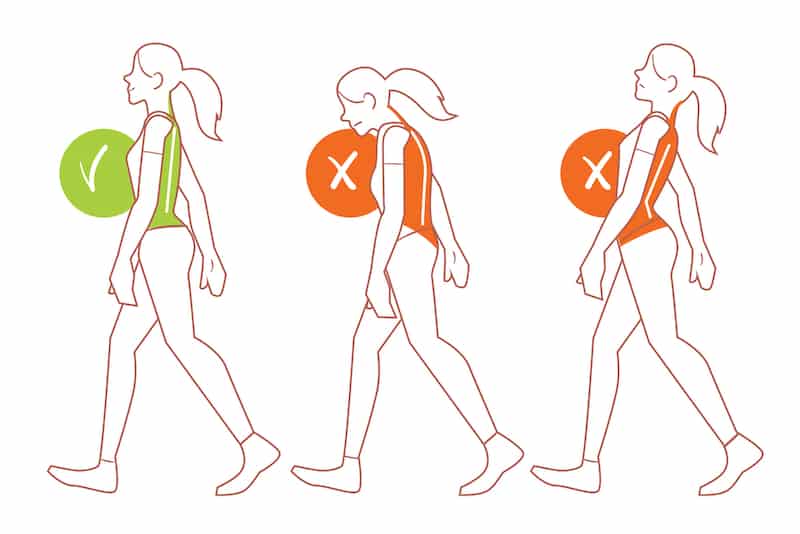
Backward walking forces you into a more upright position. Since you cannot see behind you, your body naturally engages the core and straightens the spine to maintain balance, effectively correcting a chronic “slouch.”
6. Enhances Balance and Coordination

A meta-analysis of 21 studies proved that backward walking significantly improves gait stability. This makes it an essential tool for athletes recovering from ACL tears or seniors looking to prevent falls.
7. Burns More Calories
If you want to lose weight faster, try going in reverse. It requires more effort and energy for every meter covered compared to traditional walking.
• Forward Walking: 4.3 METs
• Backward Walking: 6.0 METs
8. Sharpens Mental Focus
This is a form of moving meditation. Since the movement isn’t automatic, your brain must stay alert to spatial surroundings, which reduces symptoms of stress and anxiety while boosting cognitive awareness.
9. Alleviates Lower Back Pain

It activates the lumbar multifidus, a deep muscle group responsible for spinal stability. Strengthening these “inner” muscles often provides relief for those with chronic lower back discomfort.
10. Triggers “Mental Time Travel”
Fascinating research has shown that walking backward can actually improve memory recall. The physical act of moving backward appears to trigger a mental state that helps the brain access past events more clearly.