Exercise Guide
Strong glutes aren’t just about appearance — they support your posture, power your movements, and reduce the risk of injury. This glute workout is designed to activate all three major glute muscles for a firmer, stronger, and more functional posterior.
I – Why Train Your Glutes Regularly?
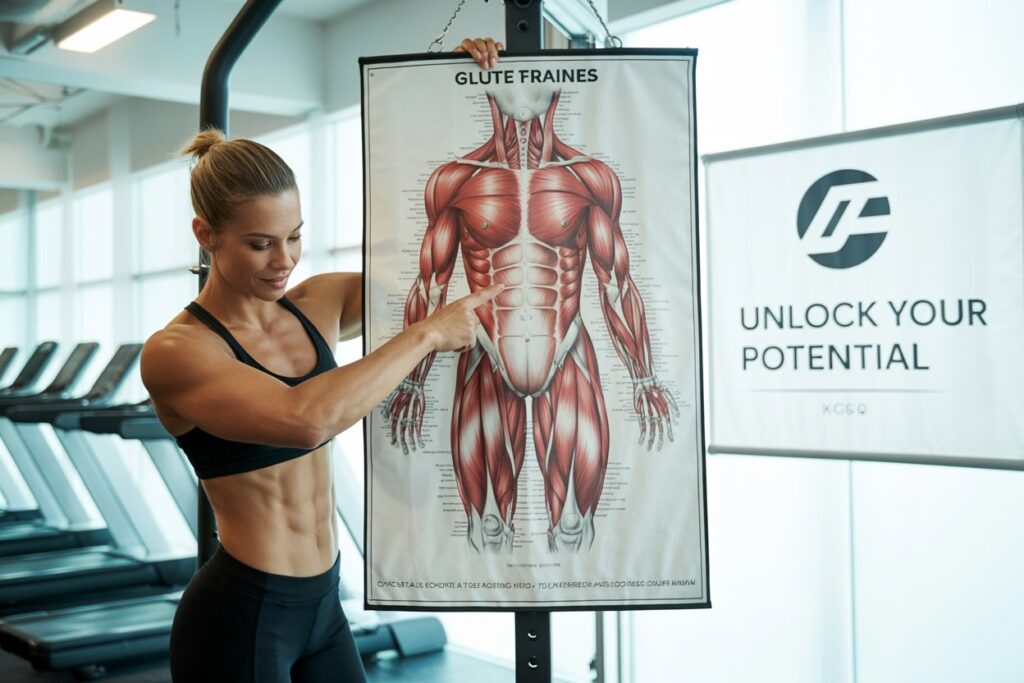
Your glutes are among the largest and most powerful muscles in your body. They play a key role in everyday movements like standing, walking, and climbing stairs. Regular glute workouts can significantly improve your posture, prevent lower back pain by stabilizing the pelvis, and boost your athletic performance in almost any sport.
II – The 6 Best Glute-Sculpting Exercises
1 – Glute Bridges
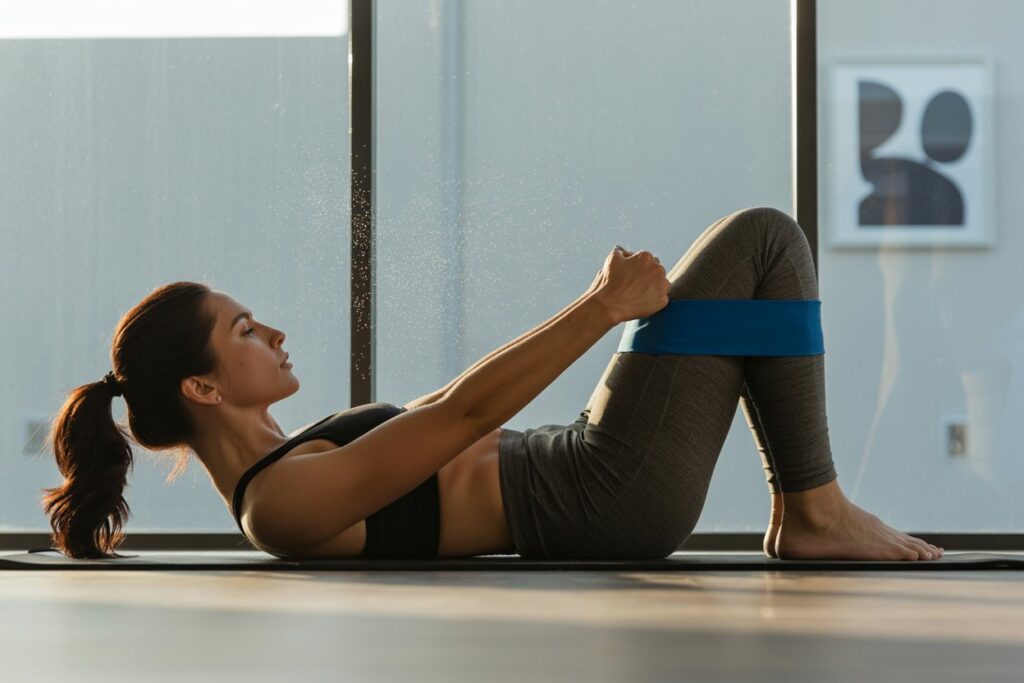
This is the foundational movement for booty strength, perfect for activating the glutes before any workout.
How to do it: Lie on your back with your knees bent and feet flat on the floor, hip-width apart. Drive through your heels to lift your hips toward the ceiling. Pause at the top and squeeze your glutes tightly before slowly lowering back down.
Tip: Add a resistance band just above your knees or place a dumbbell on your hips for an extra challenge.
2 – Bulgarian Split Squats

An amazing exercise for unilateral glute activation, balance, and hitting the glutes from a different angle.
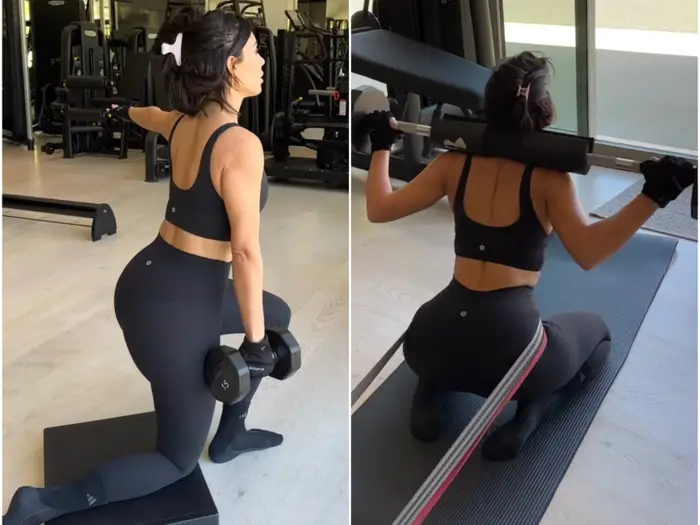
How to do it: Stand a few feet in front of a bench or sturdy chair. Rest the top of one foot on the bench behind you. Lower into a squat with your front leg, keeping your knee directly over your ankle and your chest up. Push through your front heel to return to the starting position.
3 – Donkey Kicks

This move isolates the glutes to help sculpt and tighten, giving you that lifted look.
How to do it: Start on all fours in a tabletop position. Keeping your knee bent at a 90-degree angle, lift one leg straight back and press your heel toward the ceiling. Focus on squeezing your glute at the top of the movement without arching your lower back. Lower with control and repeat.
Tip: Use ankle weights for more resistance and better results.
4 – Hip Thrusts

Considered the ultimate glute builder, hip thrusts allow for heavy loading to maximize strength and size gains in the gluteus maximus.
How to do it: Sit on the floor with your upper back resting against a sturdy bench. Place your feet flat on the floor, hip-width apart. Place a barbell or dumbbell across your hips. Drive through your heels to thrust your hips upward until your body forms a straight line from your shoulders to your knees. Squeeze your glutes at the top and lower with control.
5 – Fire Hydrants

This exercise targets the gluteus medius (the side glutes), which is crucial for hip stability and creating a rounded, sculpted shape.
How to do it: From a tabletop position on all fours, keep your core tight and lift one leg out to the side, maintaining the 90-degree bend in your knee. Lift as high as you can without tilting your torso, then lower back down slowly. A resistance band around the thighs increases the difficulty.
6 – Step-Ups

A functional and highly effective exercise that mimics everyday movements, training glute strength, and endurance.
How to do it: Stand in front of a sturdy bench or step. Step up with one foot, pressing through the heel to lift your body up. Bring the other foot to meet it on the bench. Step back down with the same lead foot and alternate legs. Hold dumbbells for an added challenge.
III – Frequently Asked Questions (FAQs)
How often should I train glutes?
For building and maintaining glute strength, 2–3 times per week is ideal. This allows for adequate recovery time, which is when your muscles grow stronger.
Do I need equipment for glute workouts?
Not necessarily. Bodyweight exercises like glute bridges and donkey kicks can be very effective, especially for beginners. However, adding resistance with bands and weights will help you progress faster and see more significant results.

How long does it take to see results?
With consistency (training 2-3 times a week) and progressive overload (gradually increasing the difficulty), many people start to see and feel noticeable changes in as little as 4–6 weeks.
Can glute workouts help with back pain?
Yes, absolutely. Strong glutes support your pelvis and stabilize your spine. When glutes are weak, the lower back often overcompensates, leading to strain and pain. Strengthening them can alleviate this issue.
What’s the difference between hip thrusts and glute bridges?
Both exercises target the glutes effectively. The main difference is the range of motion. Hip thrusts, performed with your back on a bench, allow for a greater range of motion and the ability to use heavier weights, which is generally better for muscle growth (hypertrophy). Glute bridges are performed on the floor and are excellent for activation and foundational strength.