Exercise Guide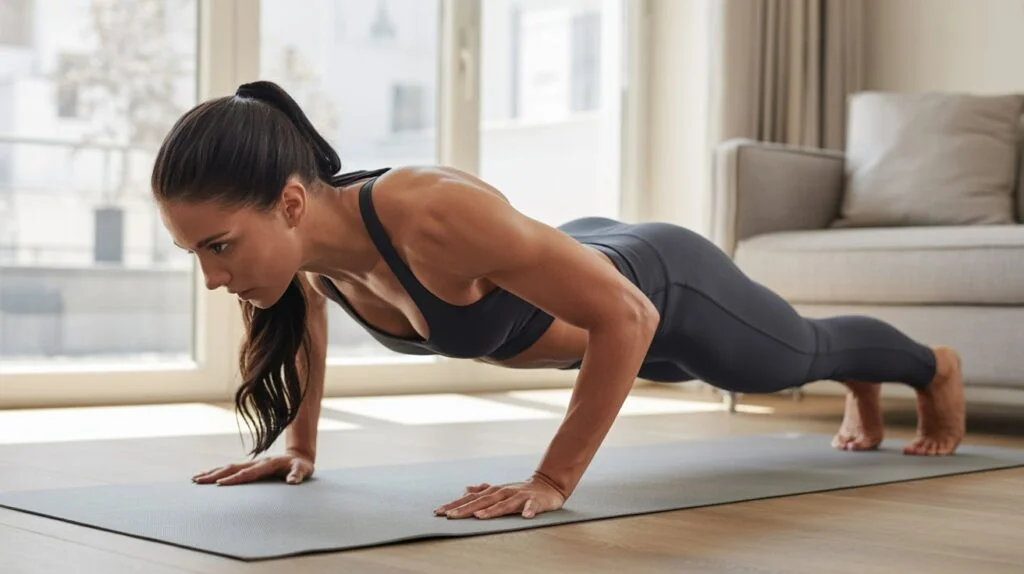
When it comes to classic bodyweight moves, nothing beats the push-up. Simple, effective, and versatile, push-ups are one of the best exercises for building upper body strength, muscle endurance, and core stability—all without equipment. Mastering the push-up can take your fitness results to the next level, helping you burn fat, build muscle, and improve functional strength.
Push-Up Exercise Overview
The push-up is a fundamental bodyweight exercise engaging multiple muscle groups simultaneously. It’s perfect for home workouts, gyms, or outdoor training.
Muscles Worked:
- Pectoralis Major (Chest): The primary mover powering the push.
- Deltoids (Shoulders): Stabilize and assist in the pressing movement.
- Triceps (Back of Arms): Extend the elbows to push your body up.
- Core Muscles (Abs & Obliques): Keep your torso rigid and prevent hip sagging.
- Serratus Anterior & Upper Back: Stabilize the shoulder blades for safe movement.

Why Push-Ups Are Important:
- No Equipment Needed: Train anywhere, anytime.
- Full Upper-Body Engagement: Strengthens chest, shoulders, and triceps efficiently.
- Core Activation: Builds a strong, stable midsection.
- Adaptable for All Levels: Easily modified for beginners (wall/knee push-ups) to advanced (clap/weighted push-ups).
- Improves Functional Fitness: Enhances real-world strength for pushing and lifting.

Push-Up Exercise Benefits
- Builds Upper Body Strength: Targets chest, shoulders, and triceps effectively.
- Strengthens Core Muscles: Engages abs and lower back for better stability and posture.
- Improves Posture and Balance: Strengthening the upper body and core helps counteract slouching.
- Burns Calories: As a compound exercise, it contributes to overall calorie expenditure and fat loss when combined with diet.
- Enhances Bone Health: Weight-bearing exercises like push-ups help increase bone density.
- Boosts Functional Strength: Improves your ability to perform daily tasks involving pushing movements.
Mental Benefits:
- Reduces stress and boosts mood through endorphin release.
- Enhances mental discipline and focus.
- Promotes a sense of accomplishment and builds confidence.

How to Do Push-Ups Correctly: Step-by-Step Form Guide
Proper form is crucial to maximize benefits and prevent injury.
- Starting Position: Place your hands slightly wider than shoulder-width apart on the floor. Extend your legs back so your body forms a straight line from head to heels (high plank position).
- Engage Your Core & Glutes: Tighten your abdominal muscles and squeeze your glutes. This prevents your hips from sagging or rising too high.
- Lower Your Body: Keeping your elbows slightly tucked (not flared out wide), slowly lower your chest towards the floor. Aim to go down until your chest is about a fist’s height from the ground or as low as your mobility allows.
- Maintain Alignment: Keep your head and neck aligned with your spine throughout the movement. Don’t let your head drop or look too far forward.
- Push Back Up: Exhale as you push through your palms to return to the starting position, fully extending your arms without locking your elbows.
Common Mistakes to Avoid:
- Sagging Hips: Indicates a weak core. Focus on keeping your abs tight.
- Flaring Elbows: Puts unnecessary stress on the shoulder joints. Keep elbows closer to your body (around a 45-degree angle).
- Not Going Low Enough: Reduces the effectiveness of the exercise. Go as low as you can with good form.
- Arching or Rounding the Back: Keep your spine neutral.

Push-Up Variations for All Levels
Beginner Variations:
- Wall Push-Ups: Stand facing a wall, place hands on it, and perform the push-up motion. Easiest variation.
- Incline Push-Ups: Place hands on an elevated surface like a sturdy table or bench. The higher the surface, the easier it is.
- Knee Push-Ups: Perform standard push-ups but with your knees on the ground for support.

Intermediate Variations:
- Standard Push-Ups: Master the basic form described above.
- Wide-Grip Push-Ups: Place hands wider than shoulder-width to target the chest more.
- Narrow-Grip / Diamond Push-Ups: Place hands close together under the chest to target the triceps more intensely.
Advanced Variations:
- Decline Push-Ups: Elevate your feet on a bench or step to increase the load on the upper chest and shoulders.
- Weighted Push-Ups: Wear a weighted vest or have someone place a weight plate on your upper back.
- Plyometric Push-Ups (e.g., Clap Push-Ups): Explode upwards forcefully enough for your hands to leave the ground.

Frequently Asked Questions (FAQ)
How often should I do push-ups?
For general fitness, 3-4 times per week is effective. If doing them daily, vary the intensity and volume. Listen to your body and allow for rest.
How many push-ups should I do per day to build muscle?
Focus on challenging sets rather than a specific daily number. Aim for 3-4 sets where the last few reps feel difficult. For beginners, this might be 5-10 reps per set; for advanced, it could be 20+. Progressive overload (increasing reps, sets, or difficulty) is key for muscle growth.
Do push-ups help lose belly fat or chest fat?
Push-ups strengthen core and chest muscles and burn calories, contributing to overall fat loss. However, you cannot spot-reduce fat. To lose belly or chest fat, combine push-ups with a calorie-controlled diet and regular cardio.

How can I make push-ups easier if I’m a beginner?
Start with wall push-ups, then progress to incline push-ups, and then knee push-ups before attempting standard push-ups. Focus on mastering the form at each stage.
Do push-ups cause wrist pain?
They can if form is incorrect or wrists are weak. Ensure your hands are directly under your shoulders. Using push-up bars or doing push-ups on your fists can help maintain a neutral wrist position and reduce strain.
Push-ups are a timeless, versatile exercise that offers incredible benefits for upper body strength, core stability, and overall fitness. By mastering proper form, incorporating variations, and staying consistent, you can effectively build muscle, burn fat, and improve functional strength without needing any equipment. Add push-ups to your routine and unlock your body’s potential.