Exercise Guide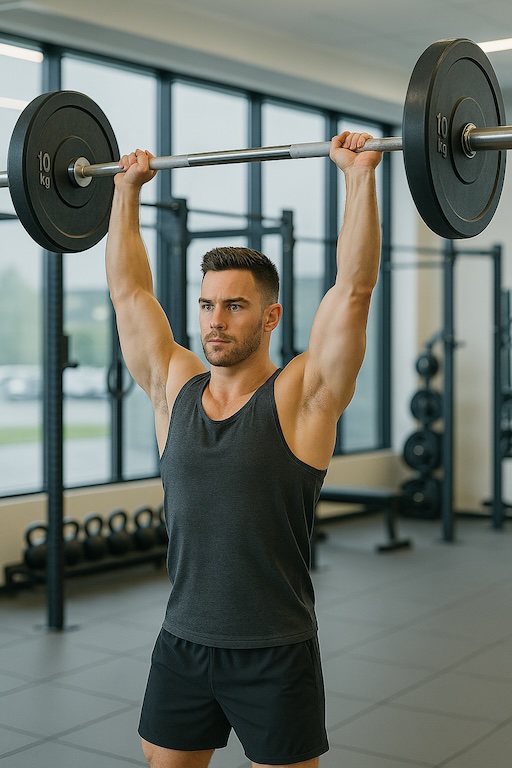
Ready to elevate your workout routine? Meet the overhead press—a classic move that works the deltoids, triceps, upper pecs, and core. Also called the shoulder press, strict press, or military press, this exercise is a staple in weightlifting for enhancing upper body strength, muscle size, coordination, and overhead function.
How to Perform the Overhead Press
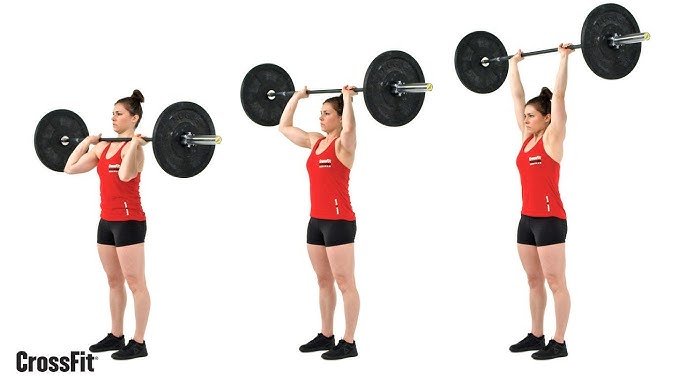
Mastering the overhead press begins with proper technique to maximize gains and minimize injury. Here’s a step-by-step guide to the standing barbell press.
- Start with Your Grip: Position your hands on the barbell just outside shoulder-width. Your grip should be firm, with hands fully wrapped around the bar.
- Position the Barbell: Unrack the bar and let it rest on your upper chest (clavicles) and shoulders. Your elbows should be slightly in front of the bar, not flared out to the sides.
- Stance and Posture: Stand with your feet shoulder-width apart. Brace your core by pulling your navel in, and squeeze your glutes. This creates a stable base and protects your lower back. Your back should be straight.
- Initiate the Lift: Take a deep breath in and press the bar straight upward. Exhale as you push past the most difficult point. As the bar passes your forehead, slightly move your head back to allow it to pass.
- Lockout: Once the bar clears your head, push your head “through the window” so that your body is aligned under the bar. Fully extend your arms overhead with the barbell stable. Ensure your torso, glutes, and legs remain tight and engaged.
- Return to Start: Inhale as you slowly and in a controlled manner, lower the bar back down to your shoulders, ready for the next rep.
Benefits of the Overhead Press
The overhead press isn’t just a show of strength—it’s a cornerstone exercise with a roster of rewards that extend beyond muscle building.
- Increases Shoulder Strength: The OHP targets your deltoids like few other exercises, carving out those coveted shoulder caps and increasing strength and stability.
- Develops Upper Body: This lift requires the triceps, upper pectorals (chest), and upper back muscles to work together to hoist the weight overhead.
- Engages Core: Stabilizing your body under a heavy weight overhead means your abs, obliques, and lower back work overtime, resulting in a stronger, more resilient core.
- Boosts Metabolism: Engaging multiple large muscle groups burns a significant number of calories during and after your workout, enhancing fat loss.
- Improves Posture and Balance: Regularly pressing weights overhead teaches your body to stabilize under load, improving your balance and posture.
- Builds Functional Fitness: With OHP training, you’ll find everyday activities like stowing luggage in an overhead bin or lifting a child easier and safer.

What Muscles Does the Overhead Press Use?
The overhead press is a comprehensive upper-body exercise that targets:
[Image of an anatomical diagram showing the muscles of the upper body, highlighting the deltoids, triceps, and upper chest]
- Primary Movers (Deltoids): All three heads of the shoulder are involved, especially the anterior (front) and medial (side) deltoids.
- Secondary Movers (Triceps): Your triceps are responsible for extending your elbow to lock out the weight overhead.
- Synergists: The upper pectorals (upper chest), trapezius (traps), and serratus anterior all assist in the lift and in stabilizing the shoulder blades.
- Stabilizers (Core): Your rectus abdominis, obliques, and erector spinae (lower back) must stay braced to keep your torso rigid and transfer force from the ground.

Variations of the Overhead Press
To mix things up, adjust the difficulty, or target muscles slightly differently, consider these variations:
- Dumbbell Overhead Press: Using dumbbells allows for a more natural range of motion and helps identify and correct strength imbalances between your left and right sides.
- Seated Overhead Press: Performing the press while seated on a bench removes lower-body assistance (“leg drive”) and isolates the upper-body pressing muscles more intensely.
- Push Press: This is a more explosive variation where you incorporate a slight knee bend and an explosive drive with your legs to help propel heavier weights overhead.
- Arnold Press: A dumbbell variation named after Arnold Schwarzenegger. You start with dumbbells in front of you, palms facing your shoulders, and rotate your wrists as you press up, which can increase activation across all three deltoid heads.

Common Mistakes & Safety Tips
It’s crucial to perform the overhead press safely to avoid injuries, particularly to the shoulders and lower back. Avoid these frequent mistakes:
Mistake: Arching the Back
The Problem: Leaning back and arching your lumbar spine to lift the weight. This shifts the load from your shoulders to your chest and puts immense strain on your lower back.
The Fix: Keep your core engaged and glutes squeezed tight throughout the entire lift. Maintain a neutral spine. If you have to arch, the weight is too heavy.
Mistake: Flaring the Elbows
The Problem: Letting your elbows flare out to the sides. This puts undue stress on the shoulder joints (impingement) and reduces the lift’s efficiency.
The Fix: Keep your elbows slightly in front of the bar at the start. As you press, think about driving your elbows *in* and *up*, not *out*.
Mistake: Using Momentum (Bouncing)
The Problem: Using a bounce from your lower body to start the lift (unless you are intentionally doing a Push Press). This takes the work away from your shoulders.
The Fix: The movement should be “strict” and controlled. Start from a dead stop at your shoulders for each rep.
Safety Tip: Warm-Up Properly
Jump-start your muscles with a good warm-up, including dynamic stretches (like arm circles) and lighter shoulder-centric exercises (like lateral raises) to prepare the joints.
Safety Tip: Use a Spotter or Safety Rack
If you’re lifting heavy, especially with a barbell, a spotter or a power cage with safety racks can catch the bar if you fail a lift, preventing injury.
Takeaway
The overhead press is a potent tool in your fitness arsenal, perfect for building comprehensive upper body strength and enhancing muscular coordination. But remember to always warm up, focus on form, and keep that core tight to prevent injuries and maximize your gains. Master this move, and you’ll build the strength and physique you’re aiming for.