Exercise Guide
Whether you’re looking to add bulk or simply strengthen your legs, quad exercises are essential. Show your quads some love with these 11 quad exercises, most of which can be performed at home with minimal equipment. After all, glutes and hammies can’t have all the fun!
Why Train Your Quads?
Your quads, the muscles in the front of your thighs, don’t get as much attention as your glutes or hamstrings—but they definitely deserve it. Collectively, they’re known as the quadriceps femoris, which includes five different muscles:
- Rectus femoris
- Vastus lateralis
- Vastus medialis
- Vastus intermedius
- Tensor of the vastus intermedius
“The quads are one of the largest muscle groups in your body,” says Sydney Yeomans, CPT. “Making them strong will take more pressure off of your knees and ankles.”
Building muscle is also great for fat loss because it accelerates your metabolism, burning more calories even at rest. “As we build muscle, we are building a foundation for strong bones, tendons, and ligaments around the leg muscles,” Yeomans says.
The 11 Best Quad Exercises
Donna Cennamano, NASM CPT, recommends starting with 2-3 sets of 8-10 reps for these moves. “Just two or three times per week for a 15 or 30-minute session will yield noticeable results in your legs, and especially the quads,” she says.
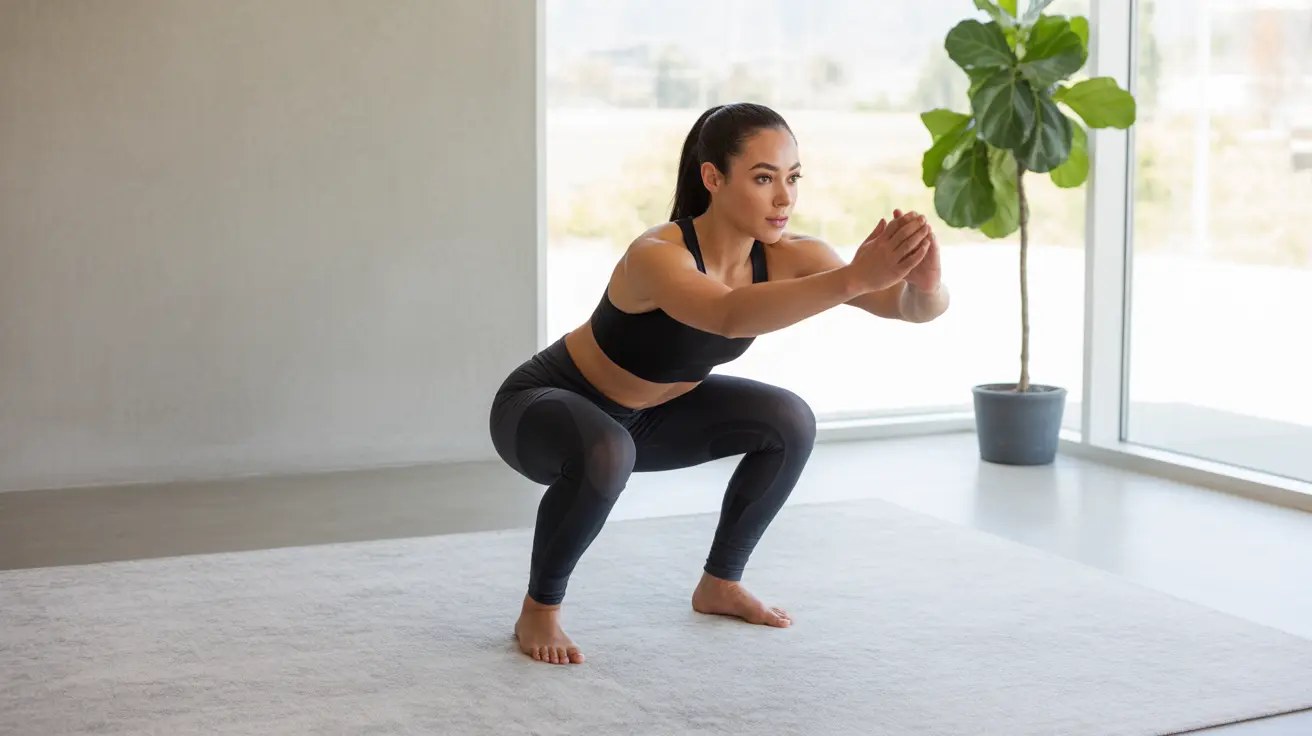
1 – Bodyweight Squat

Why it works:
Although squats are often associated with your glutes, they’re great for your quads too. This is a foundational functional movement for building lower body strength and stability.
How to do it:
- Take a balanced stance, feet shoulder-width apart.
- Bring the hips back as though you’re about to sit down in a chair.
- Keep the chest open and lifted, and your gaze forward.
- Lower until your thighs are about parallel to the floor, ensuring your knees track over your toes.
- Push through your heels to stand back up.
2–3 sets of 8–10 reps
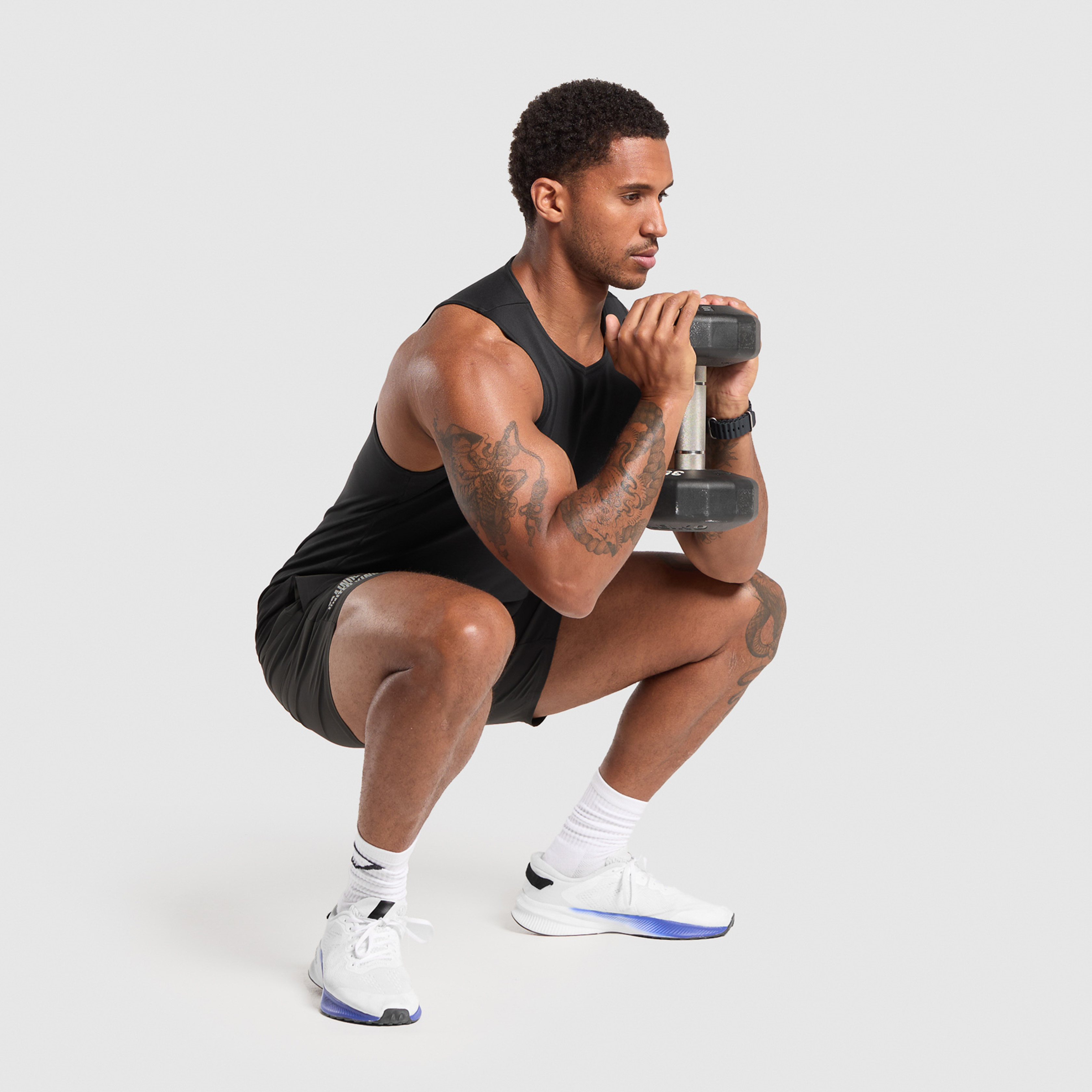
2 – Weighted Squat (Goblet Squat)
Why it works:
This move has the same mechanics as the bodyweight squat, but holding a dumbbell or kettlebell at your chest adds resistance, which challenges your quads and core even more.
How to do it:
- Stand with your feet shoulder-width apart, holding a single dumbbell or kettlebell vertically at chest level with both hands.
- Sink your hips back like you’re sitting down, keeping your chest up and elbows in.
- Lower to parallel or just below, keeping your weight in your heels.
- Push through your heels to return to the starting position.
2–3 sets of 8–10 reps
Pro tip: “Keep your weight heavy in your heels and chest up. Eyes should stay forward as you sink into the squat.” – Sydney Yeomans, CPT
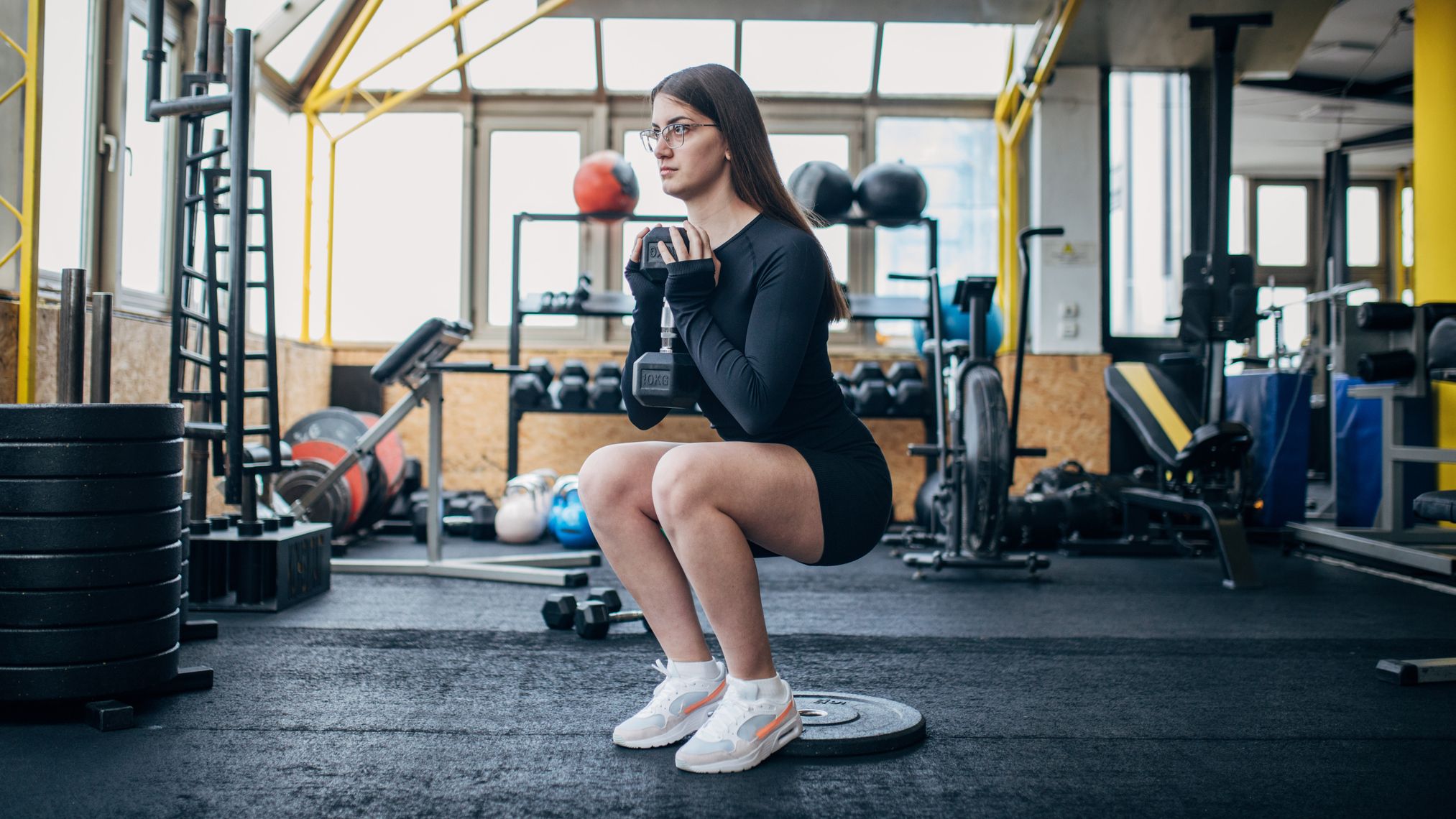
3 – Elevated Heel Squat
Why it works:
Elevating your heels (using a book or rolled towels) allows for a greater range of motion and a more upright torso. This shifts the emphasis significantly onto the quads by allowing your knees to travel further forward safely.
How to do it:
- With your heels elevated on a sturdy object, stand with your feet a little closer together than shoulder-width.
- Send your hips back and bend your knees, sinking as low as you can while keeping your chest upright.
- You will feel an intense stretch in your quads at the bottom.
- Return to the starting position.
2–3 sets of 8–10 reps
Pro tip: “Take a three second count down and a three second count up. The more time under tension for the muscle, the more the muscle will grow.” – Sydney Yeomans, CPT
4 – Sissy Squat

Why it works:
Don’t let the name fool you. This is a tough, advanced bodyweight exercise that isolates the quads by focusing on extreme knee flexion while leaning back.
How to do it:
- Stand in a neutral athletic stance, holding onto a wall or sturdy object for balance.
- Lift your heels off the ground, balancing on the balls of your feet.
- Keeping a straight line from your knees to your head, slowly lean your entire torso backward.
- Bend your knees and sink down as low as you can, bringing your knees toward the floor.
- Push through the balls of your feet to return to the starting position.
2–3 sets of 8–10 reps
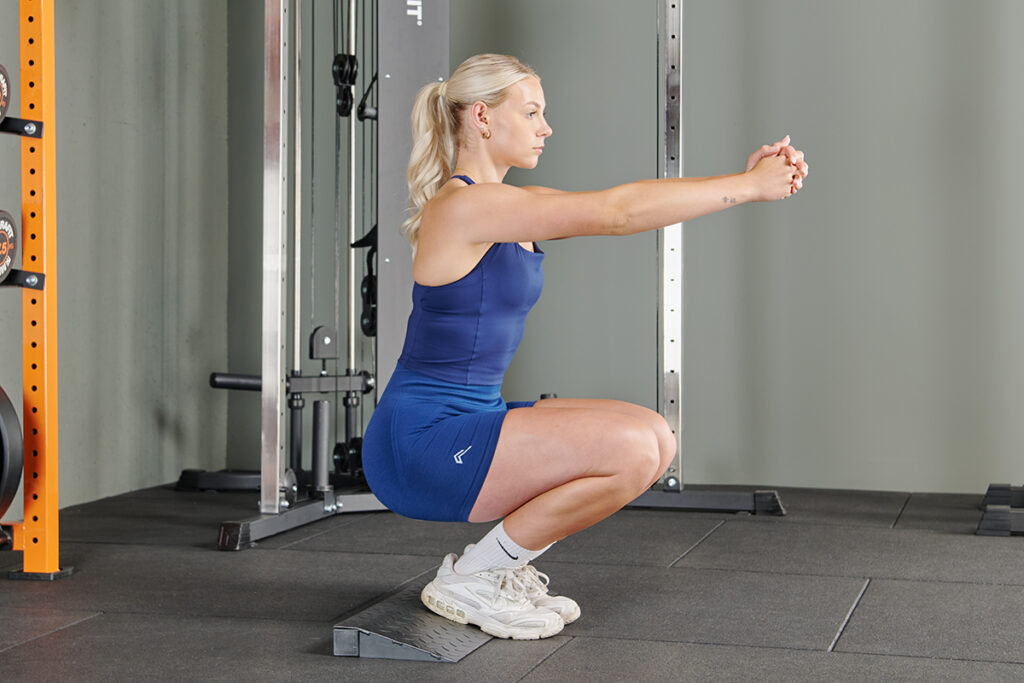
5 – Cyclist Squat
Why it works:
This is a variation of the elevated heel squat that mimics a cyclist’s stance. The very narrow stance combined with elevated heels maximally targets the quads, especially the “teardrop” muscle (vastus medialis) just above the knee.
How to do it:
- Elevate your heels on a book or rolled towels.
- Stand with your feet very close together (just a few inches apart).
- Extend your arms straight in front of you to assist with balance.
- Slowly sink your hips back and down, as if sitting in a chair.
- Slowly return to your original position to complete the rep.
2–3 sets of 8–10 reps
6 – Split Squat

Why it works:
This is a single-leg exercise that isolates the working leg, which is helpful for correcting strength imbalances. It heavily recruits the quad of the front leg.
How to do it:
- Start in a staggered stance (like a lunge), one leg in front and one leg behind you.
- Your back foot should have the heel up, with your weight on the ball of the foot.
- Keeping your torso upright, sink your back knee straight down toward the floor.
- Your front leg will bend, forming a 90-degree angle.
- Push through your front foot to return to the starting position.
2–3 sets of 8–10 reps per leg
7 – Wall Sit

Why it works:
This is an isometric exercise (where the muscle is under tension but doesn’t move). It builds incredible muscular endurance and stamina in the quads, glutes, and core.
How to do it:
- Stand with your back and shoulders flush against a wall.
- Walk your feet out about two feet in front of you.
- Sink down as if sitting in an invisible chair, until your thighs are parallel to the floor and your knees form a 90-degree angle.
- Hold this position, keeping your back pressed against the wall.
2–3 sets of 45–60 second holds
Pro tip: “You want to keep your chest up. Think about pressing your shoulder blades into the wall, and keep your eyes forward.” – Sydney Yeomans, CPT
8 – Lunge
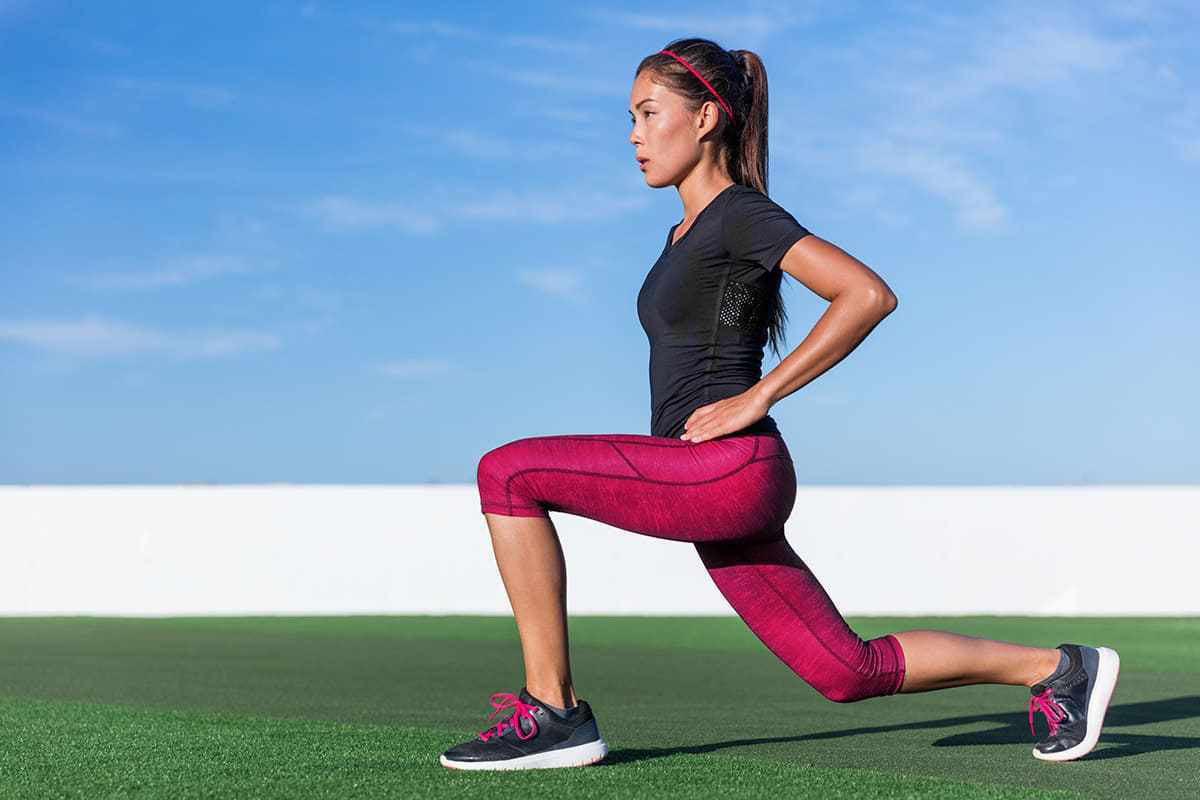
Why it works:
Lunges are a great functional movement for building strength in the quads and glutes, while also challenging your balance and core stability.
How to do it:
- Stand with feet hip-distance apart.
- Step your left foot *forward* a large step.
- Keep your upper body straight as you lower your hips, bending both knees to 90-degree angles. Your back knee should hover just above the floor.
- Ensure your front knee stays behind your toes.
- Push off your left foot to return to the starting position.
2–3 sets of 8 reps per leg
Pro tip: “Focusing on going *down* instead of going *forward* can help you improve your form.” – Donna Cennamano, NASM CPT
9 – Reverse Lunge
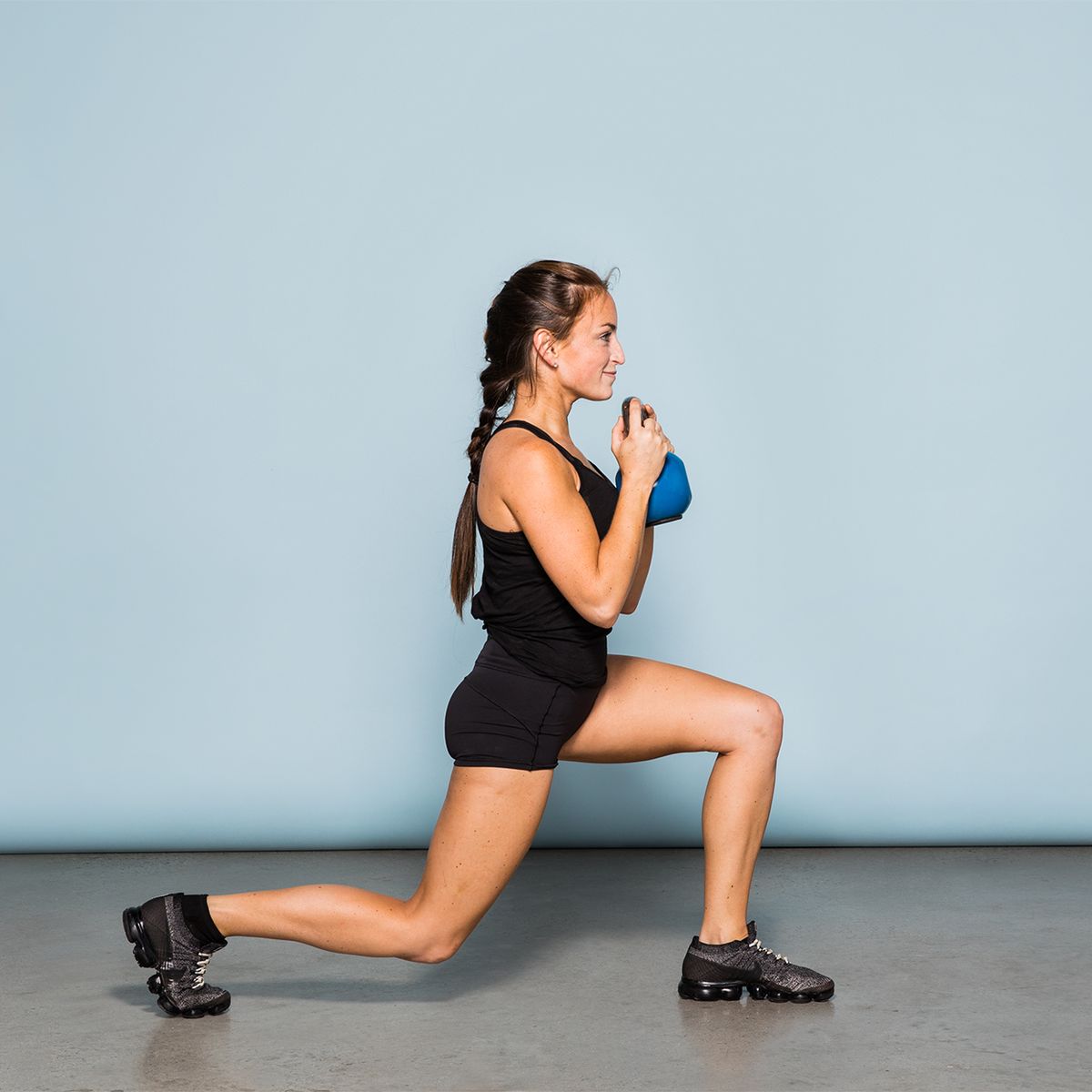
Why it works:
This variation is very similar to the forward lunge but involves stepping backward. It is often preferred as it puts less shearing force on the front knee joint, making it a great option for many people.
How to do it:
- Stand with feet hip-distance apart.
- Step your left foot *behind* you, landing on the ball of your foot.
- Keep your upper body straight as you lower your hips, bending both knees to 90-degree angles.
- Push through your *front* (right) foot to return to the starting position.
2–3 sets of 8 reps per leg
10 – Walking Lunge

Why it works:
This dynamic lunge variation adds a coordination and cardiovascular challenge. You continuously move forward, engaging your quads, glutes, and core with each step.
How to do it:
- Stand with your feet hip-distance apart.
- Step your left foot forward into a lunge, bending both knees to 90 degrees.
- Instead of pushing back, push forward, bringing your right foot up to meet your left.
- Immediately step your right foot forward into the next lunge.
- Continue this “walking” motion.
2–3 sets of 8–10 reps per leg
11 – Quad Stretch
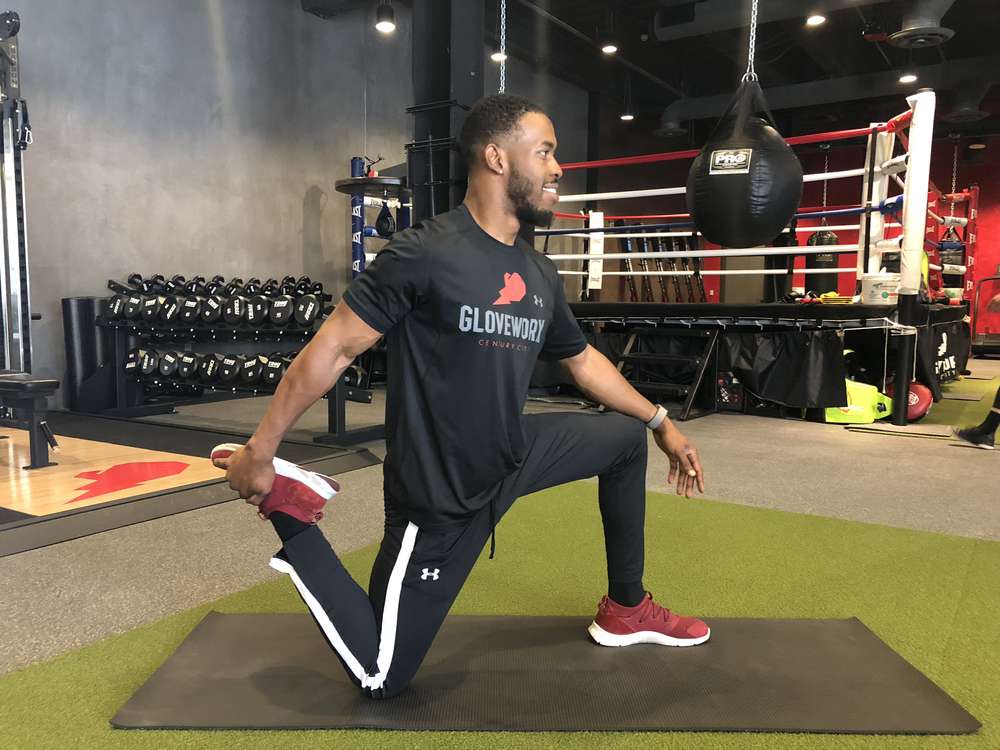
Why it works:
This is an essential stretch to perform *after* your quad workout. It helps relieve tension, improves flexibility, and can aid in muscle recovery.
How to do it:
- Stand in a relaxed stance. Hold onto a wall or chair for balance if needed.
- Bend one knee and grab your foot or ankle on the same side.
- Gently pull your heel toward your glute, keeping your knees close together.
- You should feel a good stretch along the front of your thigh.
Hold for 20-30 seconds per side.
Takeaway
Thunder thighs aren’t so bad when you’ve got quads like Zeus. These moves will help you grow them, so you can reap the benefits of stronger quads — which will actually make all of your lifts (and any movement you do regularly) easier. When in doubt, squat it out!