Exercise Guide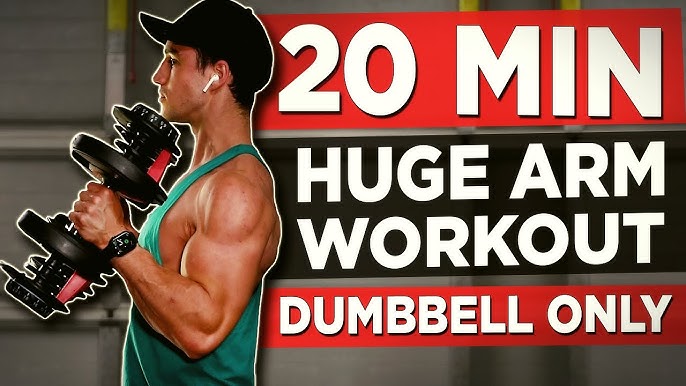
A common imbalance, regardless of age, is a disproportionately developed lower body compared to the upper body. This program addresses this deficit directly by focusing on building foundational strength and development in the **back and shoulders**, which are crucial for both an aesthetic physique and everyday functional capacity.
Developing upper body strength is not just about appearance; it enhances your ability to perform daily tasks like carrying groceries, lifting children, and maintaining posture. This routine requires only a **single set of dumbbells**, making it highly effective and accessible for both home and gym environments.
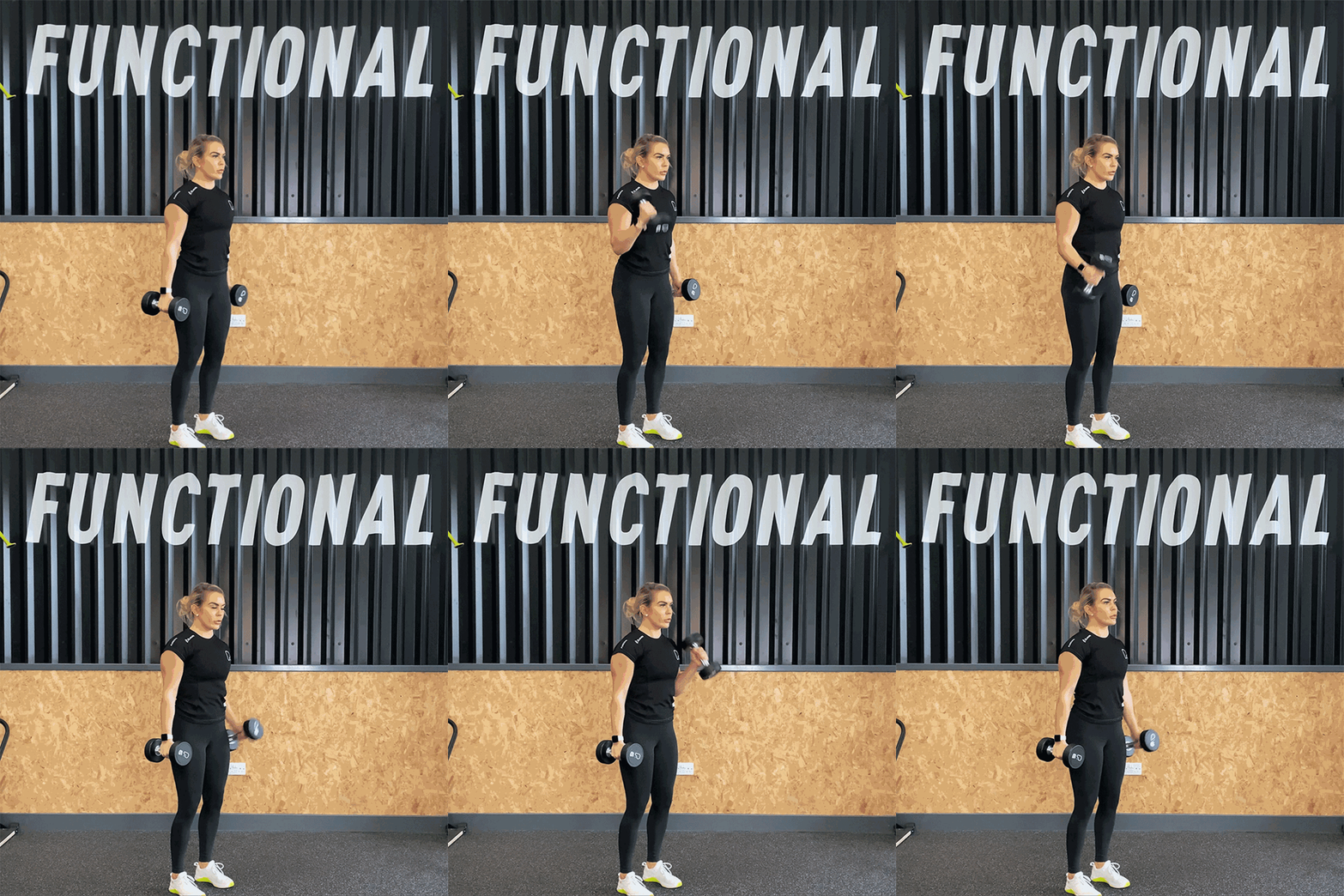
📊 Program Summary & Requirements
| Main Goal | Build Muscle (Back and Shoulder Development) |
|---|---|
| Workout Type | Single Muscle Group (Upper Body Push/Pull) |
| Training Level | Beginner |
| Program Duration | 6 Weeks |
| Days Per Week | 2 (Allowing 2-3 days of rest between sessions) |
| Time Per Workout | 45–60 minutes |
| Equipment Required | Dumbbells, Bodyweight (Adaptable) |
| Target Gender | Female (Excellent for anyone seeking foundational upper body strength) |
🏋️ Upper Body Routine: Back and Shoulders Focus
Perform this workout 2 times per week (e.g., Monday and Thursday), allowing for 48–72 hours of recovery between sessions. **Rest 60–90 seconds** between all sets. Focus on controlled movements, especially the eccentric (lowering) phase.

| Exercise | Sets | Reps / Duration | Primary Target |
|---|---|---|---|
| Dumbbell Shoulder Press | 3 | 12 | Shoulders (Anterior/Medial Deltoids) |
| Dumbbell Upright Row | 3 | 12 | Shoulders (Medial Deltoids, Traps) |
| Bent Over Dumbbell Row | 3 | 12 | Back (Lats, Rhomboids) |
| Side Lateral Raise | 3 | 6–10 | Shoulders (Medial Deltoids – Isolation) |
| Push Ups (or scaled variation) | 3 | To Failure | Chest, Triceps, Shoulders (Anterior) |
| Pull Ups (or scaled variation) | 3 | To Failure | Back (Lats), Biceps |
⚙️ Execution Guide and Form Focus
1. Dumbbell Shoulder Press

- **Start:** Dumbbells held at shoulder level (ears, not chest), palms facing forward or slightly inward.
- **Action:** Push the dumbbells overhead until arms are fully extended (but not locked).
- **Control:** Lower the weight back to the starting position in a slow, controlled manner (2–3 seconds).
- **Progression Note:** If 3 sets of 12 are easy, the weight is too light.
2. Dumbbell Upright Row
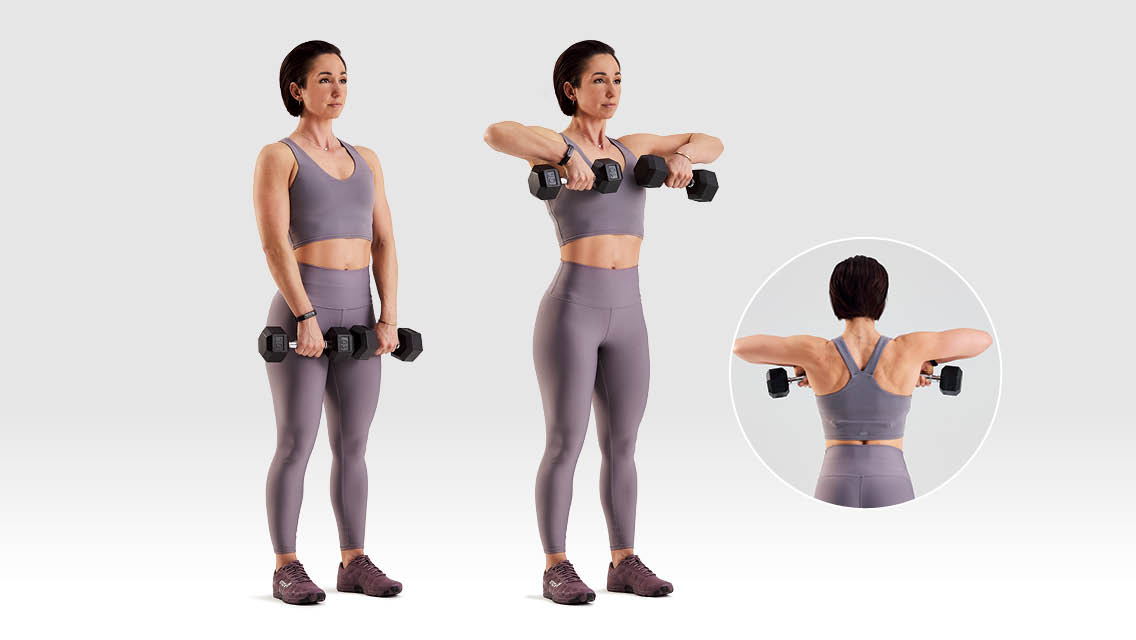
- **Start:** Arms extended down, dumbbells held in front of the thighs (palms facing body).
- **Action:** Pull the elbows up and out toward the ceiling, leading the movement with the elbows. The dumbbells should reach just below the chin.
- **Avoidance:** Do not lift the elbows higher than the shoulders.
3. Bent Over Dumbbell Row

- **Setup:** Hinge slightly at the hips, keeping the back flat and core braced (neutral lumbar arch). Arms hang toward the floor.
- **Action:** Draw the elbows up toward the ceiling, actively squeezing the shoulder blades together at the peak.
- **Control:** Lower the weights slowly to the starting position. Avoid rounding the back at any point.
4. Side Lateral Raise
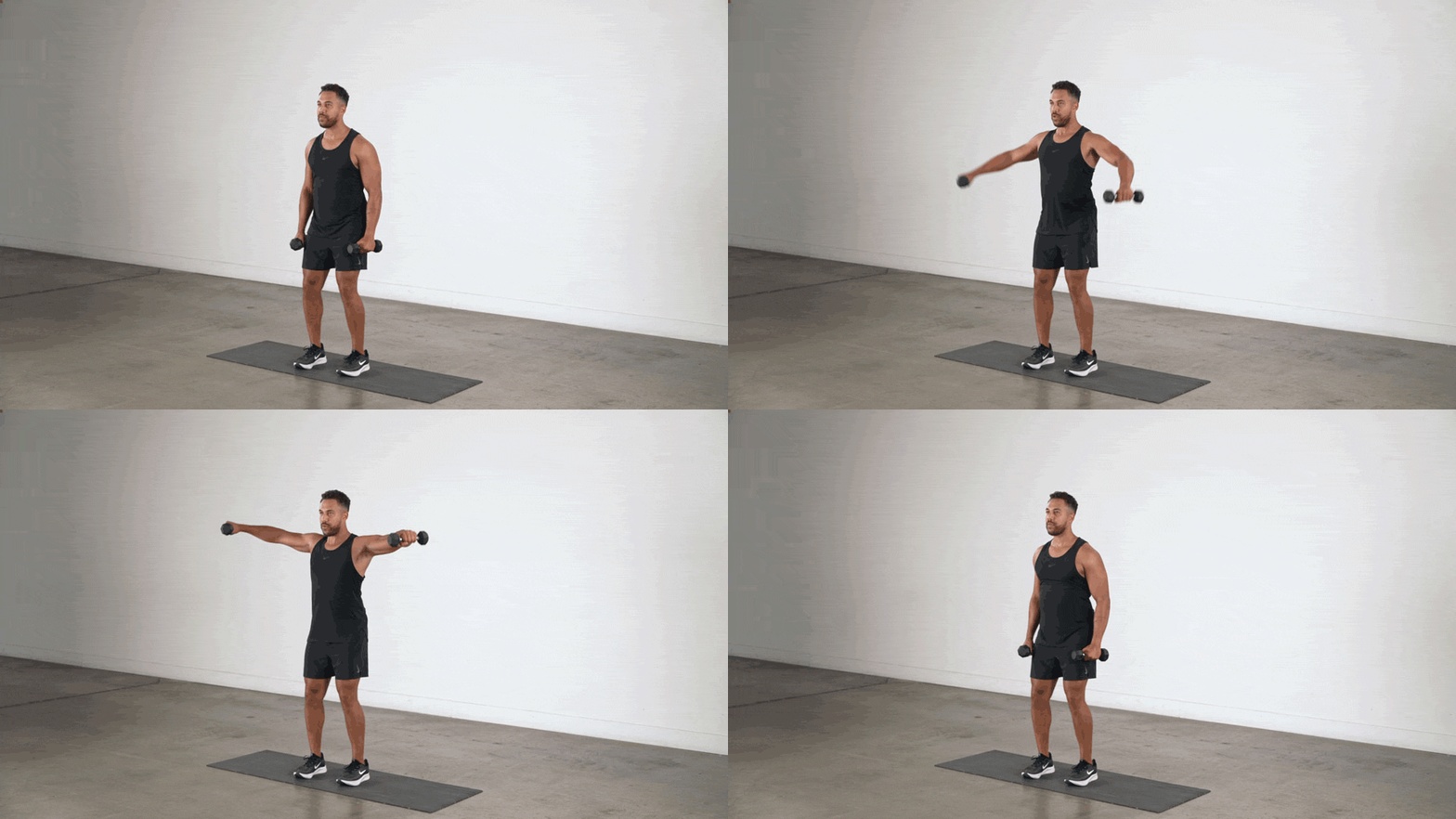
- **Start:** Arms at sides, palms facing inward.
- **Action:** Slowly raise the arms laterally (out to the sides) until the dumbbells reach shoulder height (T-shape). Keep a slight bend in the elbow.
- **Focus:** The movement should be slow and controlled, isolating the medial deltoid. Avoid shrugging the traps. The lower rep range (6-10) acknowledges the difficulty of using heavy weight for this isolation exercise.
📈 Push and Pull Progression (Push-Ups & Pull-Ups)
Push-ups and Pull-ups are fundamental bodyweight exercises that provide unparalleled development for the push (chest, shoulders, triceps) and pull (back, biceps) muscle groups. Achieving full, unassisted repetitions may take time (sometimes a year or more), but persistence is key.
A. Push-Up Progression (Horizontal Press)

- **Goal:** 3 sets to failure (Full Push-ups).
- **Scale 1 (Easiest):** **Hands-Up Push-Ups** (Incline Push-ups). Push from a counter, table, or wall. Higher the surface, the easier the exercise.
- **Scale 2 (Intermediate):** **Kneeling Push-Ups**. Perform the push-up with knees on the floor, ensuring the body remains straight from knees to head.
- **Scale 3 (Negative Focus):** Lie flat on the floor, push yourself up quickly, then control the descent back to the floor over 3–5 seconds.
B. Pull-Up Progression (Vertical Pull)
- **Goal:** 3 sets to failure (Full Pull-ups).
- **Option 1 (Assisted):** Use a **Graviton** machine, **Assisted Pull-Up Band** (placed under the foot/knee), or **Jumping Pull-Ups** (jump up, then lower yourself down slowly—negative focus).
- **Option 2 (Home Substitute):** **Inverted Rows**. Use a sturdy cross brace (like a swing set) or a secured barbell at waist height. Pull your chest toward the bar while keeping your body rigid.
- **Option 3 (Bands Only):** Place a band securely over a door or pole. Perform **Banded Pull-downs** while seated or kneeling, pulling the hands down to shoulder level.