Exercise Guide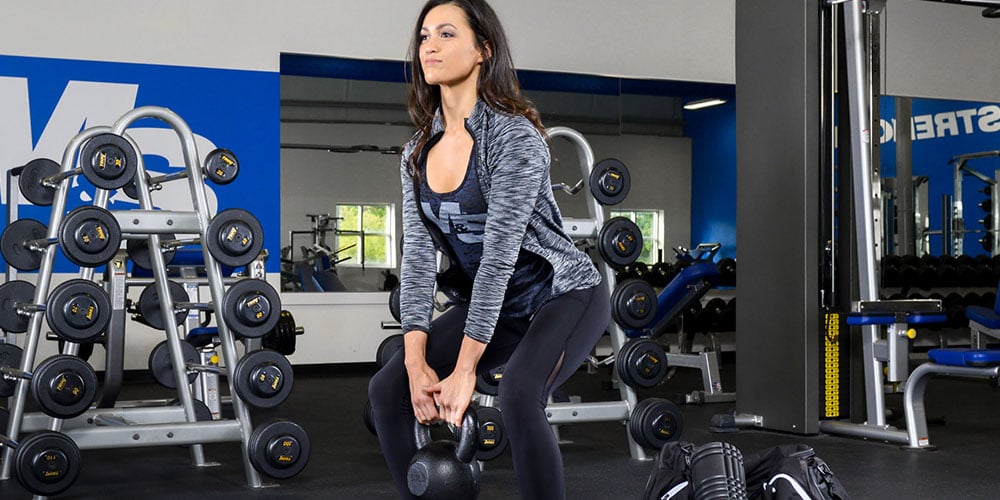
The kettlebell is an exceptionally versatile tool, ideal for compound, dynamic movements that build real-world strength and muscular endurance. This 4-week program is designed to challenge your full-body capacity, focusing specifically on **core coordination, strength, and endurance** through exercises that operate across all three cardinal planes of motion.
By integrating fundamental movements like swings, presses, and rows in standing, kneeling, and push-up positions, this circuit prepares you for more advanced kettlebell techniques while delivering a comprehensive core workout.
📊 Program Summary & Recommendations
| Main Goal | General Fitness & Core Strength/Endurance |
|---|---|
| Workout Type | Full Body Circuit (Core Focus) |
| Training Level | Beginner |
| Program Duration | 4 Weeks (Repeatable) |
| Days Per Week | 3 (Perform 2-3 times per week) |
| Time Per Workout | 25–45 minutes |
| Equipment Required | One Kettlebell (Moderate Weight) |
| Recommended Supplements | Protein Powder, Creatine, Fish Oil |
Kettlebell Weight Selection Guide:
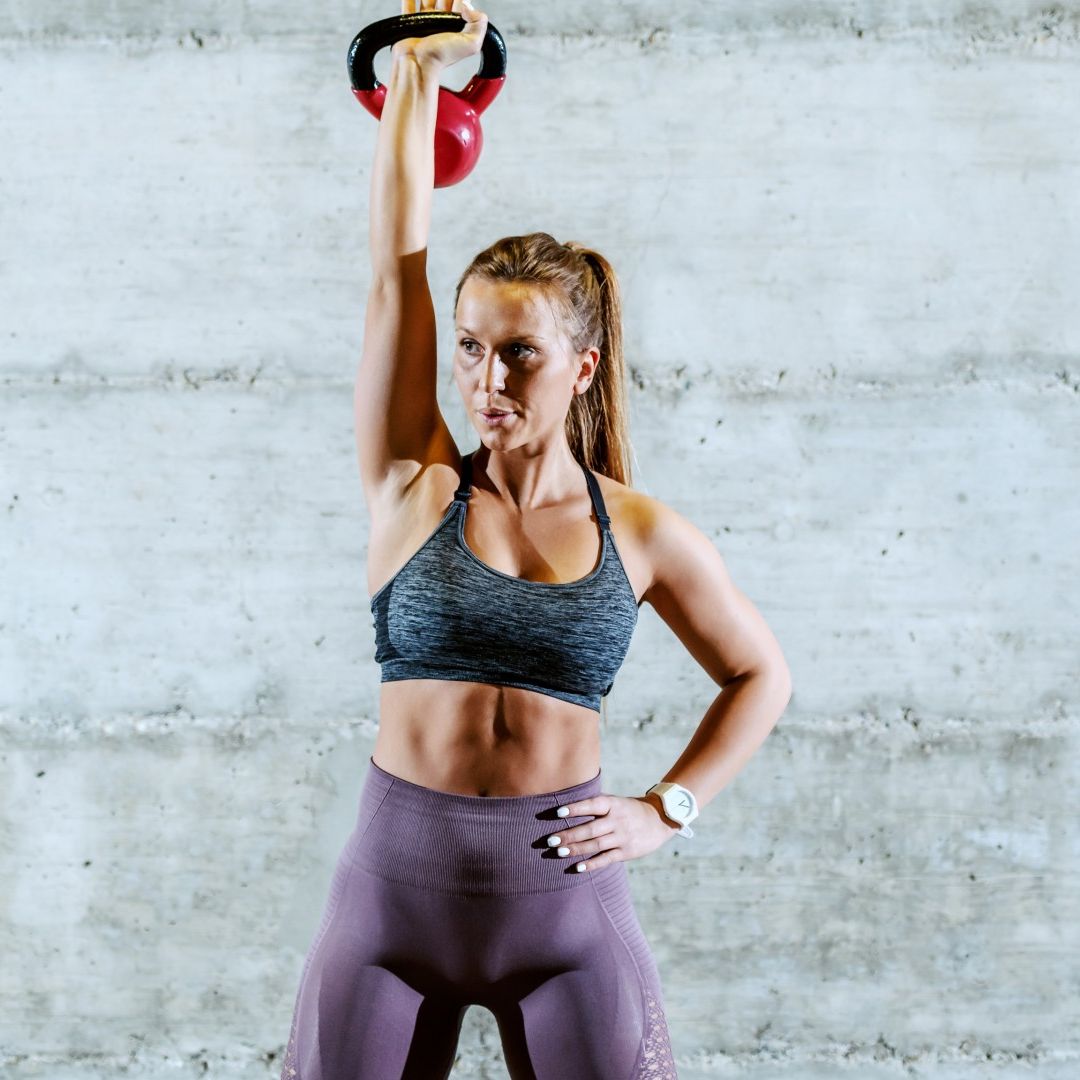
Select a weight that is challenging but allows you to maintain strict form throughout all 10 repetitions and four circuits.
- **Recommended for Women:** 6–8 kg (14–18 lbs.)
- **Recommended for Men:** 10–12 kg (22–26 lbs.)
If you can comfortably complete four full circuits, consider increasing the kettlebell weight in the following week.
🔄 The 4-Week Kettlebell Circuit
This circuit consists of 8 exercises performed back-to-back. Complete **4 full circuits** in total. **Rest for 45–60 seconds** only after completing all 8 exercises in a circuit.
| Exercise | Rounds | Reps (Unilateral) | Plane of Motion Focus |
|---|---|---|---|
| 1. Alternating Swing | 4 | 10 Per Side (20 Total) | Sagittal (Explosive Hinge) |
| 2. Side Lunge Rack Position | 4 | 10 Per Side | Frontal (Lateral Stability) |
| 3. Half Kneeling Press | 4 | 10 Per Side | Sagittal (Vertical Stability) |
| 4. Renegade Row | 4 | 10 Per Side | Transverse (Anti-Rotation) |
| 5. Half Turkish Get Up | 4 | 10 Per Side | Transverse & Sagittal (Transitional Stability) |
| 6. Feet Elevated Pullover | 4 | 10 Total | Sagittal (Anti-Extension) |
| 7. Figure 8 | 4 | 10 Per Side (20 Total) | Transverse & Sagittal (Dynamic Flow) |
| 8. Standing Russian Twist | 4 | 10 Per Side (20 Total) | Transverse (Rotational Strength) |
Detailed Exercise Breakdown & Core Activation
1. Alternating Swing
Primary Muscles: Glutes, Hamstrings, Erector Spinae, Abs, Lats.
- Stand over the kettlebell, feet hip-width apart. Hinge at the hips, grab the bell with one hand.
- Hike the bell back between the legs. Powerfully extend the hips (snap the hips forward) to swing the bell up to chest level.
- At the float point, smoothly switch hands. Guide the bell down for the next repetition.
- Core Focus: Maximal glute and abdominal bracing at the top of the swing (plank position) to protect the spine.
2. Side Lunge Rack Position
Primary Muscles: Quads, Glutes, Hamstrings, Abductors (Glute Medius).
- Hold the kettlebell in the rack position (resting in the crook of the shoulder) on the right side.
- Step wide to the right (lateral lunge), squatting deeply into the right hip while keeping the left leg straight. Maintain an upright chest.
- Explode off the right foot to return to the center. Complete all reps on one side before switching the bell to the left rack position.
- Core Focus: Resisting lateral flexion (side bending) to maintain an upright torso.
3. Half Kneeling Press
Primary Muscles: Deltoids, Lats, Triceps, Abdominals, Hip Flexors.
- Kneel in a lunge position (e.g., right knee down, left foot forward). Hold the kettlebell in the rack position on the side of the knee that is down (right side).
- Engage the core and glute of the knee-down leg. Press the kettlebell straight up overhead until the arm is fully extended.
- Lower with control. The half-kneeling position prevents lower back arching, forcing core stability.
- Core Focus: Anti-extension—preventing the lower back from arching as you press overhead.
4. Renegade Row
Primary Muscles: Lats, Deltoids, Abdominals, Biceps (Transverse and Anti-Rotation).
- Assume the top of a push-up position with feet wider than shoulder-width. Place your right hand on the kettlebell handle and the left hand on the floor.
- Row the kettlebell up to the side of your chest, pulling the elbow towards the ceiling.
- **Crucial:** Keep your hips perfectly level. Resist the urge to twist your torso or shift weight excessively.
- Core Focus: Anti-rotation—maximal oblique engagement to keep the hips square to the floor during the unilateral pull.
5. Half Turkish Get Up
Primary Muscles: Abdominals, Obliques, Serratus Anterior, Lats (Rotational & Transitional Stability).
- Lie on your back. Bend the right knee, foot flat. Left leg extended out 45 degrees. Hold the kettlebell straight up over the right shoulder with the right arm locked.
- Push into the right foot and left elbow/hand to roll up onto the left elbow.
- Roll further up onto the left hand (arm straight). Slowly reverse the motion back to the floor.
- Core Focus: Rotational stability and shoulder integrity while transitioning through various positions.
6. Feet Elevated Pullover
Primary Muscles: Pecs, Lats, Serratus Anterior, Triceps (Anti-Extension).
- Lie on your back, knees bent, feet raised off the floor (shins parallel to the floor). Hold the kettlebell by the horns straight up over your chest.
- Engage the core (pulling the ribs down) and slowly lower the kettlebell back behind your head, maintaining straight arms.
- Return to the start. The elevated feet increase the lever arm, maximizing the core’s anti-extension demand.
- Core Focus: Anti-extension—preventing the lower back from arching off the floor as the weight moves overhead.
7. Figure 8
Primary Muscles: Abs, Obliques, Quads, Deltoids (Dynamic Transverse Flow).
- Stand upright, feet hip-width apart. Hinge and grab the bell with the right hand.
- Swing the bell between the legs and around the outside of the left leg, switching hands to the left hand as it passes through the center.
- Swing the bell around the outside of the right leg, switching hands back to the right. Create a continuous figure-8 pattern.
- Core Focus: Maintaining hip hinge and resisting spinal rotation while dynamically moving the load.
8. Standing Russian Twist
Primary Muscles: Obliques, Abdominals, Erector Spinae (Rotational Power).
- Stand upright, holding the kettlebell by the horns close to your chest.
- With arms relatively straight, twist your upper body and hips to one side, swinging the kettlebell out and across the body.
- Twist immediately to the opposite side. Control the momentum through the core.
- Core Focus: Rotational strength—generating power through the obliques and hips.
Progression & Final Takeaway
Perform this circuit 2–3 times per week, in addition to any regular strength training. Consistent use of these multi-planar kettlebell movements will significantly improve core strength, build full-body coordination, and efficiently help you reach your fitness goals.