Exercise Guide
For individuals with demanding schedules, **High-Intensity Interval Training (HIIT)** provides the most efficient pathway to boosting metabolism and improving cardiovascular health. This program, requiring just 8 minutes of maximal effort and zero equipment, is scientifically designed to initiate the metabolic processes crucial for sustained fat loss.
Performing this routine first thing in the morning—ideally before heavy food intake—can supercharge your energy, enhance mental focus, and regulate appetite, setting a powerful, healthy tone for the entire day.
🧠 The Science of 8-Minute HIIT: EPOC Rationale
HIIT strategically alternates short, maximal bursts of work with brief, timed recovery periods. This methodology yields benefits far exceeding steady-state cardio by leveraging the **Excess Post-exercise Oxygen Consumption (EPOC)** effect:
- **EPOC Boost:** After intense effort, your body consumes oxygen at an elevated rate to restore physiological systems (like ATP stores). This process burns calories long after your workout is finished—sometimes for hours.
- **Efficiency:** Research supports that even short bursts of HIIT can deliver cardiorespiratory and metabolic benefits comparable to much longer endurance sessions.
- **Muscle Preservation:** HIIT stimulates fast-twitch muscle fibers, helping to preserve or even build lean muscle mass while simultaneously accelerating fat loss.

🔥 The 8-Minute Morning HIIT Circuit Protocol
Complete the following circuit **3 times** (allowing for approximately 1–2 minutes of rest/transition between rounds). Focus on maximizing intensity during the work phase.
1. Jumping Jacks (50 Reps)
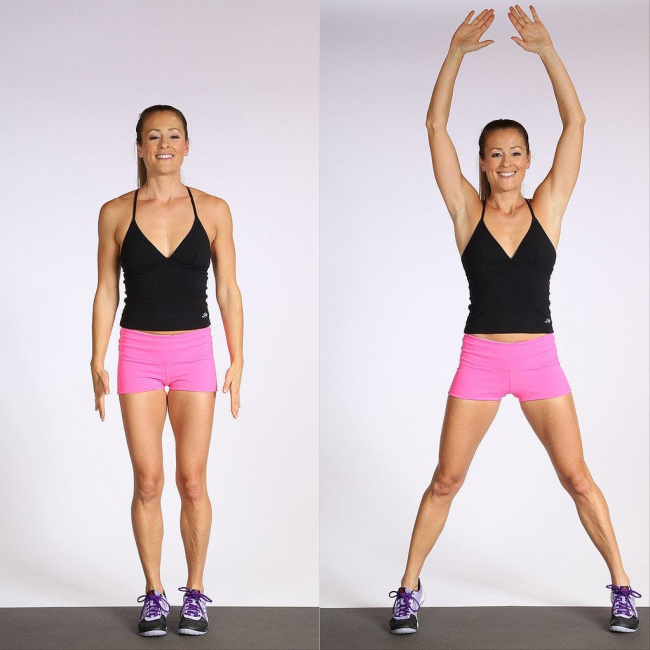
Targets: Cardiorespiratory System, Shoulders, Abductors/Adductors.
- Start standing, feet together, arms at sides.
- Jump feet out while simultaneously raising arms overhead until hands meet.
- Jump back to the start position. Maintain a quick, rhythmic pace.
**Rationale:** Serves as a full-body dynamic movement to rapidly elevate the heart rate and initiate neuromuscular activation across all major limbs.
2. Push-Ups (10 Reps)
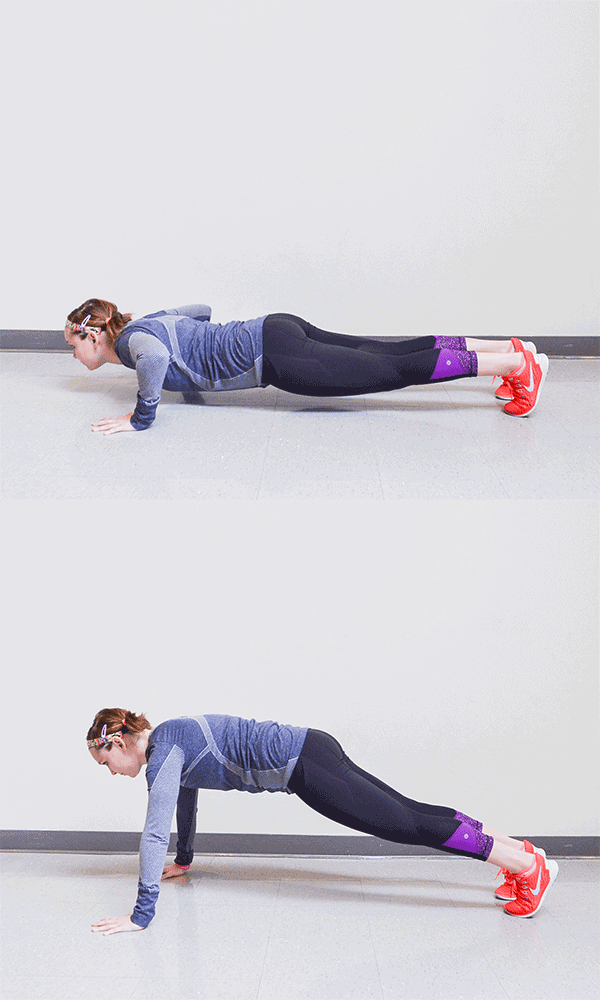
Targets: Chest, Anterior Shoulders, Triceps, **Core (Anti-Extension)**.
- Place hands slightly wider than shoulder-width. Maintain a straight plank line from head to heels.
- Lower the chest toward the floor, keeping elbows tucked close (approx. 45° angle to the body).
- Push explosively back up to the starting position.
**Rationale:** Builds foundational upper- body pushing strength while forcing the deep core (transverse abdominis) to stabilize the spine against gravity.
3. Sit-Ups (20 Reps)
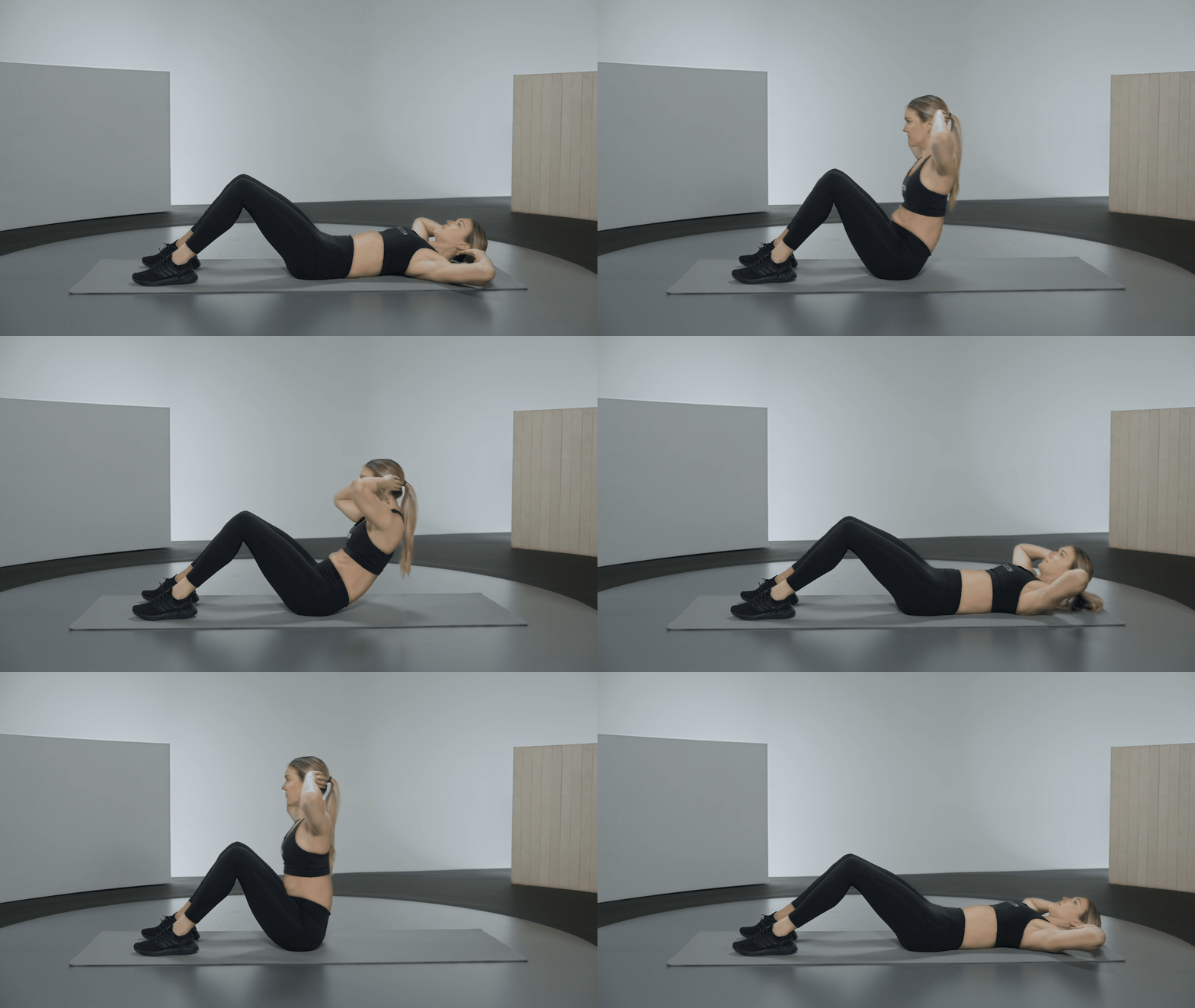
Targets: Upper Rectus Abdominis (Flexion).
- Lie on your back, knees bent, feet flat on the floor (anchored if possible).
- Place hands behind your head or crossed over your chest (avoid pulling on the neck).
- Curl your torso up toward your knees, focusing on spinal flexion driven entirely by the abdominal muscles. Lower slowly.
**Rationale:** A classic high-volume movement for training the abdominal wall, adding density and muscular endurance.
4. Bicycle Crunches (20 Reps / 10 Per Side)
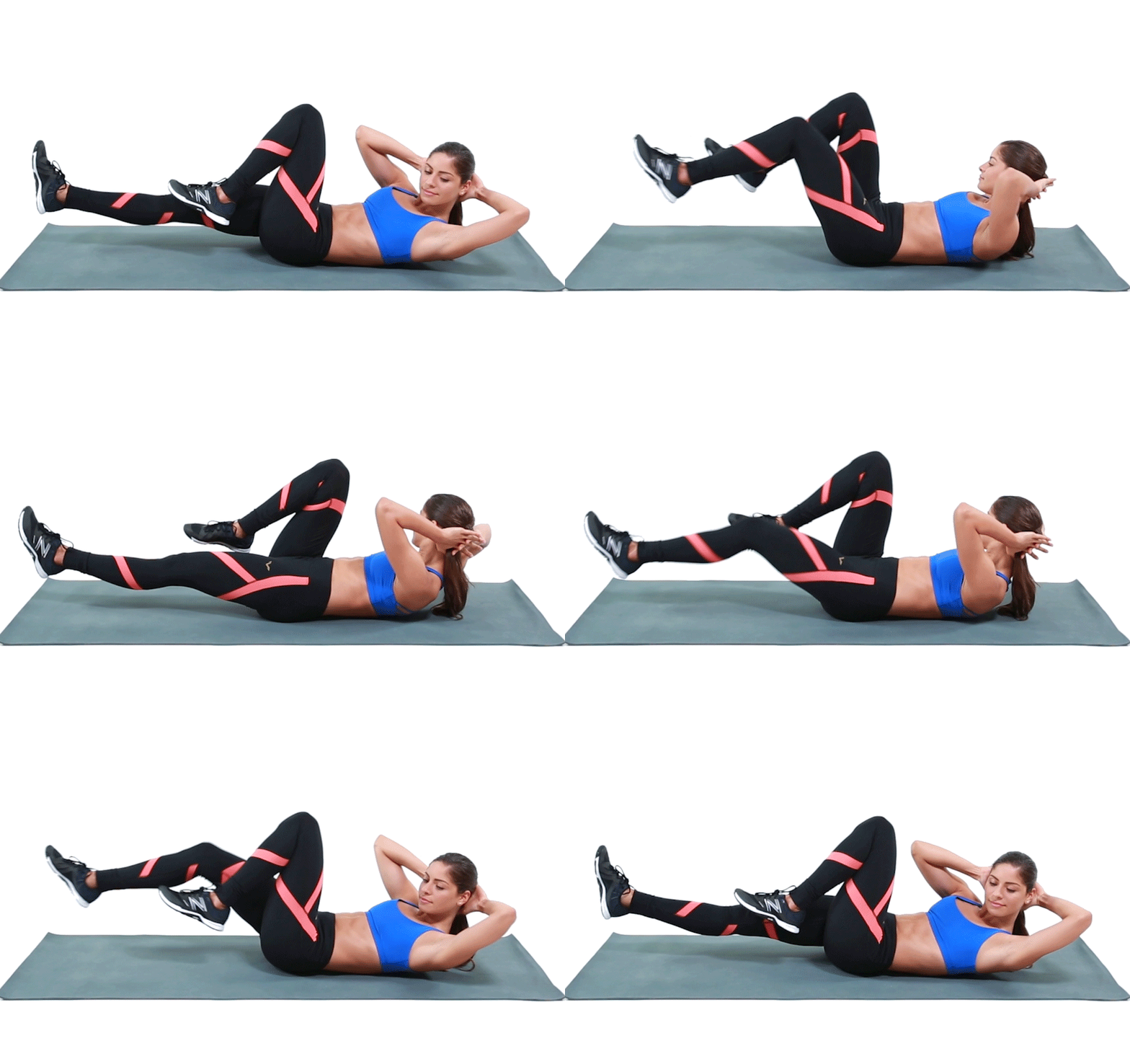
Targets: **Obliques**, Transverse Abdominis, Hip Flexors (Rotation and Anti-Rotation).
- Lie on your back, hands behind your head, legs in a tabletop position (knees over hips).
- Bring the right elbow toward the left knee while simultaneously extending the right leg straight.
- Switch sides immediately in a slow, controlled, dynamic motion.
**Rationale:** A dynamic movement that requires high coordination, engaging the entire core and introducing rotation—essential for functional movement.
5. Mountain Climbers (20 Reps / 10 Per Side)
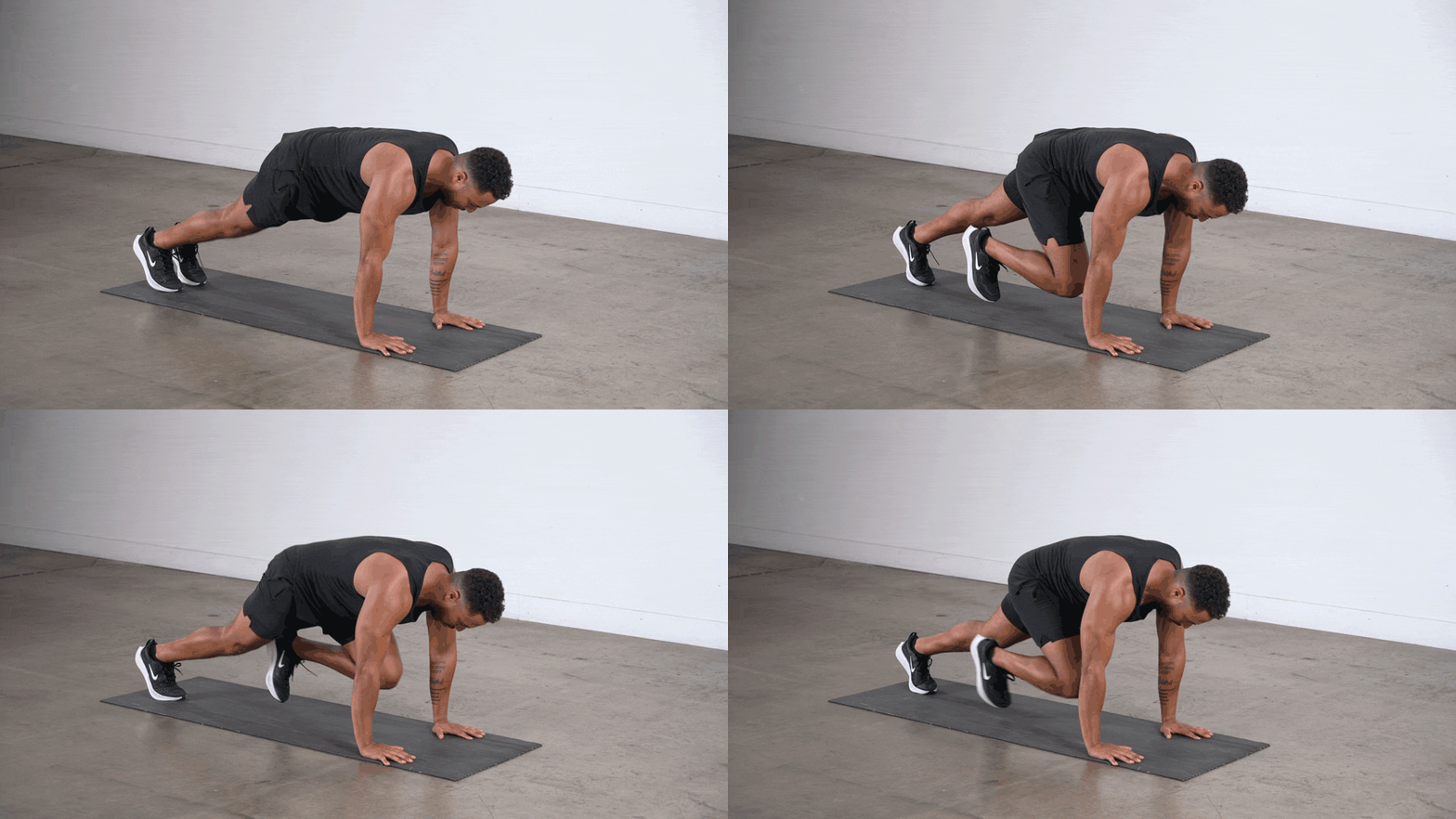
Targets: Core, Shoulders, Hip Flexors, Cardiorespiratory System (Metabolic).
- Return to a high plank position.
- Drive one knee toward your chest, then quickly switch legs (sprinting motion).
- Maintain a tight core and keep the hips level.
**Rationale:** Dual-purpose—serves as a core stability exercise combined with a potent cardiorespiratory spike, maximizing the metabolic workload of the session.
6. Plank (30 Second Hold)

Targets: Core, Shoulders, Glutes, Posture (Stability).
- Rest on forearms and toes. Ensure elbows are directly under the shoulders.
- Body forms a straight line from head to heels. Engage the core, squeeze the glutes, and pull the ribs down (anti-extension).
- Do not allow the hips to sag toward the floor or rise excessively toward the ceiling.
**Rationale:** The foundational exercise for full-body stability, strengthening the deep core muscles that support the spine and translating into better posture throughout the day.
✅ Programming and Consistency
The total working time for this routine (3 rounds of 6 exercises) should be completed in **8–10 minutes, plus warm-up/cool-down**. The primary goal is to establish consistency.
- **Frequency:** Perform 3–5 times per week, depending on your recovery capacity.
- **Progression:** As the exercises become easier, increase the rep count on the strength moves (e.g., 12–15 push-ups) or extend the plank hold duration.
- **Commitment:** The results stem from the intensity of the effort—not the time spent. Start tomorrow morning, commit to the 8 minutes, and reap the all-day metabolic and mental benefits.