Exercise Guide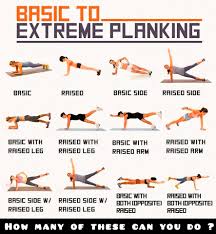
The plank is much more than a simple core hold. By introducing dynamic movements and creative variations, the plank transforms into a full-body burner, engaging your shoulders, glutes, back, legs, and deep core stabilizers—all without any equipment. It’s an exercise in mindful, slow movement that builds strength, stability, and endurance.
We’ve compiled 12 killer plank variations to completely upgrade your routine. Start with a 15–30 second hold or 10–12 repetitions for each, gradually working up to 1–2 minutes as your strength improves.
Core & Upper Body Focus
1. Plank Walk-Down (Forearm to Hand)

Muscles Worked: Core, Shoulders, Arms, Triceps
- Start in a forearm plank (elbows directly beneath shoulders, body in a straight line).
- Push up onto your right hand, then your left hand, transitioning into a high plank position.
- Lower back down to the forearms, starting with the right forearm first, then the left.
Why It Works: The transition between forearm and high plank keeps your shoulders under continuous tension and forces your core to fiercely resist lateral movement (rocking).
2. One-Arm Plank

Muscles Worked: Deep Core, Shoulders, Stability Muscles
- Begin in a forearm plank, body straight and core braced.
- Reach one arm straight forward, in line with your body, while actively preventing your hips from twisting or dropping.
- Hold this challenging position for 10–15 seconds, then smoothly switch to the other arm.
Focus: This exercise dramatically challenges your core’s ability to fight anti-rotation, which is essential for a strong, stable center.
3. Sliding Forward and Backward

Muscles Worked: Core, Shoulders, Calves, Latissimus Dorsi
- Start in a forearm plank.
- Push off your toes to slide your entire body forward a few inches, keeping the straight line from head to heels.
- Use your forearms and toes to pull your body back to the starting plank position.
Tip: Try this on a smooth floor wearing socks or using furniture sliders for easier movement.
🔄 Obliques & Side Stability
4. Side Plank Toe Touch

Muscles Worked: Obliques, Shoulders, Outer Hips (Abductors)
- Begin in a side plank, balancing on your right forearm. Extend your left arm straight up.
- Keep your body straight and raise your top (left) leg until it is in line with your body.
- Bend your torso sideways to reach your left hand down and touch your left toe.
- Return to the starting position with complete control. (Reps: 10–12 per side).
Pro Tip: Keep your supporting hip lifted and away from the floor throughout the entire movement.
5. Side Plank Knee-to-Elbow
:upscale()/2024/03/13/782/n/1922729/tmp_Mji3aW_fc15aed3542716bb_PS23_Fitness_Workout_08_Move_02_Plank_Hip_Dip.gif)
Muscles Worked: Obliques (highly activated), Glutes, Hip Flexors
- From a right forearm side plank, lift your left hand to your skull (goal post position).
- Drive your top (left) knee toward your left elbow, performing a controlled crunch.
- Squeeze your core and glutes at the peak of the crunch, then extend your leg and arm back to the start. (Reps: 10–12 per side).
Bonus: The rotational crunch aggressively targets the side abdominal muscles (obliques).
6. Side-to-Side Hip Dips

Muscles Worked: Obliques, Transverse Abdominis, Lower Back
- Start in a high plank position (shoulders above wrists).
- Gently shift your weight and let your right hip dip down toward the ground (do not touch).
- Lift your right hip back to plank center, and then immediately switch to the left side, letting the left hip dip.
Tip: Control matters more than speed. Move slowly and mindfully to protect your lower back and engage the core.
🔥 Full Body & Dynamic (Cardio)
7. Tom Cruise Plank (Wide Stance Low)

Muscles Worked: Full Body—Core, Chest, Shoulders, Legs (High Tension)
- Begin in a classic high plank position.
- Walk your hands and feet wide apart (wider than shoulder-width), maintaining a tight belly.
- Drop your body toward the ground, bending elbows slightly (like the bottom of a push-up), until you are as low as you can go without resting on the floor.
- Hold for one full beat, then press back up to the wide plank.
Why It’s Great: This challenging isometric hold fires up the entire posterior and anterior chain simultaneously, mimicking intense functional training.
8. Walking Plank (Lateral Step)

Muscles Worked: Core, Shoulders, Obliques (Movement Control)
- Start in a high plank position.
- Step your right hand and right foot out laterally to the right side simultaneously.
- Bring your left hand and left foot to meet the first two steps.
- Continue walking laterally across the room, then reverse the direction.
Coaching Tip: The key is to keep your hips level and avoid swaying or lifting to maintain constant core engagement.
9. Side-to-Side Plank Jumps
:upscale()/2017/04/24/950/n/1922729/eedd8b8075ff1fd5_PikePlank.gif)
Muscles Worked: Core, Legs, Cardio Spike, Stabilizers
- Start in a high plank position, feet together.
- Jump your feet out wide to the sides, land securely, and immediately jump them back together.
- For a greater challenge, jump your feet side-to-side (left/right) while minimizing upper body movement. (Reps: 10–15 jumps).
Why It Works: It adds a cardiovascular element, forcing your core and stabilizers to work overtime under dynamic stress.
🍑 Lower Body & Posterior Chain
10. Alternating Leg Lifts

Muscles Worked: Glutes, Hamstrings, Lower Abs (Hip Extensors)
- Start in a high plank position (wrists under shoulders).
- Keeping your foot flexed, raise one leg back just a few inches—high enough to feel your glute activate, but not so high that your back arches.
- Hold for a beat, then lower until the foot is just above the floor.
- Switch to the other leg and repeat. (Do 10–15 lifts for each leg).
Why It Works: It targets your posterior chain (backside) while requiring maximum anti-extension stability from your core.
11. Rotating Plank (Cross-Body Mountain Climber)
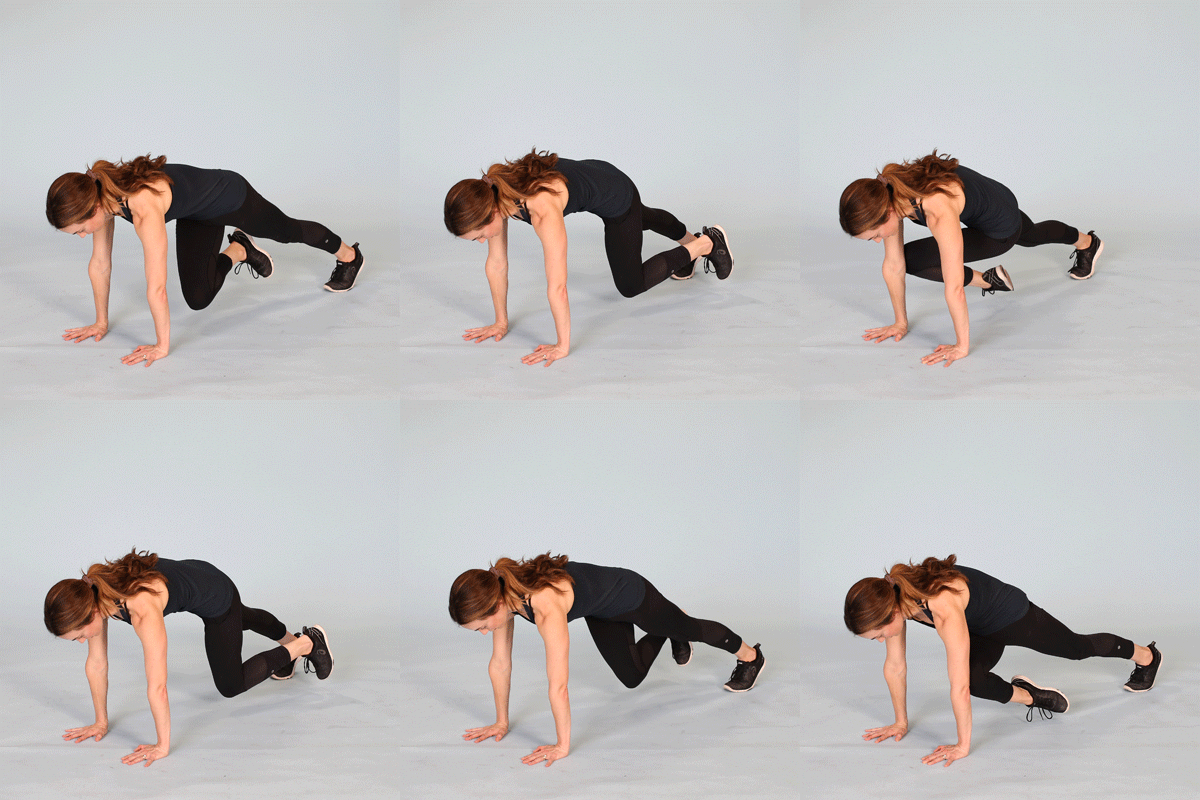
Muscles Worked: Obliques, Chest, Legs, Hip Flexors
- Start in a high plank.
- Bring your right knee across your body toward your left elbow.
- Pause briefly, return to the plank, and switch: left knee to right elbow.
Focus: Control is vital. The movement should come from your obliques, not just momentum.
12. Plank with Maximum Tension (Micro-Tension Hold)
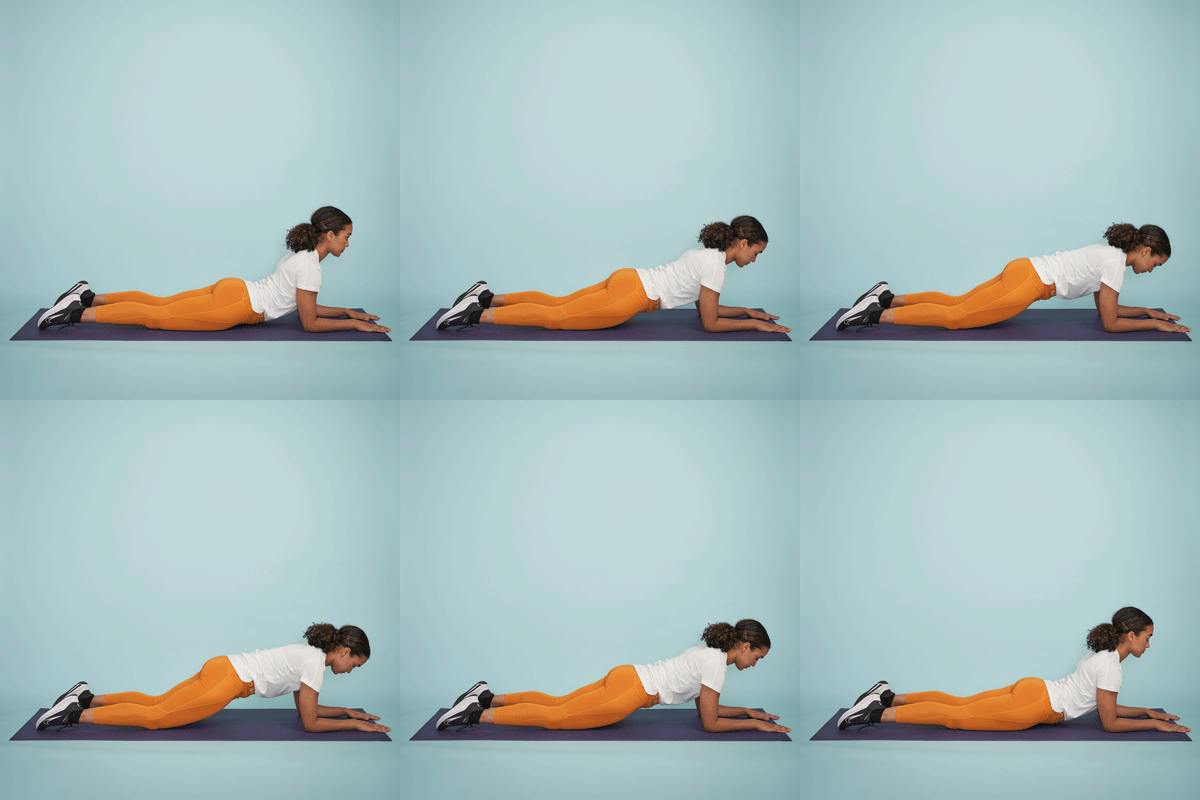
Muscles Worked: Deep Core (Transverse Abdominis), Full-Body Isometric Activation
- Start in a forearm plank.
- Squeeze Everything: Press your forearms down, push your toes into the floor, squeeze your glutes hard, pull your belly button towards your spine, and lock your quadriceps.
- Hold this maximum tension for 10–15 seconds, maintaining steady breathing.
Pro Tip: This technique teaches full-body control and is often more metabolically demanding than a long, relaxed hold.
🗓️ How to Structure Your Plank Workout
Use these guidelines to incorporate the variations into your fitness routine 3 to 4 times per week. This can be used as a standalone workout or a powerful core finisher.
- Beginners: Choose 3 to 4 exercises. Hold each for 15–30 seconds. Rest for 15 seconds between moves. Complete 1 full round.
- Intermediate: Choose 5 to 6 exercises. Hold or perform reps for 30–45 seconds each. Rest for 15 seconds. Complete 2 full rounds.
- Advanced: Stack 6 or more exercises. Hold each for 60 seconds or longer. Minimize rest between moves. Complete 3 full rounds.