Exercise Guide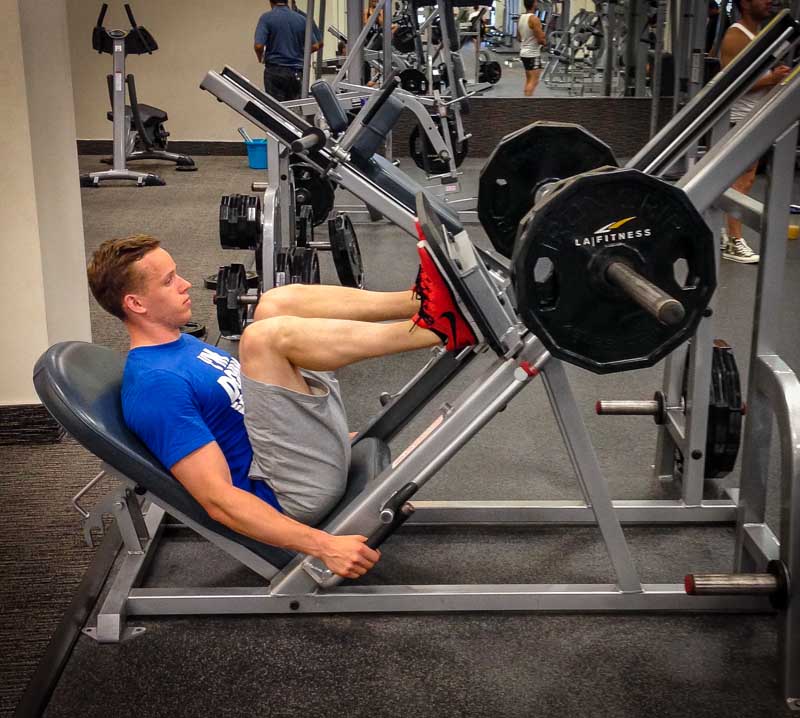
From avoiding heavy weights to embracing high-volume, high-intensity training, fitness competitor Julie Michaelson shares the powerful leg day she uses to transform physique and build impressive gluteal development. This routine rejects the outdated “light weights and high reps for toning” philosophy, arguing for a simple, aggressive approach centered around foundational lifts.
Julie’s philosophy hinges on the belief that **lifting HEAVY and utilizing high volume** is the most effective path to achieving lean muscle growth and a sculpted physique. This workout is so demanding that it should only be performed **once per week**, allowing the body ample time for necessary recovery before the next intense session.

📊 Workout Summary & Structure
| Main Goal | Build Muscle (Glute & Quad Hypertrophy) |
|---|---|
| Workout Type | Single Muscle Group (Legs/Glutes) |
| Training Level | Intermediate (Beginners should reduce volume) |
| Program Duration | 6 Weeks |
| Days Per Week | 1 (Maximum recovery needed) |
| Time Per Workout | 45–60 minutes |
| Equipment Required | Barbell, Dumbbells, Leg Curl Machine, Step/Box |
| Recommended Supplements | Whey Protein, BCAAs or EAAs (Intra/Post-Workout Support) |
🏋️ The Butt Builder Workout Protocol
This routine is designed to be highly effective and efficient, built around three foundational compound movements: the Squat, the Straight-Leg Deadlift (or variation), and the Leg Press. The workout structure utilizes an aggressive **Superset** approach to maximize time under tension and metabolic stress.

- Keep rest periods short: **60 seconds to a maximum of 2 minutes** between heavy sets.
- **Prioritize Form:** Weight is important, but never sacrifice strict form, especially on squats and deadlifts.
- **Progressive Overload:** Aim to increase the weight or the number of reps/sets each week.
| Exercise | Sets | Reps | Notes |
|---|---|---|---|
| **A1. Squat** (Superset with B1) | 10 | 10 | Back Squats recommended. Heavy weight. Focus on depth and control. |
| **A2. Leg Curls** (Superset with A1) | 10 | 10 | Immediate follow-up to squats. Targets Hamstrings. |
| **Superset Protocol:** Perform 10 reps of Squats immediately followed by 10 reps of Leg Curls. Rest 60 seconds. Repeat 10 total times (20 working sets). This is the core metabolic stress driver. | |||
| Reverse Barbell Lunges | 4 | 8–10 (per leg) | Focus on glute stretch and unilateral stability. Heavy load. |
| Dumbbell Step Ups | 3 | 12 (per leg) | Glute Max activation. Drive through the heel. Use a sturdy box/bench. |
| Leg Extensions | 3 | Failure | Quads Isolation (High Volume Finisher). Push to muscular failure. |
🧠 Mechanics of the Workout Structure
1. The Squat/Leg Curl Superset (The Gauntlet)

The 10 sets of 10 reps (10×10) for the Squat and Leg Curl serve as the engine of this workout. This massive volume ensures maximal Time Under Tension (TUT) and metabolic fatigue. By supersetting a large compound lift (Squat, focusing on Quads/Glutes) with a hamstring isolation movement (Leg Curl), you:
- **Maximize Blood Flow:** Keeping the heart rate high and pumping blood into the legs.
- **Active Recovery:** Allowing the quads to recover slightly while the hamstrings are worked, and vice-versa, minimizing total rest time.
- **Achieve Total Leg Fatigue:** 20 total sets are designed to fully exhaust the primary muscle groups.
2. Foundational Compound Lifts vs. Machines

The program emphasizes **barbells and dumbbells** over fixed-path machines, promoting superior neuromuscular coordination, core stability, and full-range muscle recruitment. The foundational lifts include:
- **Squats:** The ultimate exercise for quad/glute mass and systemic strength.
- **Straight-Leg Deadlift (RDL):** Crucial for hamstring length and glute tie-in. (Implicit in the leg routine, often substituted by the Squat/Hip Thrust focus).
- **Leg Press:** Used for adding bulk and taxing the quads/glutes under heavy load (can be substituted by Step Ups here).
The author strongly recommends avoiding the temptation to rely heavily on isolation machines (like the Adductor/Abductor), believing that the core compound lifts provide more comprehensive glute development.
🍏 Nutrition and Recovery Strategy
1. Intra- and Post-Workout Nutrition

Nutrition on a heavy training day is adapted to fuel performance and optimize muscle recovery:
- **High Carb Days:** The strategy includes a significant increase in **starchy carbohydrates (50–75 grams)** on leg training days to fully replenish muscle glycogen stores depleted by the high volume.
- **Post-Workout Shake:** Essential for immediate recovery. It typically consists of **Whey Protein** (for rapid amino acid delivery) combined with a fast-acting carb source (like Gatorade powder) to spike insulin and drive nutrients into the muscle cells.
- **Contest Prep Adjustment:** During periods of strict calorie management, the high-carb pre-workout may be reduced, and the fast carbs post-workout are often replaced with **BCAAs (Branched-Chain Amino Acids)** to spare muscle tissue.
2. Recovery Protocol (Once Per Week Training)
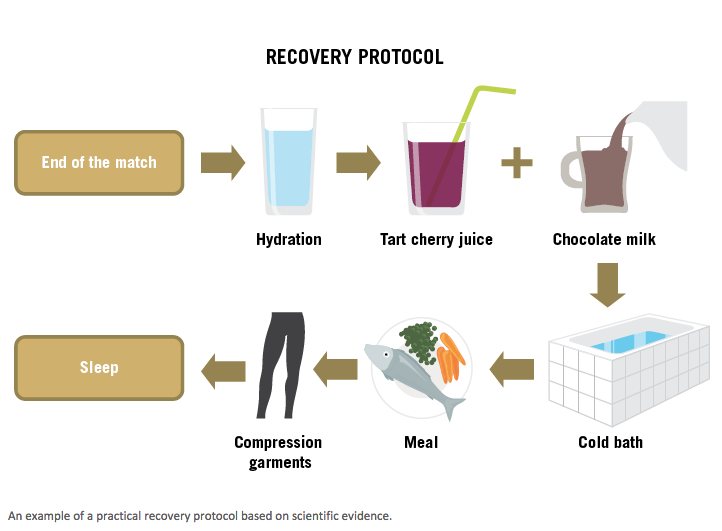
The severity of this workout mandates a long recovery window. By training the legs hard only once a week, you ensure:
- **Full Muscle Repair:** The extreme muscle damage from the 10×10 superset and heavy lifting has enough time (6-7 days) to fully repair, grow, and adapt.
- **Maximal Intensity:** You are fully recovered and ready to lift maximally heavy every time you enter the gym, preventing plateaus often caused by training too frequently.