Exercise Guide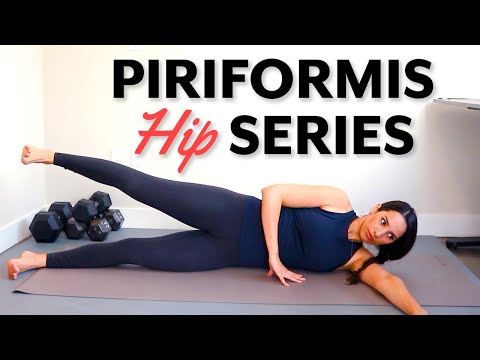
I learned about this hip series early in my piriformis syndrome healing journey. For the first time in months since I was diagnosed, I felt like I was doing something right and getting relief from the hip pain I was experiencing. So, I’m excited to share this hip series with you.
One of the main reasons for piriformis compensation and tightness is gluteus medius weakness… This hip series is focused on activating the glute med. Start with this routine below if you have an issue activating your glutes. Rest assured, there is no way you won’t feel your glutes working if you follow my instructions!
1 – The Gluteus Medius
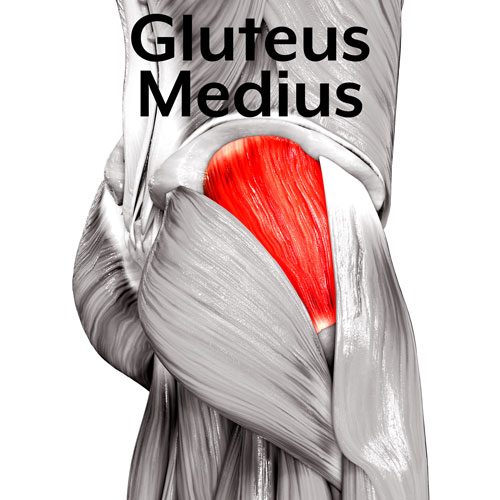
The hip series below is focused on the gluteus medius, and here’s why: Gluteus medius stabilizes the pelvis and keeps your upper body upright when standing on one leg as the weight shifts to one side, running, and walking. Any time one leg is off the ground, the glute med kicks in.
With only one foot on the ground, the bodyweight tends to make the pelvis sag downwards on the unsupported side. A properly engaged gluteus medius of the standing leg counteracts this force by applying traction on the hip bone.
2 – The 3-Minute Hip Series
The exercises are meant to mobilize the hip joint and activate the gluteus medius muscle. You must minimize hip rotation (forward or backward) to do that correctly and effectively. You’ll do all the exercises on one side, then switch sides.
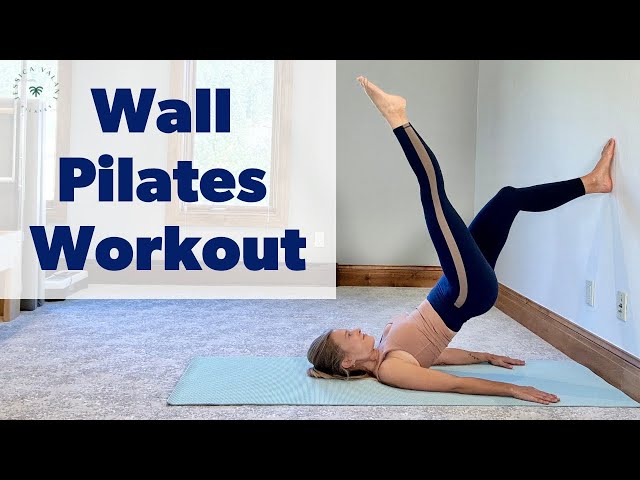
If you notice that you can’t maintain alignment, I highly encourage you to lie on your side with your back facing the wall. Make sure your upper back, glutes, and heels touch the wall. When you move your legs, keep your glutes on the wall.
Exercises Breakdown
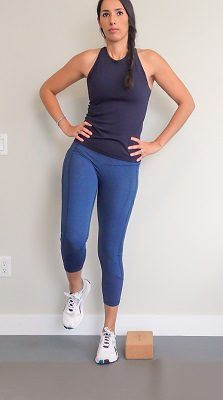
We will do an entire series on one side before switching to the other side. Please take a break whenever you need to. It’s important to maintain form and not trigger pain.
- 10 Small leg raises: Keep your foot straight to minimize piriformis engagement. Avoid rolling your hip forward. These small raises will warm up the hips and the gluteus medius.
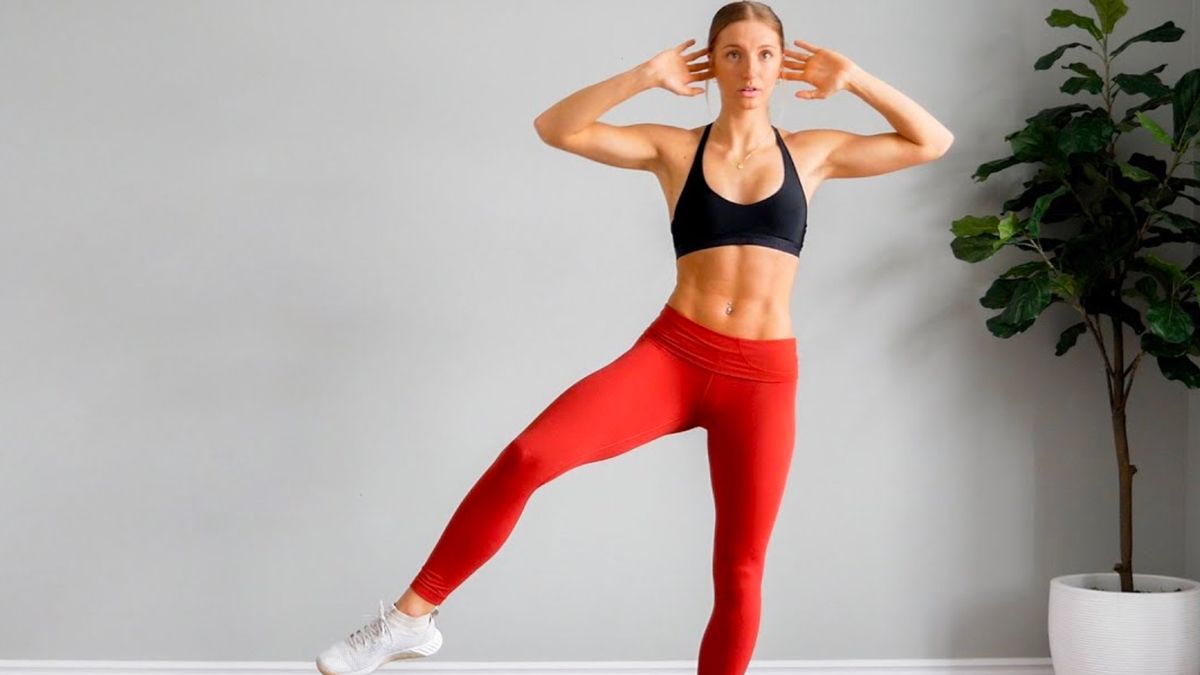
- 5 Bicycle to sidekicks: Start by flexing your hip forward, then kicking your leg backward. Contract your glutes and repeat for about five repetitions.
- 10 Big leg lifts: Raise as high as possible without sacrificing form.
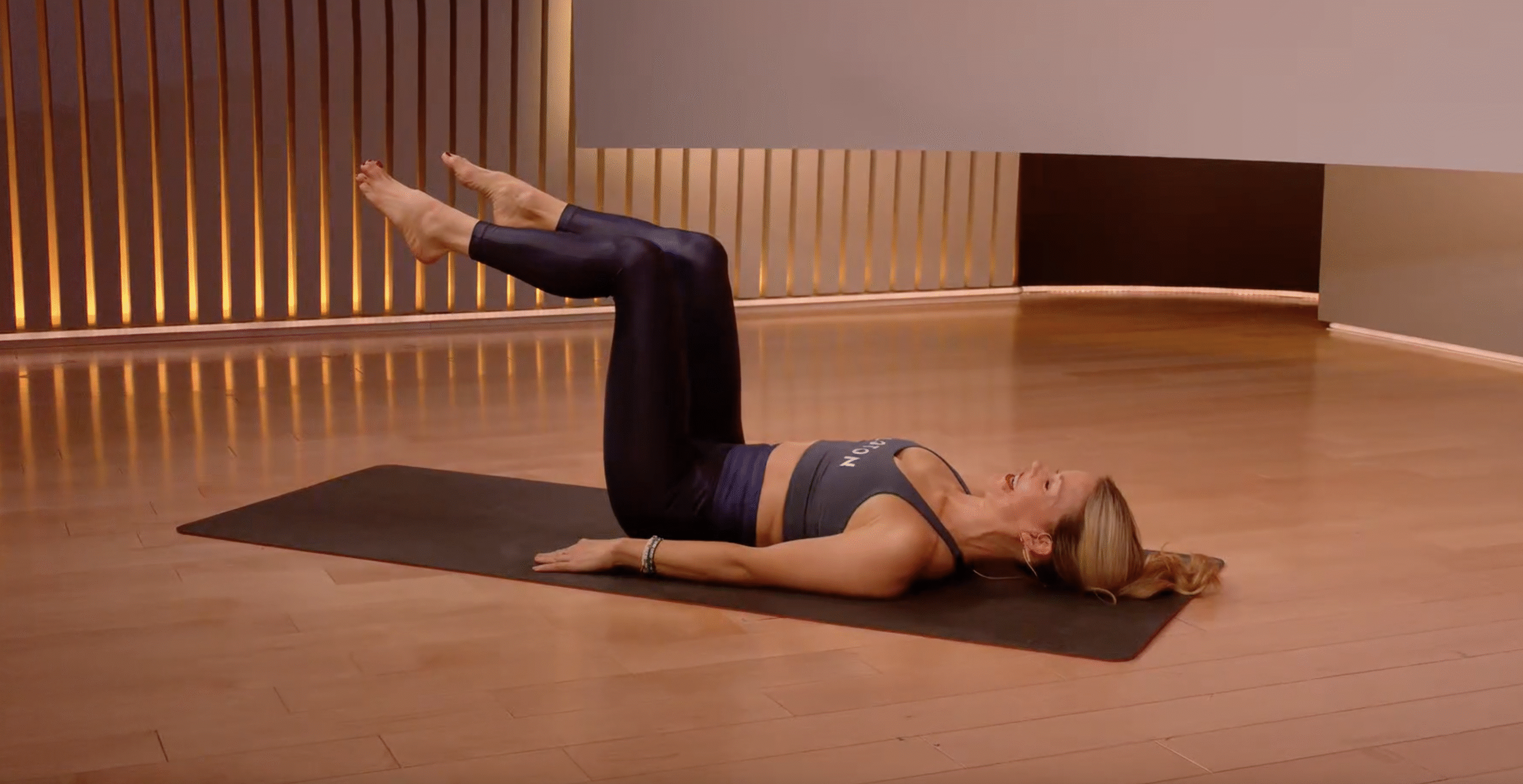
- 5-10 Leg circles (counter-clockwise): Small circles here. Again, focus on maintaining alignment and take a break whenever needed.
- 5-10 Leg circles (clockwise): Reverse direction and circle the other way.

If you stay consistent with this amazing hip series, you’ll feel more comfortable with the exercises. You can increase the intensity by adding a resistance band around your thighs.
Signs of Weak Gluteus Medius

Briefly, these are the main warning signs of weak gluteus medius muscle(s):
- You notice your knees going inwards: during specific exercises such as squats. You may even see your knees internally rotating when walking.
- Trendelenburg Gait: This is a movement pattern where the hips drop and hike as you walk. The glute med is not doing its primary job of preventing the pelvis from sagging.
- Lower back tightness: Many muscles will tighten as they compensate for lack of hip stability and balance. If you experience chronic QL tightness, TFL tightness, and lower back tension, you may need to work more on fixing glute med weakness.