Exercise Guide
If you’ve ever wished for a rounder, firmer, and stronger butt, you’re not alone. A well-shaped backside isn’t just about aesthetics — it plays a critical role in your overall health, posture, and athletic performance. This ultimate guide will break down everything you need to know about glute training, from the best exercises to strategies for recovery and nutrition.
Understanding Your Glute Muscles
Your glutes are made up of three main muscles, and training all three is key to achieving a well-rounded and functional result.
- Gluteus Maximus: The largest muscle, responsible for the main shape of your butt. It powers movements like hip extension (think hip thrusts and squats).
- Gluteus Medius: Located on the side of your hip, this muscle is crucial for hip stability and moving your leg out to the side. Training it helps create a “rounded” look.
- Gluteus Minimus: The smallest of the three, it lies beneath the gluteus medius and also assists with hip stability.
The Ultimate Glute Workout Routine
I – Warm-Up (5-10 Minutes)

A proper warm-up activates your glutes, reduces injury risk, and improves performance. Don’t skip it!
- Glute Activation March (1 Minute): Stand tall and lift your knees alternately toward your chest, squeezing your glutes at the top of each step.
- Bodyweight Squats (10–15 Reps): Lower your body slowly as if sitting into a chair, then push through your heels to stand and squeeze your glutes at the top.
- Lunge with Torso Twist (8–10 Reps Per Leg): Step into a lunge and gently twist your torso toward the front leg to activate the glutes and core.
- Hip Circles (30 Seconds Per Side): Stand with hands on your hips and make large, controlled circles to loosen up the hip joints.
- Glute Bridges (10–12 Reps): Lie on your back, lift your hips toward the ceiling, and focus on feeling your glutes work.
1. Hip Thrusts

Why it works: The ultimate booty-builder. Hip thrusts isolate and activate your glutes more effectively than almost any other movement, allowing for heavy weight and maximum growth.
How to do it:
- Sit on the ground with your upper back against a sturdy bench.
- Place a barbell or dumbbell over your hips (or use bodyweight to start).
- Push through your heels, driving your hips up until your thighs are parallel to the ground.
- Squeeze your glutes hard at the top, then lower back down with control.
Perform 3 sets of 10-12 reps. Pause at the top for 2-3 seconds for maximum activation.
2. Squats

Why it works: A foundational compound exercise for growing your glutes, quads, and hamstrings. They build overall lower body strength and size.
How to do it:
- Stand with your feet shoulder-width apart.
- Lower your hips down and back as if sitting in a chair, keeping your chest up.
- Go as deep as you can while maintaining good form, then press through your heels to return to the starting position, squeezing your glutes at the top.
Perform 3 sets of 12-15 reps. Add resistance with dumbbells or a barbell for better results.
3. Bulgarian Split Squats

Why it works: This single-leg exercise improves balance while deeply targeting and isolating each glute, helping to correct muscle imbalances.
How to do it:
- Stand a few feet in front of a bench and place the top of one foot behind you on it.
- Lower yourself down until your front thigh is parallel to the ground, keeping your front knee over your ankle.
- Push back up through your front foot.
Perform 3 sets of 10 reps per leg. Hold dumbbells for added resistance.
4. Romanian Deadlifts (RDLs)

Why it works: A fantastic exercise for strengthening and shaping your glutes and hamstrings, creating a powerful posterior chain.
How to do it:
- Hold a barbell or dumbbells in front of your thighs.
- Hinge at your hips, keeping a slight bend in your knees and your back straight.
- Lower the weights until you feel a deep stretch in your hamstrings.
- Drive your hips forward and squeeze your glutes to return to a standing position.
Perform 3 sets of 10-12 reps. Keep the weights close to your body throughout the movement.
5. Cable Kickbacks

Why it works: This isolation exercise helps shape the glutes, improves the mind-muscle connection, and is great for targeting the upper part of the glutes for a “lifted” look.
How to do it:
- Attach an ankle strap to a low cable machine.
- Stand facing the machine and kick one leg straight back, keeping a slight bend in the knee.
- Squeeze your glute at the peak of the movement and return to the start with control.
Perform 3 sets of 15 reps per leg. Use a slow, controlled motion to avoid using momentum.
II – Cool Down & Stretching (5-10 Minutes)

Finish your workout with these stretches to reduce muscle soreness and promote recovery.
- Seated Glute Stretch: Sit on the floor, cross one ankle over the opposite knee, and gently pull the leg toward your chest. Hold for 30 seconds per side.
- Standing Quad Stretch: Stand and pull one heel toward your glute. Hold for 30 seconds per side.
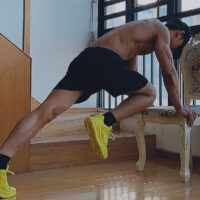
- Hip Flexor Stretch: Kneel in a lunge position and gently push your hips forward. Hold for 30 seconds per side.
Final Tips for Glute Growth
- Progressive Overload: To keep growing, you must continuously challenge your muscles. Gradually increase the weights you lift, the number of reps, or the intensity of your workouts over time.
- Proper Nutrition: Muscles need fuel to grow. Eat enough protein (from sources like chicken, eggs, fish, and legumes) and healthy carbs to support muscle repair.
- Consistency is Key: Aim for 2-3 glute-focused workouts per week. Results won’t happen overnight, but consistent effort will pay off.
- Mind-Muscle Connection: Focus on actively squeezing your glutes with every single rep. This ensures your glutes are doing the work, not other muscles.