Exercise Guide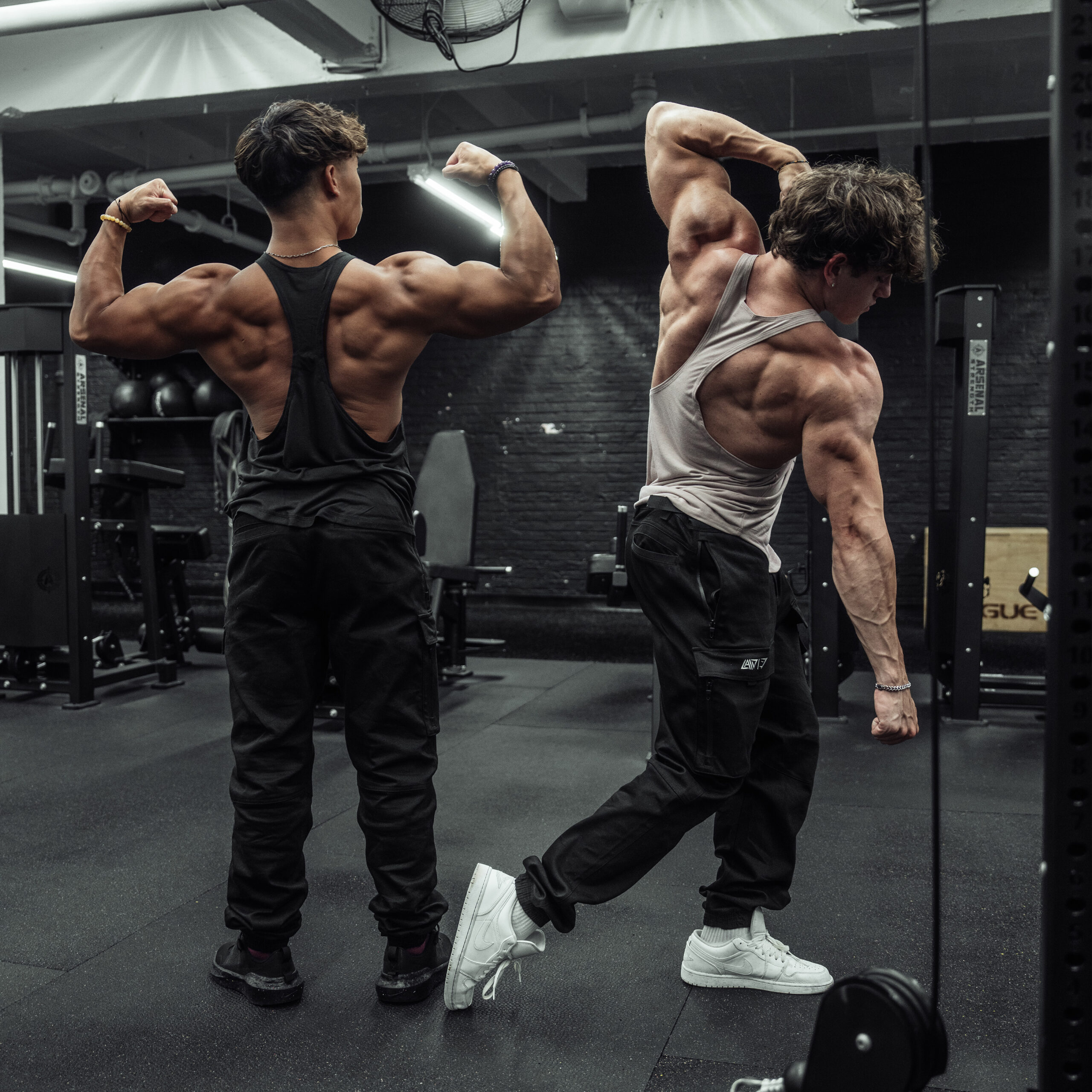
Looking to enhance your posture and build stronger shoulders? Discover the best rear delt routines to achieve a balanced and sculpted upper body.
What Are Rear Delts and Why Do They Matter?
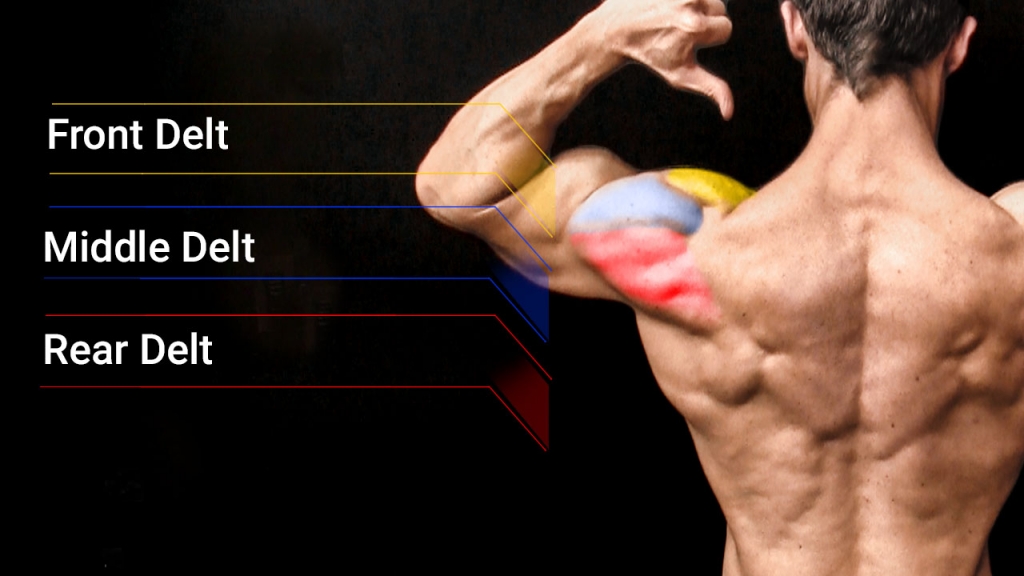
You’ll find your posterior deltoid muscles (your rear delts) on your back, running from the top of each arm to the base of each shoulder blade. Along with your traps, rhomboids, and retractors, they are the crucial muscles that keep your shoulders pulled back and your posture strong and confident.
In our modern lives, we spend hours hunched over desks and phones, which shortens our chest muscles and weakens our back muscles. This leads to the common “computer hunch.” Training your rear delts is the direct antidote to this problem.
The Benefits of a Strong Rear Delt Workout
Focusing on this often-neglected muscle group provides massive benefits beyond just looks:
- Improved Posture: This is the number one benefit. Strong rear delts actively pull your shoulders back, counteracting rounded shoulders and giving you a taller, more confident stance.
- Injury Prevention: A balanced shoulder joint is a stable one. Weak rear delts are a common cause of shoulder impingement and rotator cuff injuries. Strengthening them protects the entire joint.
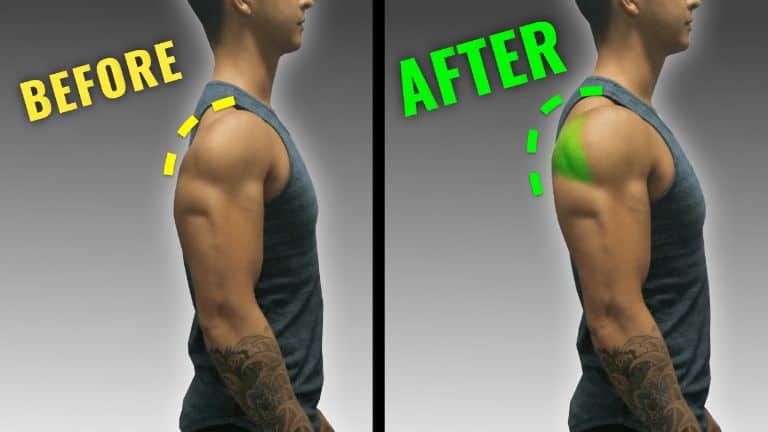
- Enhanced Aesthetics: Well-developed rear delts create a 3D, “capped” look for the shoulder. They add thickness and width to your upper back, contributing to the classic V-taper physique.
- Better Lifts: A stable shoulder provides a stronger platform for all your pressing movements (like the bench press) and is essential for all pulling movements (like rows and pull-ups).
You want that powerful posture? Well, as Britney said, “You better work!” We’ve rounded up the best back-and-shoulder workouts to build into your regular exercise routine.

11 Best Rear Delt Exercises
Here are the top exercises to isolate and build your posterior deltoids.
1 – Barbell Bent-Over Rows

These rows won’t only do wonders for your rear delts; they’ll also boost strength and stability throughout your whole body.
You’ll Need:
- A loaded barbell
How to Do It:
-
- With your hands shoulder-width apart, grip the bar with your palms facing you (an overhand grip).
- Bend your knees and tilt your torso forwards, hinging at the hips.
- Your back should be kept straight, ideally parallel to the ground.
- Steadily lift the barbell up to your sternum, squeezing your shoulder blades together.
- Hold for a moment at the top.
- Steadily lower the barbell back to the starting position.
- Repeat for 6 to 12 reps.
2 – Bodyweight Stability Ball Cobras

This gentle introductory stretch develops your delts while also keeping them flexible and supple. A solid warmup or activation exercise.
You’ll Need:
- A stability ball
- Two light dumbbells (optional)
How to Do It:
-
- Get onto your stability ball, facing down.
- Stick your legs out behind you to hold your weight on your toes. Keep your face down, towards the floor.
- Extend your arms forward. If using dumbbells, grip one in each hand. If not, keep your palms facing the floor.
- Bring your arms out to your sides and then behind you with your thumbs pointing up (a “T” shape, then an “I” shape).
- As your arms lift, allow your chest to raise up as well. Your head should be facing forwards once you reach the full stretch.
- Hold for a moment, then steadily return to the starting position.
- Repeat for 10 to 15 reps.
3 – Dumbbell Arnold Presses

Get to the choppah! This classic shoulder exercise, named after the Terminator himself, hits all three heads of the deltoid, including the rear delts, during the rotation.
You’ll Need:
- Two dumbbells
How to Do It:
-
- Begin standing or seated with a dumbbell in each hand, feet at hip width.
- Curl the weights inward until they’re at shoulder level, with your palms facing inwards towards your face.
- Keep your spine aligned and engage your core.
- Lift the weights as you rotate your arms, so your palms are facing forwards as your arms fully extend upwards.
- Hold for a moment at the top.
- Reverse the motion, rotating your palms back as you lower the weights.
- Repeat for 8-12 reps.
4 – Dumbbell Reverse Flys
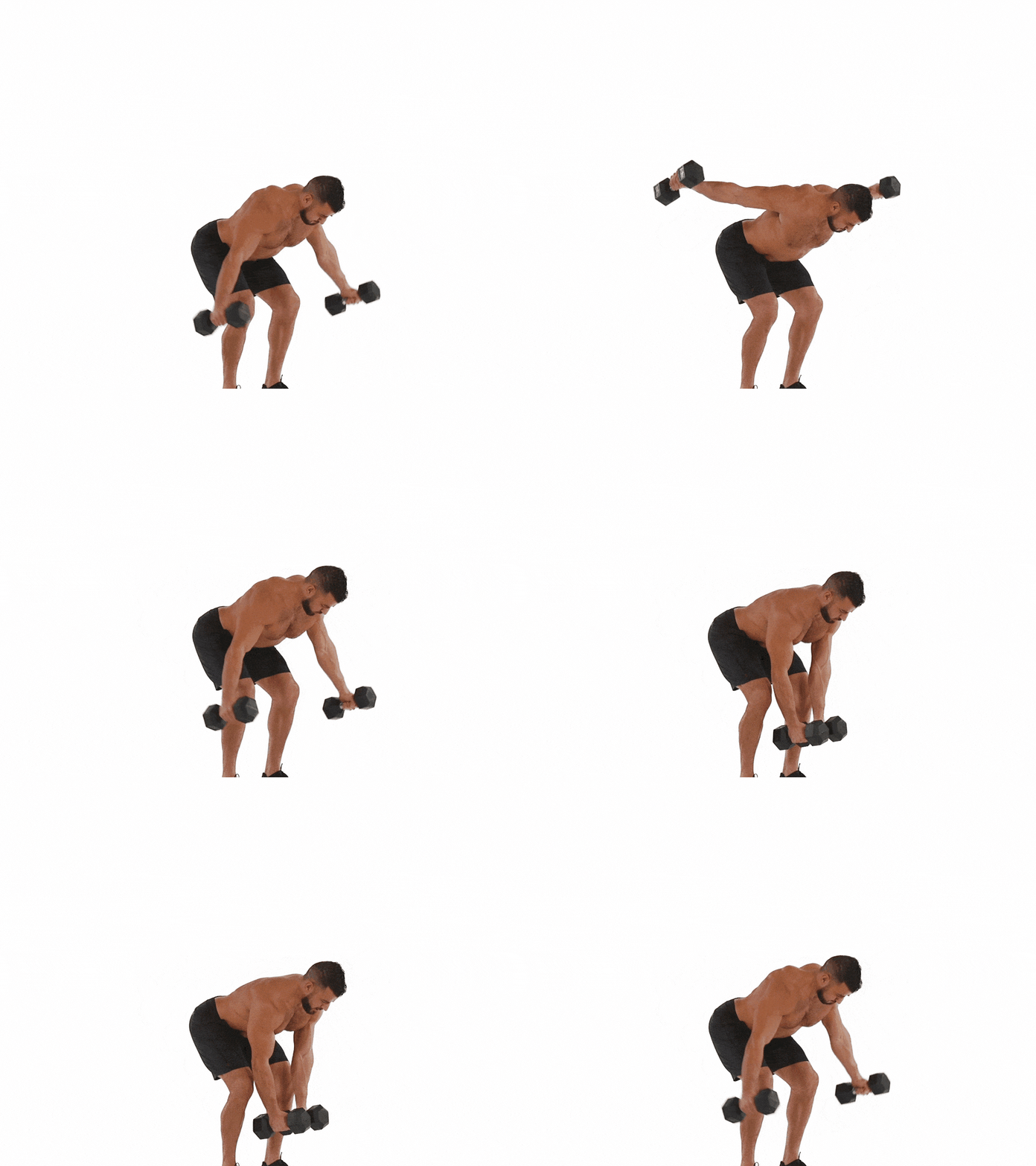
This is a classic isolation exercise to activate these often-neglected muscles. Form is everything here.
You’ll Need:
- Two dumbbells
How to Do It:
-
- Start with a dumbbell in each hand and your feet shoulder-width apart.
- Bend forwards, hinging from the waist and keeping your hips pushed back.
- Once your torso is parallel with the floor, let your hands hang down, still gripping your dumbbells with palms facing inwards.
- Engage your core and maintain a flat back.
- Raise your arms out sideways to shoulder level, keeping a slight bend in your elbows (like you’re hugging a tree).
- Squeeze your shoulder blades together at the top.
- Hold for a moment, then steadily return to the starting position.
- Repeat for 12 to 15 reps.
5 – Incline Dumbbell Y Raises
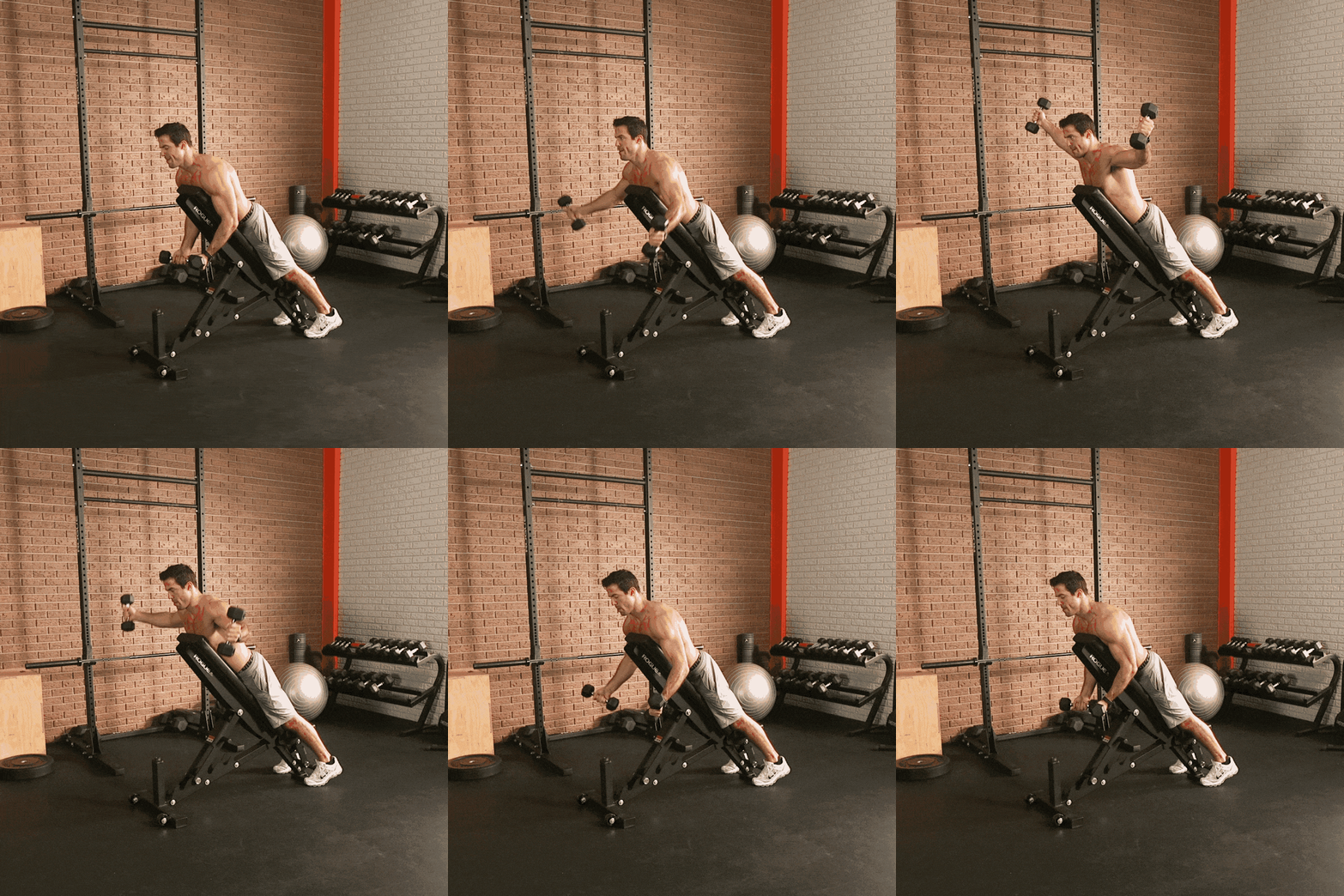
These rear delt exercises also activate your lower traps and forearms. A versatile addition to your regular workout schedule.
You’ll Need:
- Bench raised to 45 degrees
- Two dumbbells
How to Do It:
- Lie with your stomach pressed into the bench.
- Stick your feet out backwards to take your weight on your toes.
- Align your hands beneath your shoulders, gripping your weights with palms facing inwards.
- Lift the weights and raise your arms up and out into a “Y” shape (at a 45-degree angle from your body).
- As you reach full extension, engage your core and pull your shoulder blades together.
- Hold for a moment, then steadily return to the starting position.
- Repeat for 12 to 15 reps.
Pro Tip: Beginners are better off doing Y raises with just their bodyweight (no dumbbells). Once you increase your stamina, you can always add some weights into the mix.
6 – Incline Rear Delt Dumbbell Rows
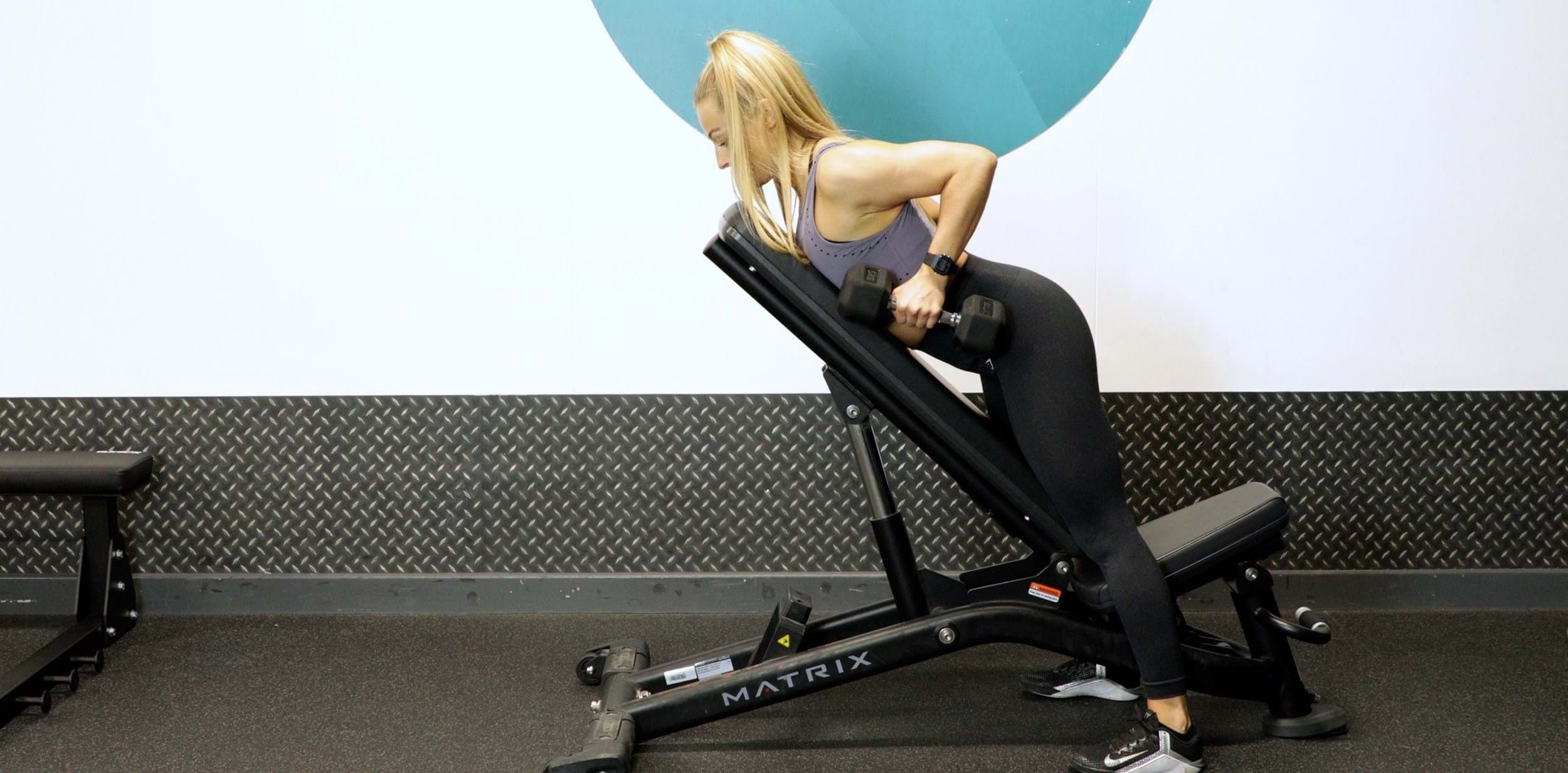
Using the same 45-degree workout bench, this row variation emphasizes the rear delts and upper back. A solid stability builder.
You’ll Need:
- Bench raised to 45 degrees
- Two dumbbells
How to Do It:
-
- Lie facing forward on the bench, neck and head resting above its back.
- Support your weight on your toes by stretching your legs out behind you.
- Grip the dumbbells in each hand, letting them hang with palms facing each other.
- Pull the dumbbells up, flaring your elbows out to the sides (this is key) until your elbows raise above your shoulders.
- Engage your shoulder and back muscles as you reach the full stretch.
- Hold for a moment, then steadily return to start.
- Repeat for 12 to 15 reps.
7 – Inverted Rows

A delt-friendly spin on the pull-up. It’s important to focus on perfect form here for maximum activation.
You’ll Need:
- A bar racked at waist height (in a power rack or Smith machine)
How to Do It:
-
- Start out lying on your back beneath the racked bar.
- Reach up and grip the bar with hands slightly wider than shoulder-width. Use an overhand grip (palms facing away).
- Let yourself hang from the bar with your body in a straight line from heels to head. Your hands should be aligned above your shoulders.
- Pull yourself up until your chest touches the bar. Keep your body rigid like a plank.
- Hold for a moment, then steadily lower yourself.
- Repeat for 10 to 15 reps.
8 – Reverse Pec Deck Flys
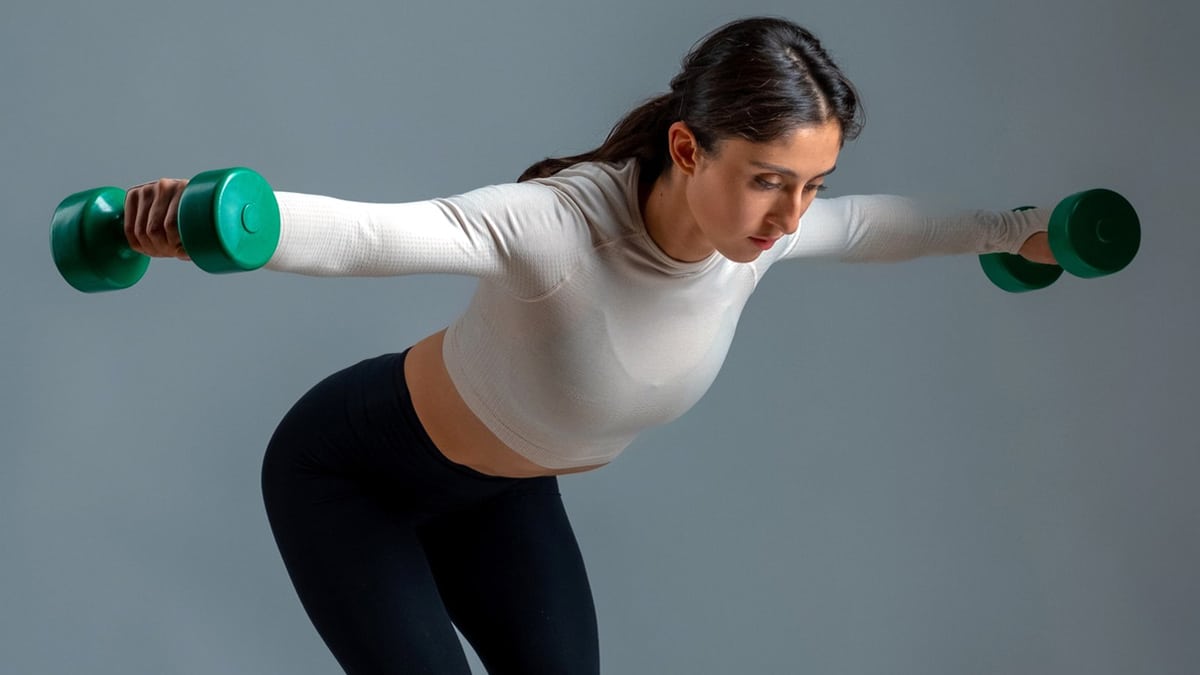
Here’s a machine-based workout you can use to really push yourself. Your rear delts, and your upper back in general, will thank you later.
You’ll Need:
- A pec deck resistance machine (with reverse fly handles)
How to Do It:
-
- Get on the machine, facing it with your stomach touching the pad.
- Keep your arms parallel with the floor as you grip the handles.
- Focus on engaging your back muscles and squeezing your shoulder blades together as you push the handles backwards.
- Hold for a moment before steadily returning to the start position, controlling the negative.
- Repeat for 15 to 20 reps.
9 – Rope (or Resistance Band) Face Pulls
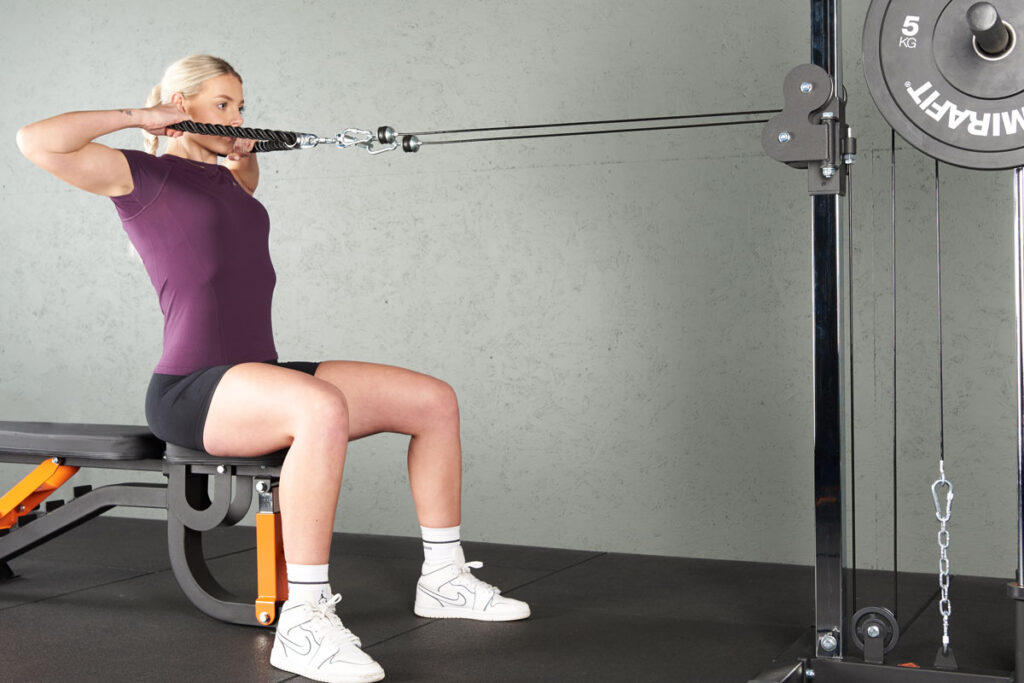
This is one of the best all-around exercises for shoulder health and rear delt development. Make sure your anchor is at about head height.
You’ll Need:
- A resistance band or a cable machine with a rope attachment
How to Do It:
-
- Grip the rope attachment with an overhand grip, thumbs facing you.
- Take a step backward until you feel the cable tensing.
- Align your back straight, keep your elbows high, and pull the band towards your face (aiming for your nose/forehead).
- As you pull, externally rotate your shoulders (so your knuckles face the ceiling at the end).
- Steadily return to the start position.
- Repeat for 12 to 15 reps.
10 – Seated Rear Dumbbell Lateral Raises
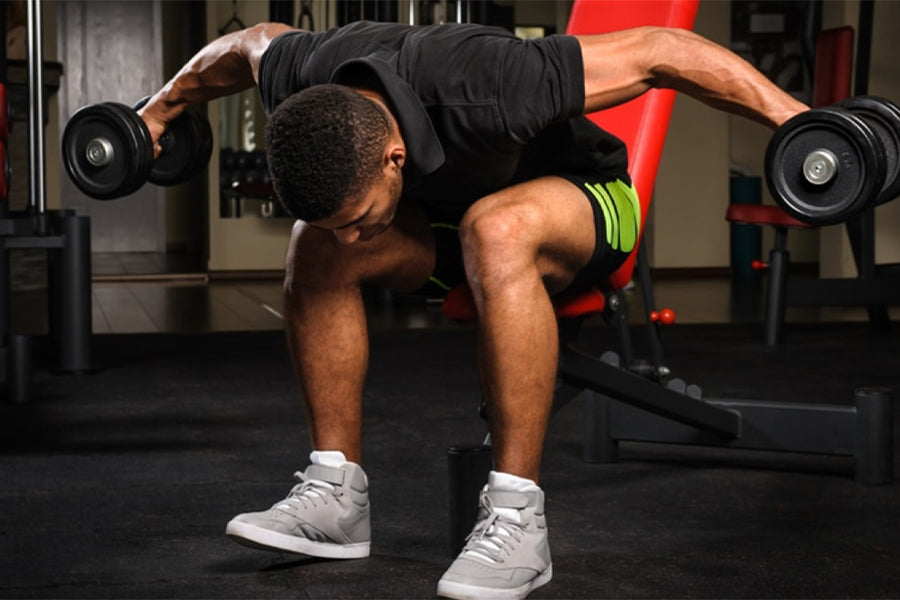
Sitting down takes your legs out of the movement and puts this move’s focus entirely on your rear delts for even better toning and strengthening.
You’ll Need:
- Two dumbbells
- A chair or bench
How to Do It:
-
- Sit on the edge of a bench with your feet apart. Let the weights hang by your legs.
- Tilt your torso forwards until your chest is close to your knees.
- Lift the dumbbells outwards to your sides, with palms facing inwards and a slight bend in your elbows.
- Squeeze your rear delts at the top.
- Hold for a moment with your arms at full extension.
- Steadily return to start.
- Repeat for 12 to 15 reps.
11 – Y-T-I Dumbbell Raises
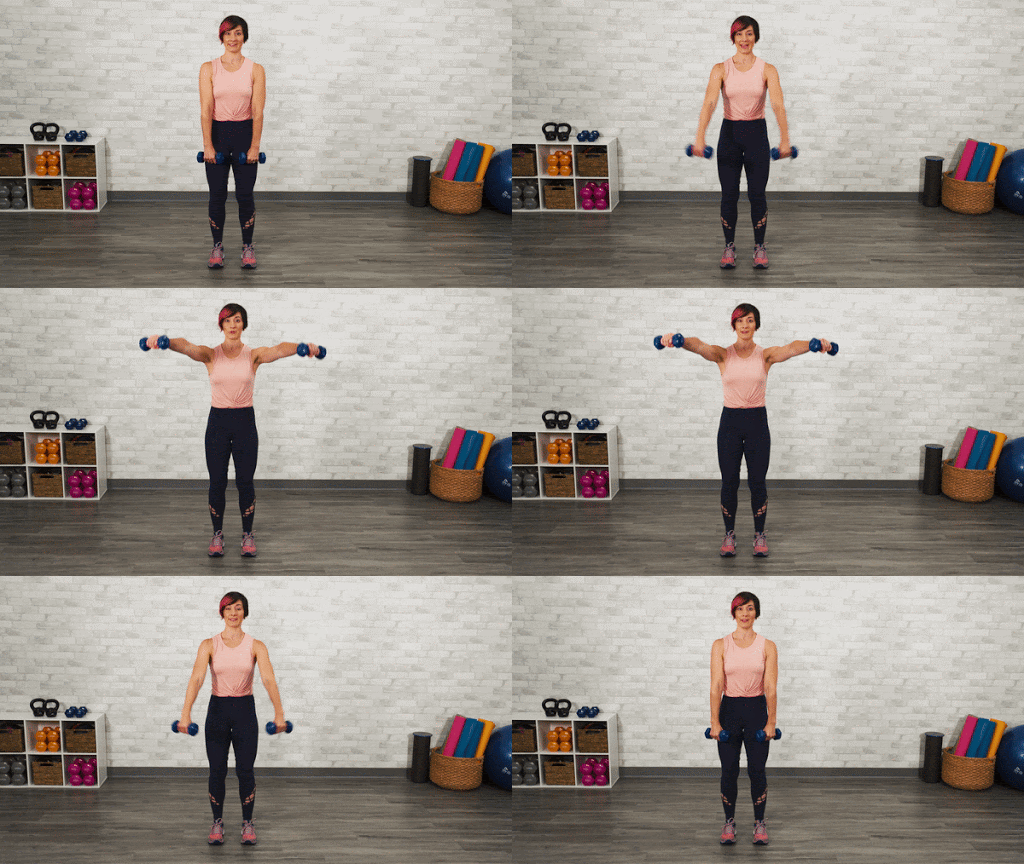
Combining weights with the stability ball makes for a solid intermediate challenge. An outstanding inclusion in any posture-focused workout.
You’ll Need:
- Two light dumbbells
- A stability ball
How to Do It:
-
- Lie face down on your stability ball, gripping a dumbbell in each hand with your palms facing each other.
- Steady yourself by taking your weight onto your toes.
- With your body aligned, lift the dumbbells until your arms make a Y-shape at 45 degrees. Hold, then lower.
- Lift the dumbbells again, this time out to your sides to form a T-shape with palms facing down. Hold, then lower.
- Lift the dumbbells up so your arms make an I-shape straight ahead of you, palms facing each other. Hold, then lower.
- This Y-T-I sequence counts as one rep.
- Repeat for 10 to 12 reps.
✅ Pro-Tips for Maximum Rear Delt Gains
Just doing the exercises isn’t enough. To truly target this small muscle group and avoid injury, keep these tips in mind:
- Mind-Muscle Connection: The rear delts are small. You must focus intently on squeezing the muscle to move the weight. Don’t just swing your arms; your traps and lats will take over.
- Go Lighter, Perfect Your Form: Leave your ego at the door. The rear delts respond better to lighter weight, higher reps (12-20 rep range), and perfect form.
- Control the Negative: Don’t let the weights just drop. Control the eccentric (lowering) phase of each lift to maximize muscle engagement.
- Train Them Often: Because they are a smaller muscle group, rear delts recover quickly and can be trained 2-3 times per week. A great way to incorporate them is at the end of your ‘Push’ day or as part of your ‘Pull’ or ‘Back’ day.
The Takeaway
Properly working out your back and shoulders nets you a bunch of day-to-day health benefits. The rear delts contribute enormously to shoulder flexion, extension, and external rotation. This makes everyday movements like picking stuff up, reaching into the back seat, or pulling open a heavy door easier.
Strengthening your delts is also a good way to guard against injury. A lot of workout routines fail to activate the back muscles—don’t make that same mistake. A balanced approach to exercise will net you long-term benefits that keep paying off in both appearance and function.