Exercise Guide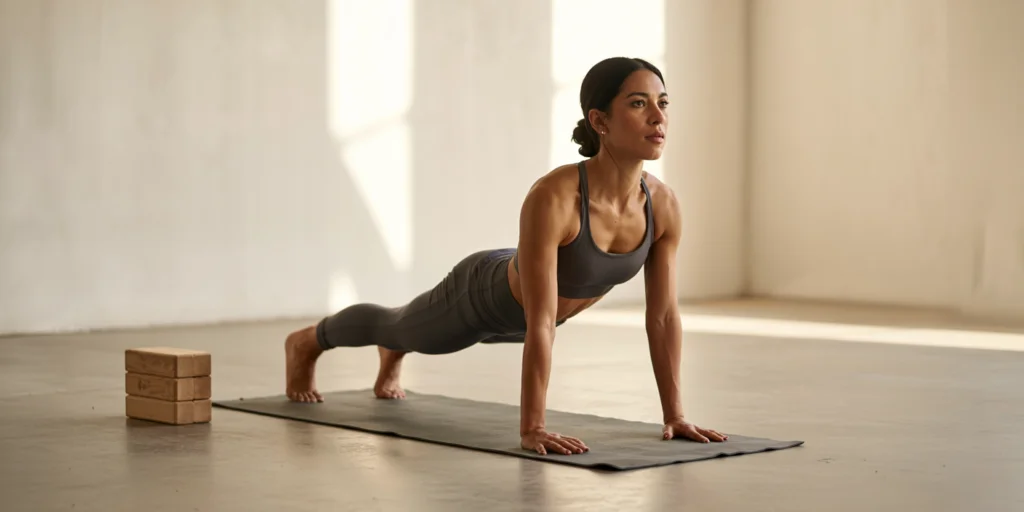
Yoga isn’t just about flexibility—it’s also one of the most effective ways to build strength, stability, and body control without heavy equipment. By practicing the right yoga poses consistently, you can strengthen your arms, legs, core, and back while also improving posture, balance, and endurance. Unlike traditional strength training, yoga uses bodyweight resistance and controlled movements to engage multiple muscle groups at once.
This guide covers 7 of the most effective yoga poses for full-body strength, perfect for beginners and experienced yogis alike.
The 7 Strength-Building Poses
1 – Plank Pose (Phalakasana)
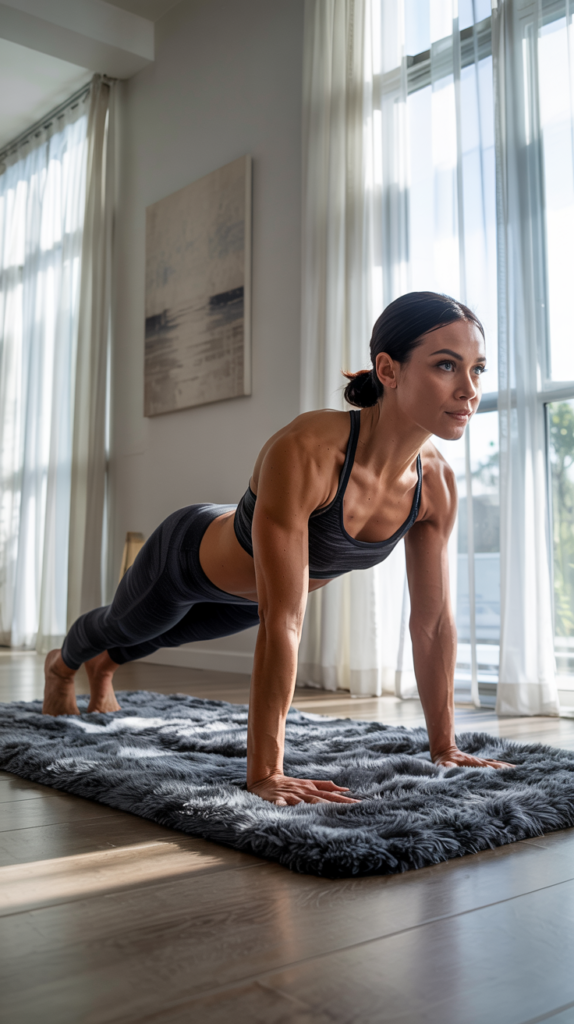
Why it works:
Plank is a powerhouse isometric exercise. It builds foundational strength in the entire core (rectus abdominis, obliques, and transverse abdominis), while also strengthening the shoulders, chest, and glutes. It teaches full-body engagement and stabilization.
How to do it:
- Start on all fours. Step your feet back one at a time, straightening your legs.
- Your hands should be directly under your shoulders, and your body should form a straight line from head to heels.
- Engage your core by pulling your belly button toward your spine. Squeeze your glutes and quads to keep your hips from sagging.
- Keep your neck neutral, gazing at the floor just ahead of your hands.
- Hold for 20-60 seconds, maintaining steady breathing.
Common Mistakes: Avoid letting your hips drop or arching your back, as this strains the lower back. If it’s too difficult, try a Forearm Plank or a Knee Plank.
2 – Chair Pose (Utkatasana)
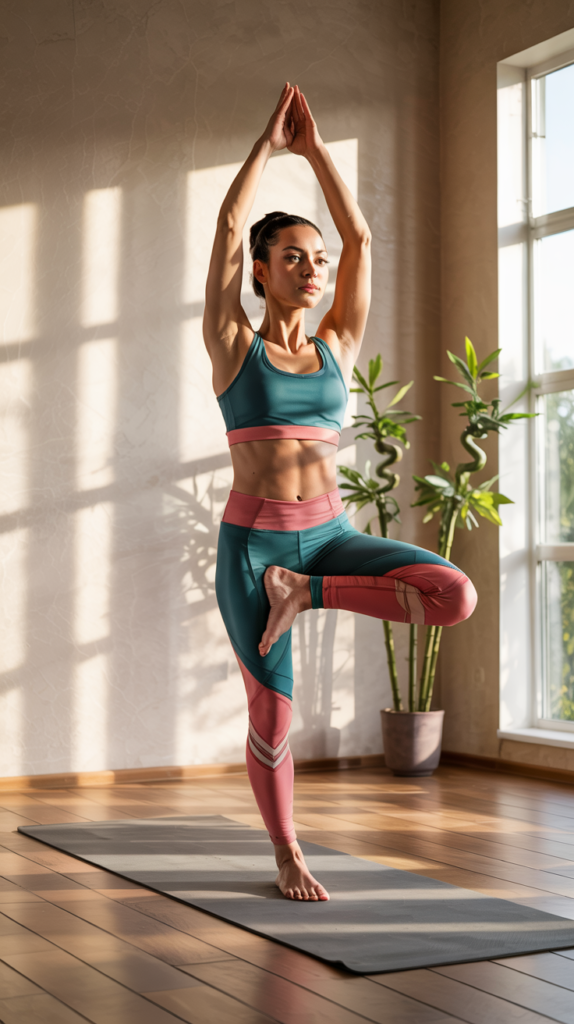
Why it works:
This powerful pose is essentially an isometric squat. It builds significant endurance and strength in the quads and glutes. It also engages the back muscles to keep the spine straight and the core to maintain balance.
How to do it:
- Stand tall with your feet together or hip-width apart (Mountain Pose).
- Inhale and raise your arms overhead, palms facing each other.
- Exhale as you bend your knees and sit your hips back, as if sitting in an invisible chair.
- Keep your chest lifted and your weight primarily in your heels (you should be able to wiggle your toes).
- Hold for 3-5 deep breaths (20-30 seconds), sinking deeper with each exhale.
Beginner Tip: Don’t sink too low at first. Only go as far as you can while keeping your back straight and chest lifted. You can also practice with your back against a wall for support.
3 – Boat Pose (Navasana)
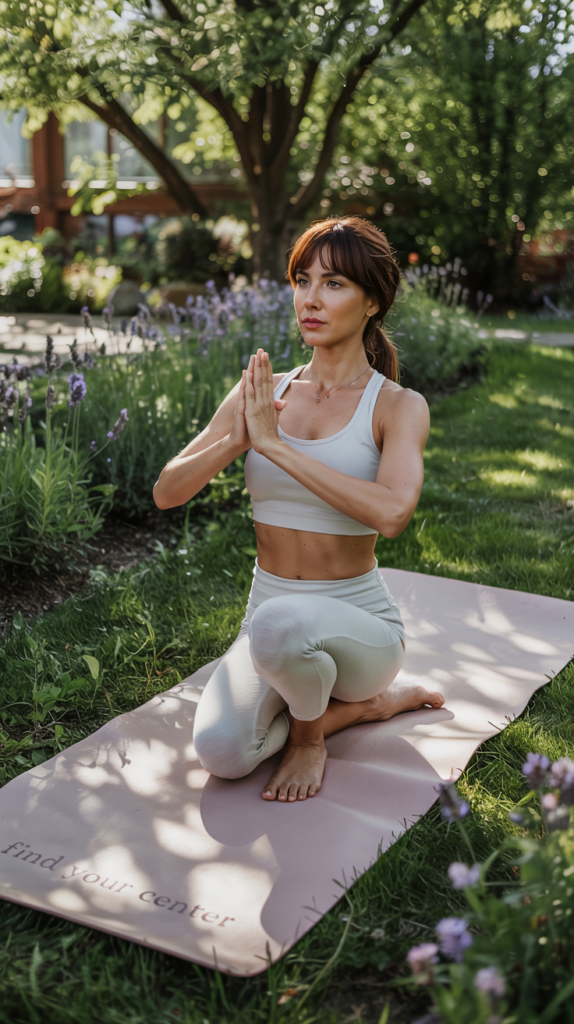
Why it works:
Boat Pose is a fantastic core-strengthening move. It targets the rectus abdominis (the “six-pack” muscles) and the deep hip flexors while challenging your balance and breath control.
How to do it:
- Sit on your mat with your knees bent and feet flat on the floor.
- Place your hands lightly behind your thighs.
- Lean back slightly, keeping your back straight and chest lifted. Engage your core and lift your feet off the floor until your shins are parallel to the ground.
- Once balanced, extend your arms forward, parallel to the floor.
- Hold for 3-5 breaths (20-30 seconds), keeping your core tight.
Beginner Tip: Keep your knees bent (as described above). To advance, straighten your legs to form a “V” shape with your body. If you feel your back rounding, hold behind your thighs for support.
4 – Warrior III (Virabhadrasana III)
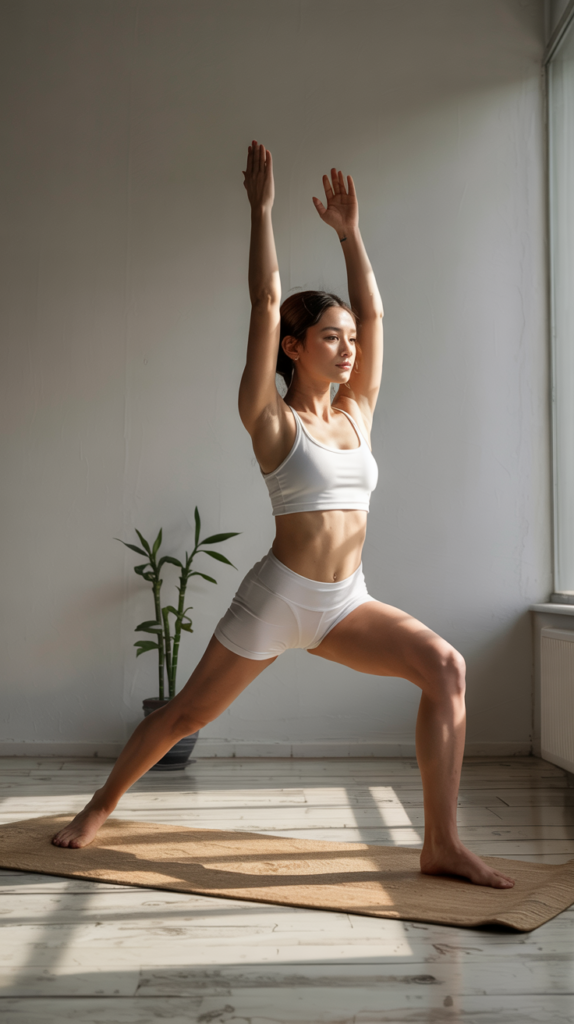
[Image of a person balancing in Warrior III pose]
Why it works:
This is a full-body balancing pose. It builds incredible strength in the standing leg (glute and hamstring), strengthens the entire core to keep your body stable, and engages the back and shoulder muscles.
How to do it:
- Start standing tall. Shift your weight onto your right foot.
- Begin to hinge forward at your right hip, extending your left leg straight back behind you.
- Continue hinging until your torso and left leg are parallel to the floor.
- Extend your arms forward for the full pose. Keep your core engaged and your hips level (try not to let the left hip open up).
- Hold for 3-5 breaths, then slowly return to standing and switch sides.
Beginner Tip: Place your hands on yoga blocks or a chair in front of you for balance. You can also keep your hands at your heart center or extended back like airplane wings.
5 – Side Plank (Vasisthasana)
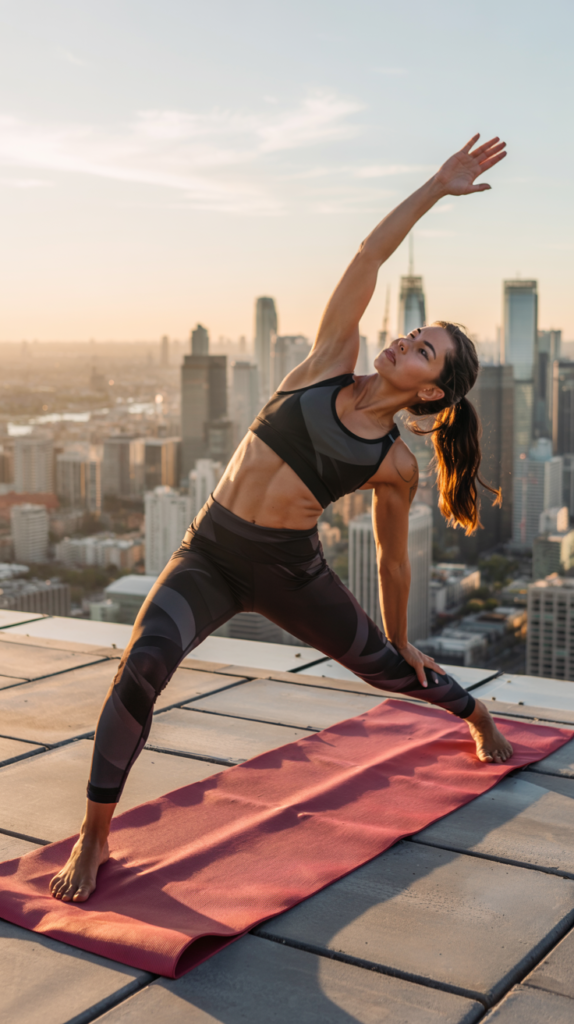
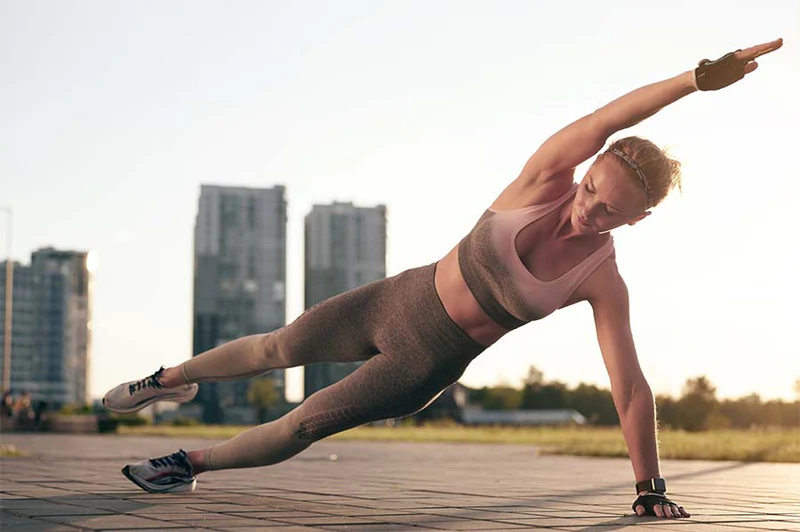
[Image of a person holding a strong Side Plank pose]
Why it works:
This variation of plank intensely works the obliques (side abs), which are crucial for core stability and preventing back pain. It also builds strength in the shoulders, wrists, and outer hips (gluteus medius).
How to do it:
- Start in a high Plank Pose (on your hands).
- Shift your weight onto your right hand and the outside edge of your right foot.
- Stack your left foot on top of your right. Lift your hips high.
- Extend your left arm straight up toward the ceiling, opening your chest.
- Hold for 3-5 breaths (15-30 seconds), then return to center and repeat on the other side.
Beginner Tip: Modify by dropping your bottom knee to the mat for extra support. You can also do this on your forearm to reduce wrist pressure.
6 – Bridge Pose (Setu Bandhasana)
Why it works:
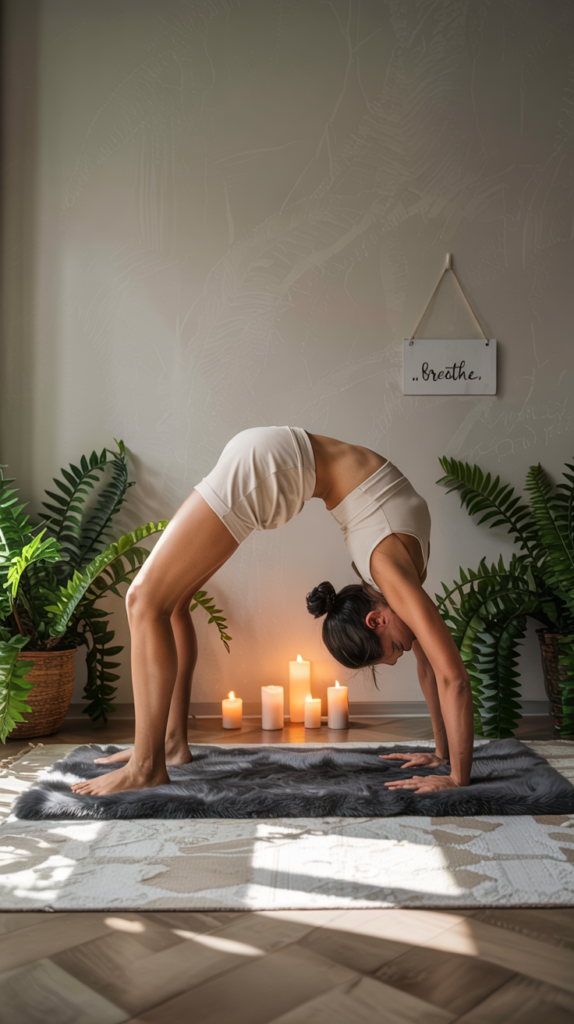
Bridge Pose is a dynamic backbend that builds powerful strength in the glutes, hamstrings, and spine. It also opens up the hips and chest, making it a great counter-pose for long periods of sitting.
How to do it:
- Lie on your back with your knees bent, feet flat on the mat, and hip-width apart. Your arms should be resting by your sides.
- Press your feet and arms into the mat as you exhale and lift your hips toward the ceiling.
- Keep your thighs parallel. For a deeper stretch, you can interlace your fingers on the mat beneath your hips.
- Hold for 3-5 breaths, then slowly lower your spine back to the mat.
Beginner Tip: Place a yoga block between your knees to ensure your thighs stay parallel and to activate your inner thighs.
7 – Dolphin Pose (Ardha Pincha Mayurasana)
Why it works:
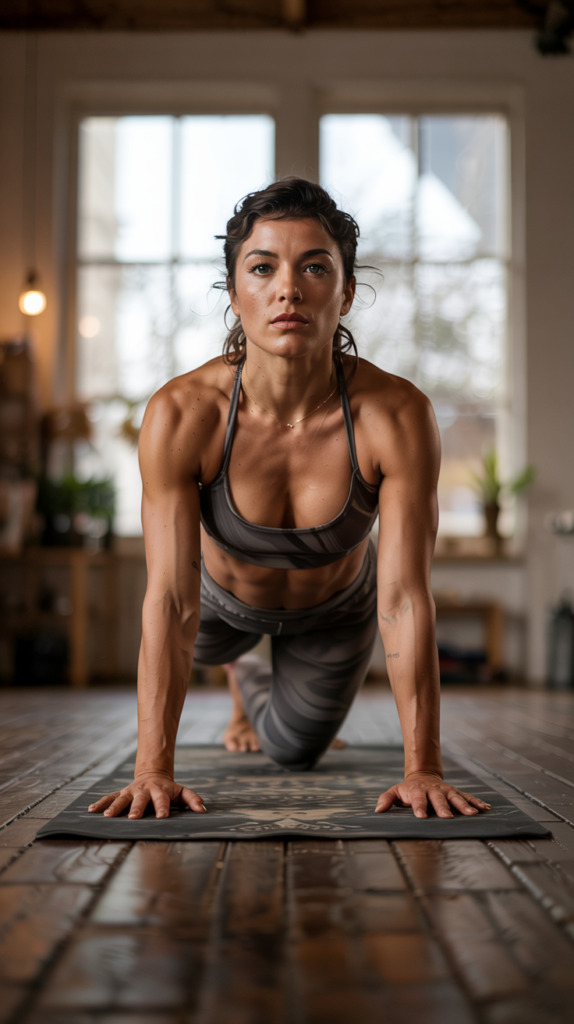
Dolphin Pose is a strength-building posture that tests both patience and shoulders. It is an incredible pose for improving shoulder stability, opening tight hamstrings, and building the core and upper back strength needed for more advanced inversions.
How to do it:
- Start on all fours. Lower your forearms to the mat, ensuring your elbows are directly under your shoulders.
- Keep your forearms parallel or clasp your hands.
- Tuck your toes under and lift your hips toward the ceiling, straightening your legs as much as you can.
- Keep your head between your upper arms without letting it rest on the floor. Your body forms an inverted “V”.
- Press your heels gently toward the mat to feel a hamstring stretch.
- Hold for 3-5 deep breaths.
Common Mistakes: Avoid collapsing into the shoulders or rounding the spine. Keep your shoulders lifted away from your ears. If your hamstrings are tight, keep a generous bend in your knees.

Frequently Asked Questions (FAQs)
Q1: How often should I practice these yoga poses to build strength?
For best results, aim to practice these poses 3-5 times per week. Consistency is key. Listen to your body and take rest days when needed to allow your muscles to recover and grow stronger.
Q2: How long should I hold each pose?
For beginners, holding a strength pose for 3-5 deep breaths (about 20-30 seconds) is a great start. As you build strength, you can gradually work your way up to one minute or longer, always prioritizing stable form over duration.
Q3: Can yoga build muscle like weightlifting?
Yoga builds functional strength and lean muscle by using your own bodyweight as resistance. It excels at improving endurance, stability, and toning. While it won’t build the same “bulk” as heavy weightlifting, it creates a strong, defined, and resilient physique.
Q4: Can I do these poses if I’m a beginner?
Yes, absolutely. All these poses are beginner-friendly if you use the modifications provided (like using blocks, a wall, or bending your knees). Yoga is about your personal progress, not perfection.
Final Thoughts
Foundational yoga asanas like Plank, Chair, and Dolphin Pose are more than just physical exercises — they are tools for building strength, balance, and mindfulness. When practiced consistently, these 7 poses will enhance your posture, tone your entire body, and calm your mind. Remember, yoga isn’t about perfection; it’s about progress. Start where you are, listen to your body, and enjoy the journey of building a stronger, more powerful body.