Exercise Guide
You don’t have to be the Yoda of yoga to reap major mental health benefits. Yoga can be an amazing form of therapy for beginners, experts, and everyone in between. Here’s how yoga therapy can help you feel better inside and out.
What is Yoga Therapy?
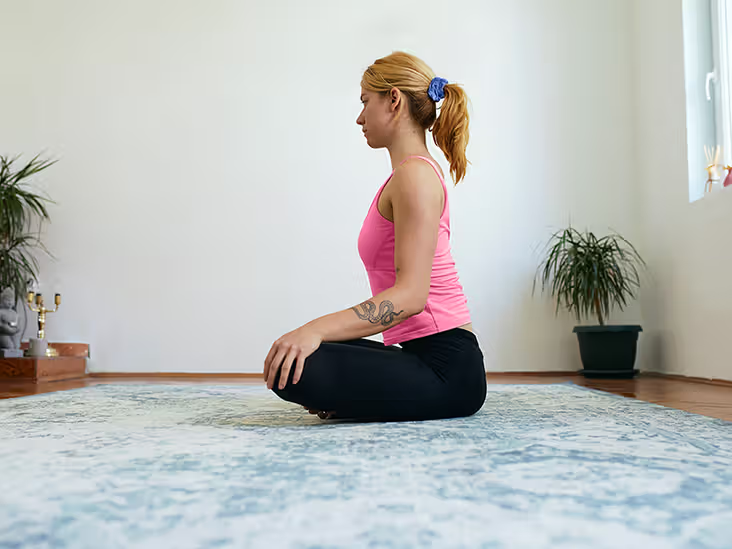
Yoga is pretty much the PB&J of workouts — it’s the perfect combo. The blend of exercise and meditation can help you exercise your body and mind at the same time.
- Exercise is a natural way to pump up the volume on your serotonin production, which some research suggests can help ease depression symptoms.
- Meditation can slow down your thoughts and clear your mind, and research suggests it has significant mental health benefits.
Yoga therapy uses the same tools as other forms of yoga. It just focuses more on each person’s individual needs. The practice can help address your unique physical, emotional, or mental concerns.
Yoga therapy can help with:
- mind-body connection
- overall well-being
- physical pain
- depression
- anxiety
- stress

Where can I do yoga therapy?
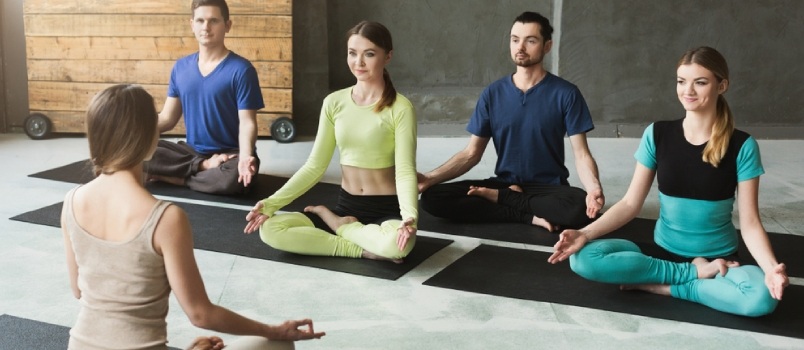
You can do yoga therapy solo or in a group setting. If an in-person sesh isn’t your thing, you can opt for virtual yoga or connect with a yoga therapist online. You can also check out yoga or meditation apps to see if they offer yoga therapy.
How is it different from regular yoga?
Traditional yoga and yoga therapy can both be super soothing and beneficial, but there are some big differences. It really comes down to individual results.
A traditional yoga instructor will focus on the methods and practices of yoga, and classes tend to be geared to a general audience. But in yoga therapy, the therapist will focus on your individual emotional and physical needs.
A yoga therapist will assess your needs before a session so they can optimize your experience. They’ll also go over various healing tools, such as:
- yoga postures
- guided energy work
- meditation techniques
- breath awareness and control
The therapist will also give you advice on how to practice on your own. “I’m a firm believer in patients leaving a session with a tangible intervention that they can practice on their own, making them feel empowered,” says certified yoga therapist Sadie Grossman.
What are the benefits of Yoga Therapy?
Stress reduction
Life is often a stress fest, and yoga therapy is here to help. A consistent practice can help you stay calm, focused, and positive. A small 2012 study of 72 “distressed” women found that those who practiced yoga once or twice per week for 3 months showed greater improvements in measures of stress and quality of life.
Anxiety relief
The calming sensations, focused breathing, and slow movements can help lower anxiety levels. A small 2009 study found that women referred to a yoga clinic for anxiety showed greater decreases in anxiety levels after 2 months of practice compared to a control group.
Improved eating habits
Meditation and yoga both encourage mindfulness, which can contribute to healthier eating habits. This is why yoga is often used in eating disorder recovery — it can help you have a healthier relationship with food and your body.
Better mood
Yoga therapy can help you nip bad vibes in the bud. It can help boost those endorphins and leave you feeling a heck of a lot better. A 2017 study found that certain yoga poses can increase energy and self-esteem.

Does yoga therapy help depression?
Depression can make anyone feel cut off and isolated. But remember: You are not alone. Studies suggest that yoga could help you feel better. Here’s how:
- Depression can take a toll on your energy level and ability to concentrate. Yoga might give you the boost you need to get back to business.
- Yoga can also help on a chemical level — it can decrease your levels of the stress hormone cortisol, which is also linked to depression.
Pro tip: Grossman suggests group sessions if you’re experiencing depression, since the group setting can help combat a sense of isolation.
Takeaway: Pros and Cons of Yoga Therapy
Yoga therapy can give your mental and physical health a major glow-up. Here’s a deep dive into all the pros and cons to help you decide if it’s right for you.
Pros:
- Helps you establish individual goals
- Friendly for all fitness levels
- Can improve overall health
- Works out your mind and body
- Can reduce stress and anxiety
- Can ease symptoms of depression
Cons:
- Not the right fit for everyone
- Might be challenging on a physical and emotional level
- Can be pricey (depending on the studio or therapist)
PSA: Yoga therapy might work best when combined with other forms of treatment, like medication or psychotherapy. It is not a cure-all.
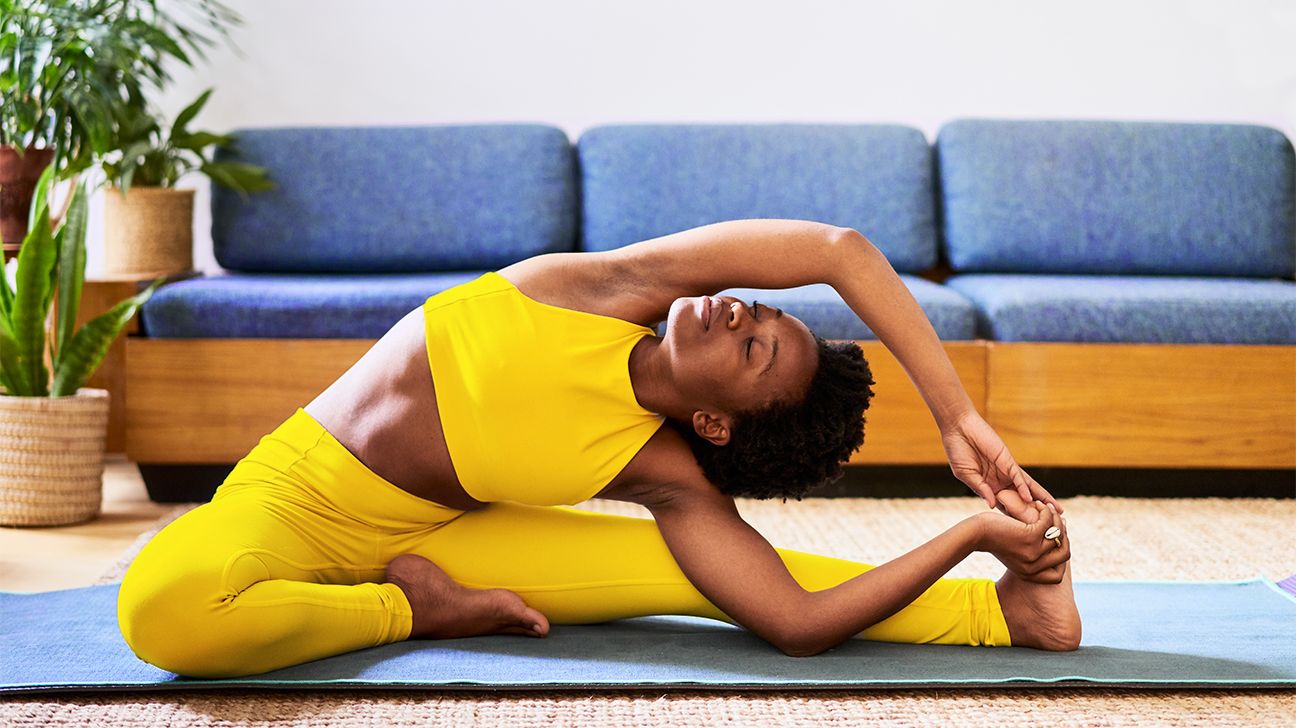
14 Incredible Health Benefits of Yoga
From head to toe, you’d be hard-pressed to find something yoga doesn’t improve. Focus on progress, not perfection. Curious about what some of those benefits are? We rounded up the reasons yoga is great for your health.
- A healthy spine: A 2011 study found yogis had stronger spines with less degenerative damage to discs.
- Focus and cognitive health: A 2015 research review suggests yoga can improve focus, processing speed, and cognitive function.
- More energy: A 2017 study found that even 2 minutes of yoga can boost energy and self-esteem.
- Weight loss: Yoga can help weight loss, likely due to its ability to reduce cortisol (a stress hormone).
- Better sleep: According to a survey of yogis, more than half say they sleep better thanks to the practice.
- Stronger bones: Yoga is low-impact but weight-bearing, helping to build or maintain bone density. A 10-year study used a 12-minute regimen to reverse bone loss.
- Better balance: The practice builds stronger feet and ankles and makes you more aware of your body, giving you more control over your balance.
- Relief for back and neck pain: Yoga has been shown to offer short-term relief for pain in both the back and neck.
- Healthy knees: Yoga has been shown to improve knee pain and stiffness in people suffering from osteoarthritis.
- A strong heart: A meta-analysis found “promising evidence” of yoga’s ability to boost heart health, helping improve BMI, blood pressure, and cholesterol.
- A groovin’ digestive tract: Possibly due to the brain-gut connection, yoga can impact digestion. One small study found it could help with chronic constipation.
- Ease depression: Yoga may also help boost your mood as part of a treatment plan.
- Maxin’ relaxin’ (Stress relief): Yoga helps combat stress by building resilience and teaching relaxation techniques. It can also lower your cortisol levels.
- Soothe anxiety: Yoga may ease anxiety symptoms, including performance anxiety.
30 Must-Know Yoga Poses for Beginners and Beyond
To help everyone from yoga newbies to experienced practitioners, we present a definitive guide to common yoga poses. Consider it your cheat sheet to finally mastering the asanas you’re likely to encounter in most classes.
Basic Yoga Poses
1 – Mountain Pose (Tadasana)
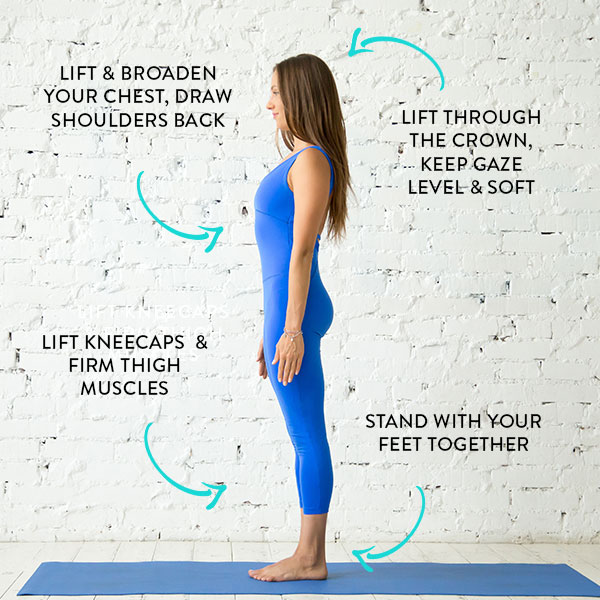
How to do it:
Stand with your feet together or hip-width apart. Ground down through the four corners of your feet. Roll your shoulders away from your ears, draw your shoulder blades down your back, and lift the crown of your head. Engage your thighs, draw your belly button in, and lengthen up through the spine. Turn your palms facing forward. Breathe easy.
The benefits:
It may seem like you’re just standing, but this is the blueprint for all other poses. It promotes balance and directs your attention to the present moment.
2 – Chair Pose (Utkatasana)
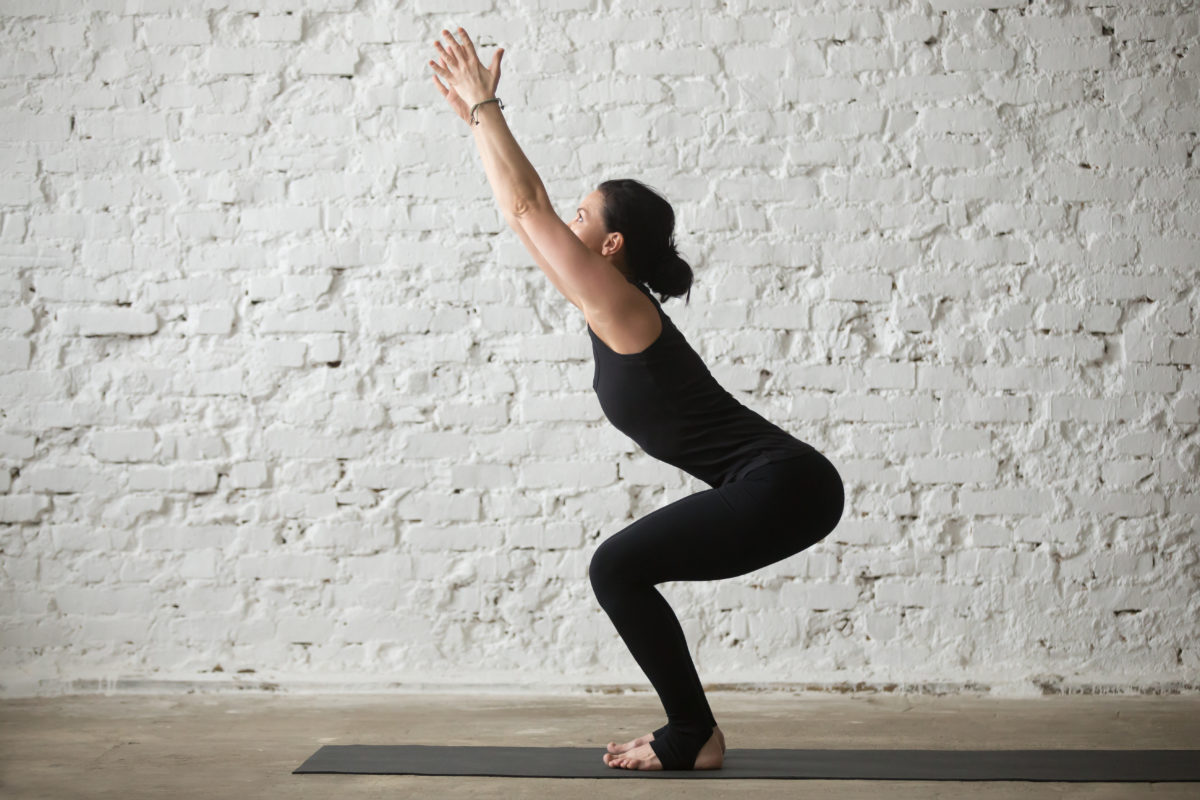
How to do it:
Start in Mountain Pose. As you inhale, raise your arms, spread your fingers, and reach up. As you exhale, sit back and down as if sitting into a chair. Shift your weight toward the heels and lengthen up through the spine. As you exhale, sit deeper into the pose.
The benefits:
This heating standing pose strengthens your legs, upper back, and shoulders. It also builds patience as your thighs work hard.
3 – Down Dog on a chair (Uttana shishosana – variation)

How to do it:
Place your hands on the back of a chair, shoulder-distance apart. Step your feet back until they align under your hips, creating a right angle with your body, spine parallel with the floor. Ground through your feet, lift through thighs, and reach your hips away from your hands to lengthen your torso.
The benefits:
This modification shares the benefits of Downward-Facing Dog (stretching hamstrings, opening shoulders) without putting all the weight on your upper body. It’s great for beginners.
4 – Downward-Facing Dog (Adho Mukha Svanasana)
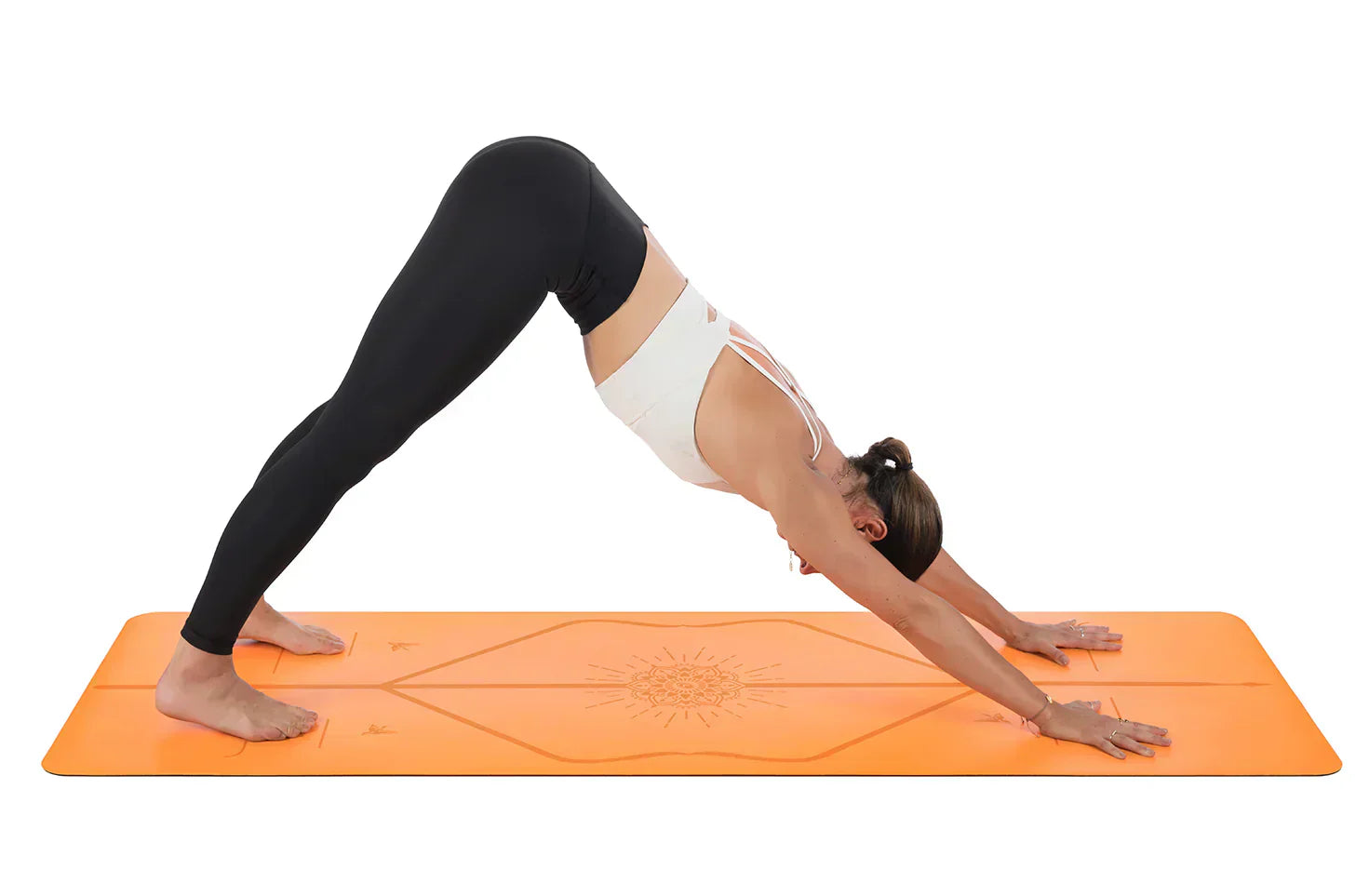
How to do it:
From all fours, walk your hands 6 inches in front of you. Tuck your toes and lift your hips up and back to lengthen your spine. If your hamstrings are tight, keep your knees bent. Spread your fingers wide, press into your hands, and rotate your arms so your biceps face each other.
The benefits:
This classic pose opens your shoulders, lengthens your spine, and stretches your hamstrings. The mild inversion creates a calming effect.
5 – Warrior II (Virabhadrasana II)

How to do it:
Stand with feet wide (3–4 feet). Turn your left foot out 90 degrees and your right heel out slightly. Line up your left heel with the arch of your right foot. Bend your left knee to a 90-degree angle, keeping it aligned with your second toe. On an inhale, bring arms to a T at shoulder height. Gaze over the front fingers.
The benefits:
This standing pose calms the mind, strengthens legs and ankles, and increases stamina.
6 – Triangle Pose (Trikonasana)
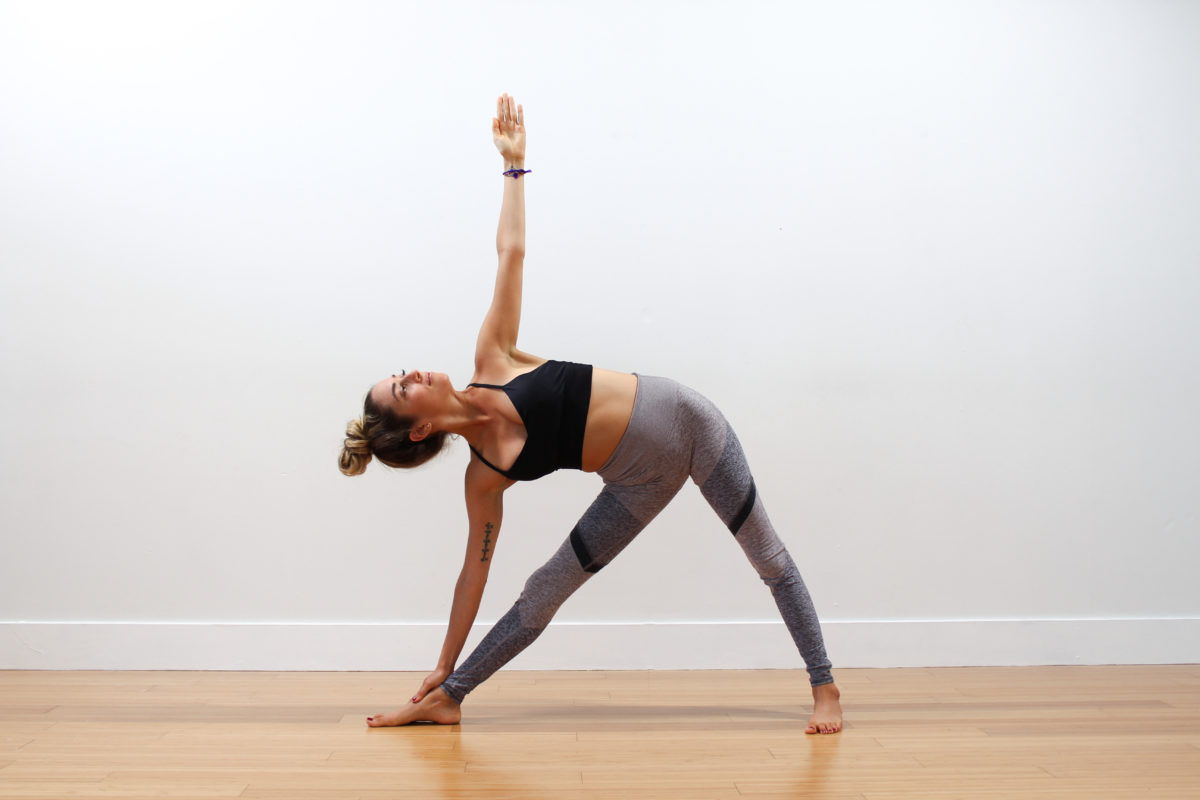
How to do it:
From a wide stance (like Warrior II but with a straight front leg), lift arms to a T. Reach forward with your front arm. When you can’t reach anymore, hinge at the front hip. Bring your front arm down to your shin, a block, or the ground. Lift your back arm up toward the sky. Gaze down or up at your lifted hand.
The benefits:
Promotes balance, stretches the hamstrings and inner thighs, and creates a feeling of expansion.
7 – Tree Pose (Vrksasana)
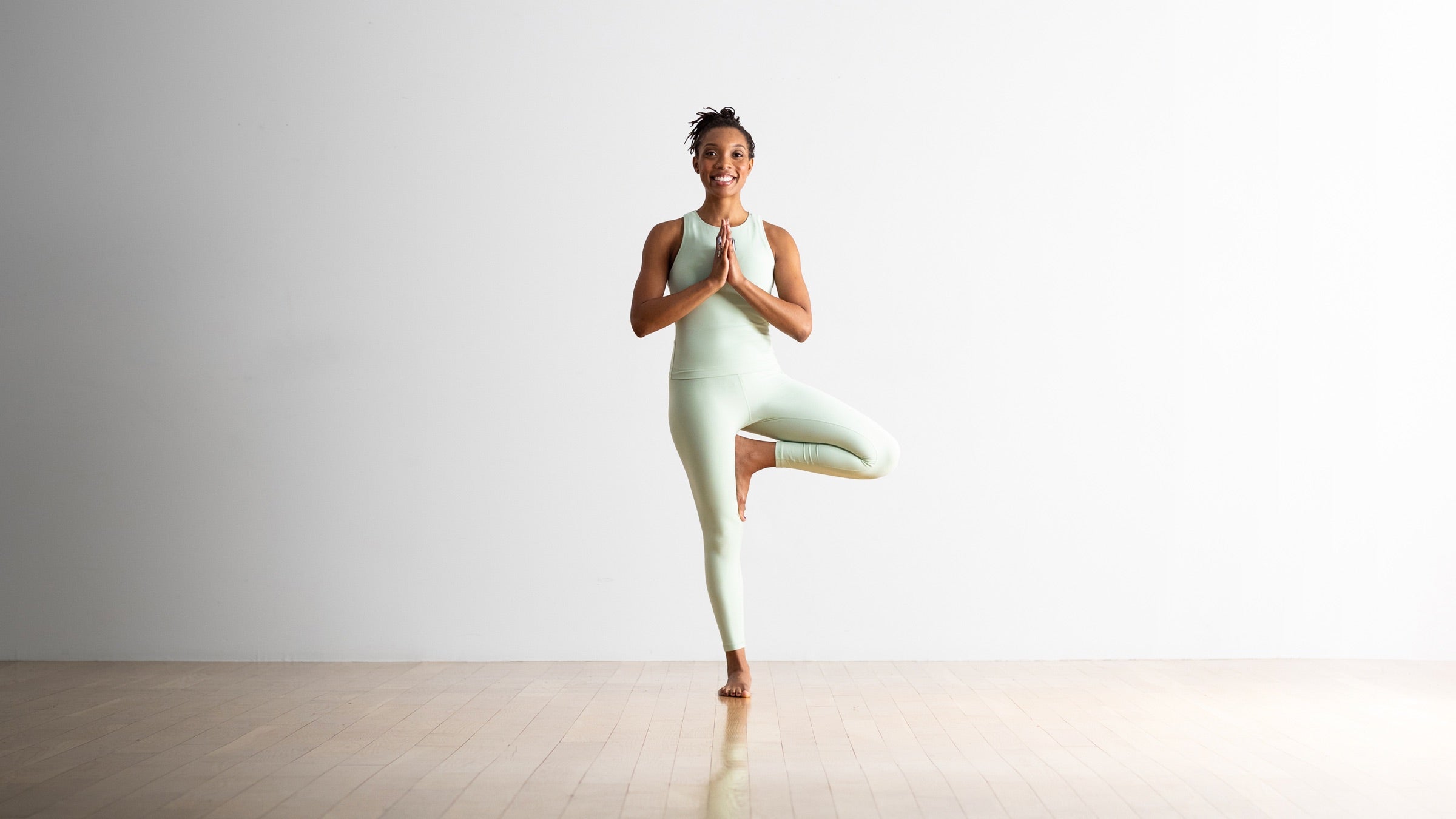
How to do it:
Start in Mountain Pose. Find a fixed point to stare at. Shift weight into your left foot. Using your hand, bring your right foot to your shin or inner thigh (avoid placing it directly on the knee). Bring your palms to touch in front of your heart. Lengthen through the crown of your head.
The benefits:
Improves concentration and balance by strengthening the arches of the feet and the outer hips.
8 – Bridge Pose (Setu Bandha Sarvangasana)
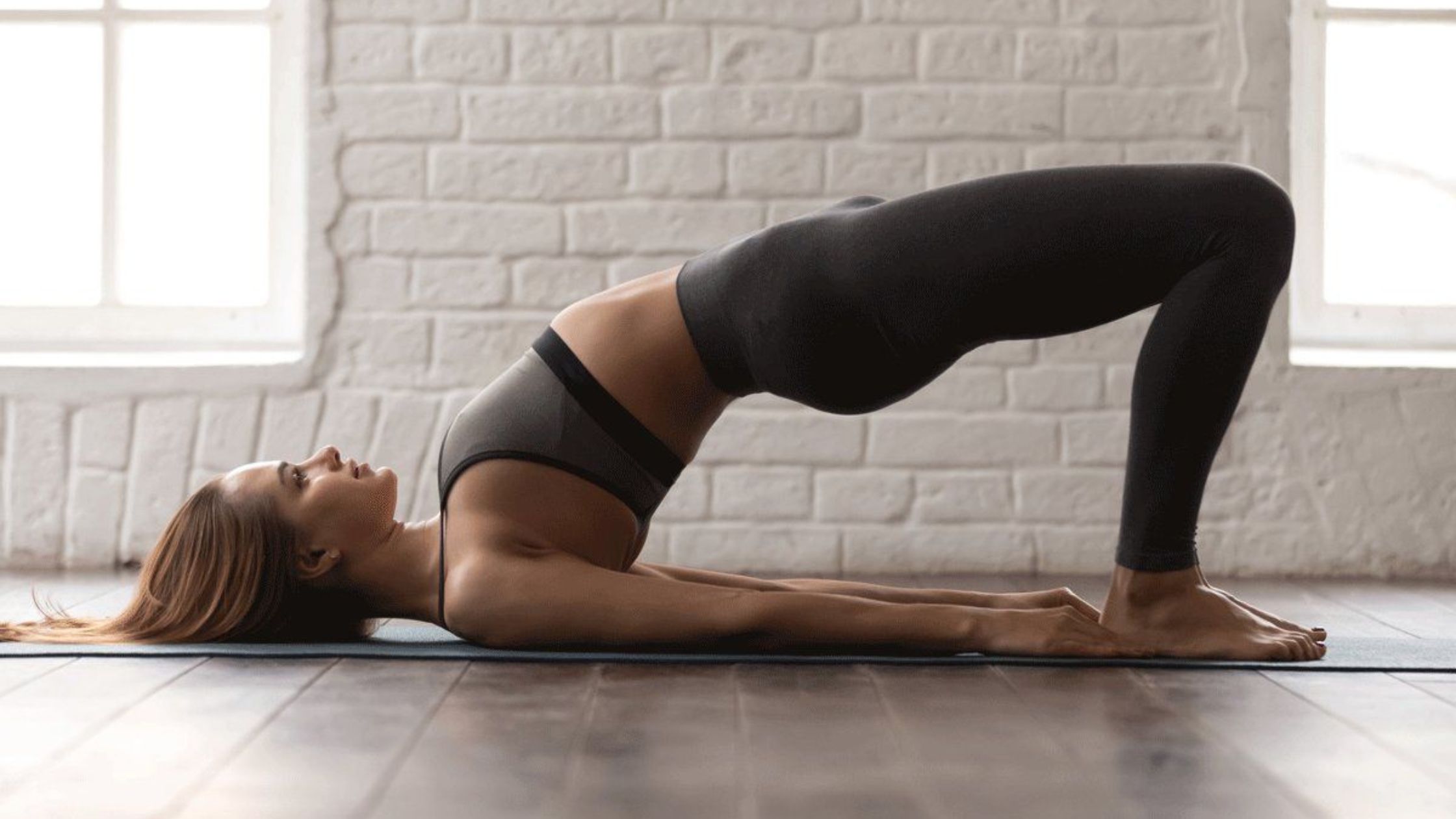
How to do it:
Lie faceup with knees bent, feet flat, and heels stacked under knees. On an inhale, activate your legs and glutes. Press the floor away with your feet and lift your hips. You can interlace your fingers underneath your “bridge” and shimmy your shoulders under your chest.
The benefits:
This energizing backbend opens your chest and stretches your neck and spine. It can calm the mind and reduce anxiety.
9 – Bound Angle Pose (Baddha Konasana)
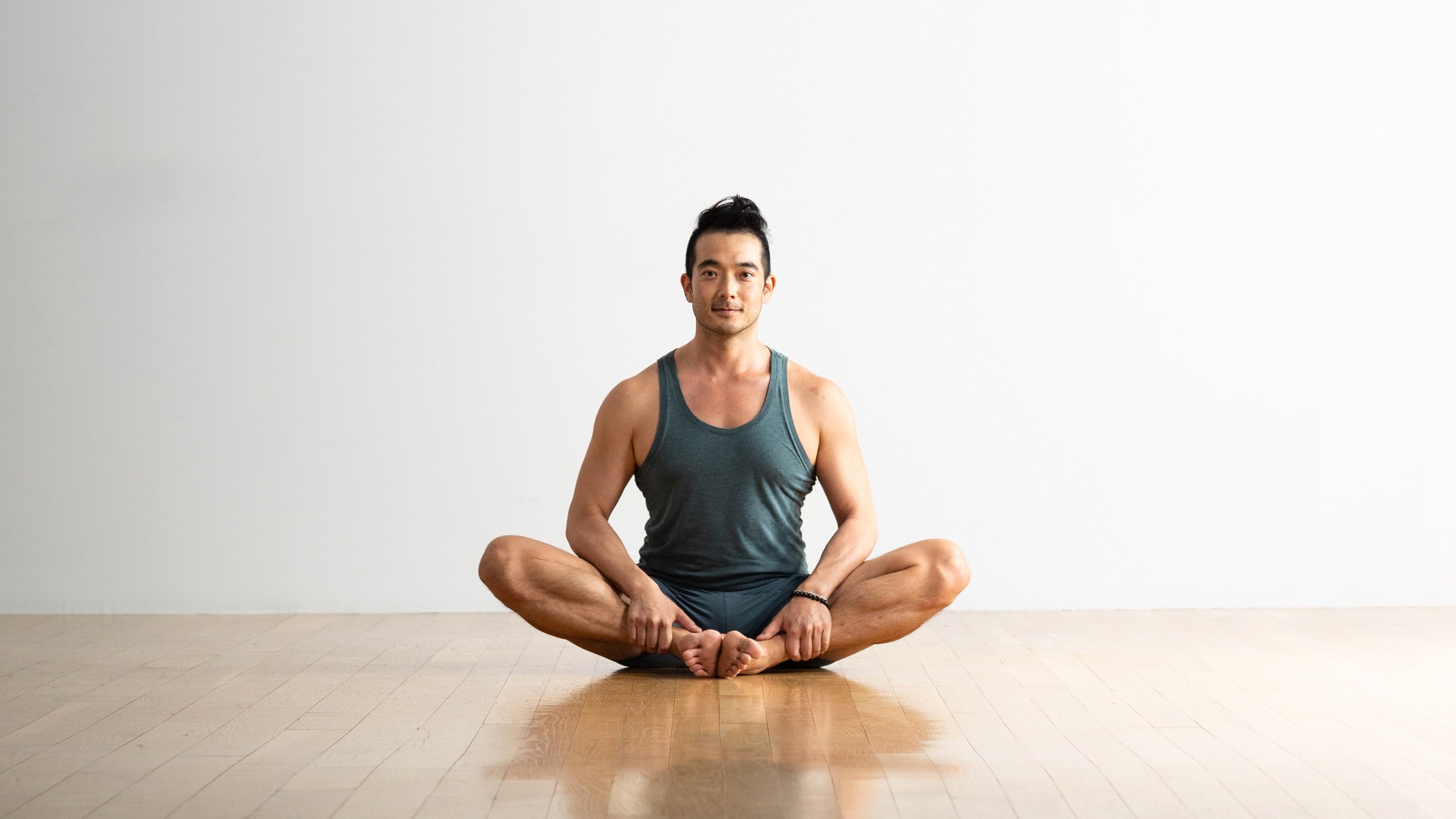
How to do it:
Sit on the floor, bend your knees, and open them out to the side like a book. Join the soles of your feet together. Sit upright, or hold your ankles and hinge forward at the hips. If you’re stiff, sit on the edge of a blanket.
The benefits:
Gives your inner thighs and groin a nice stretch, while the forward bend creates a calming, cooling effect.
10 – Seated Forward Fold (Paschimottanasana)
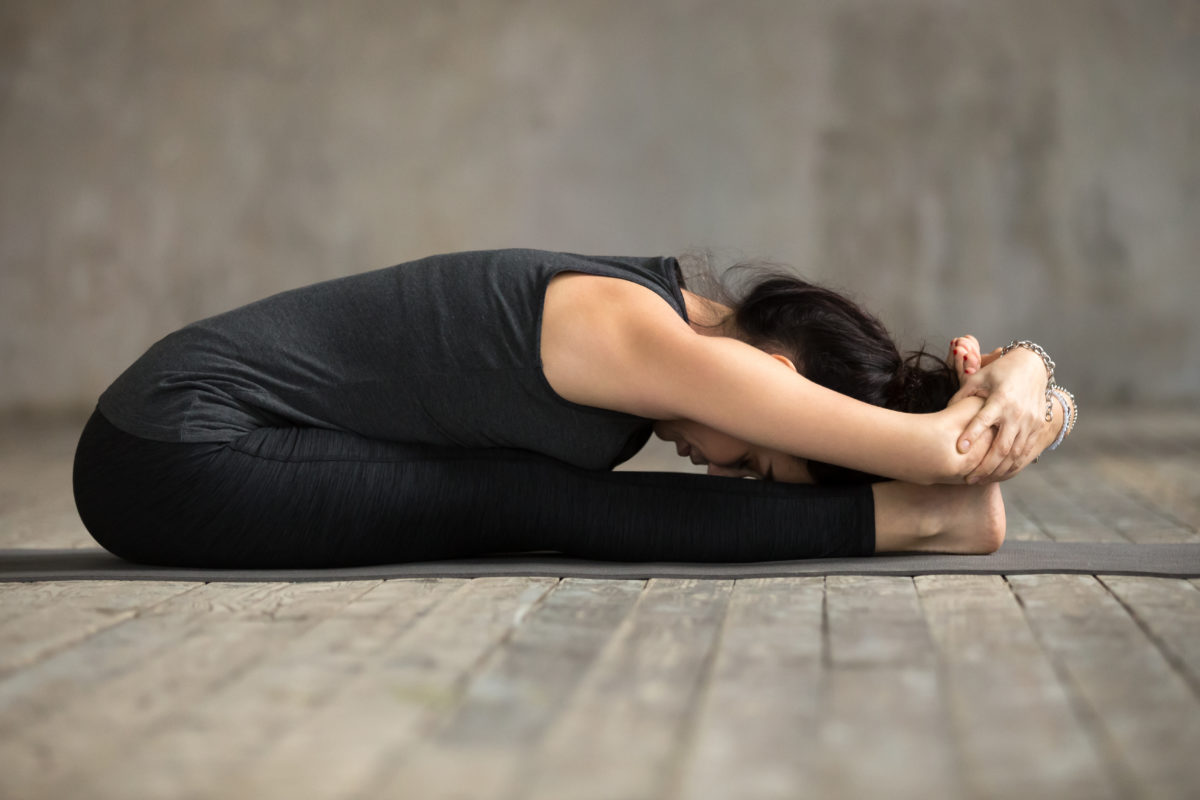
How to do it:
Sit and straighten your legs out in front of you. Hinge at the hips to elongate your torso over your thighs. Grab the outer edges of your feet. If your hamstrings are tight, loop a strap behind your feet or sit on a blanket.
The benefits:
Elongates the back of your body, lengthens your spine, and stretches your hamstrings.
11 – Corpse Pose (Savasana)
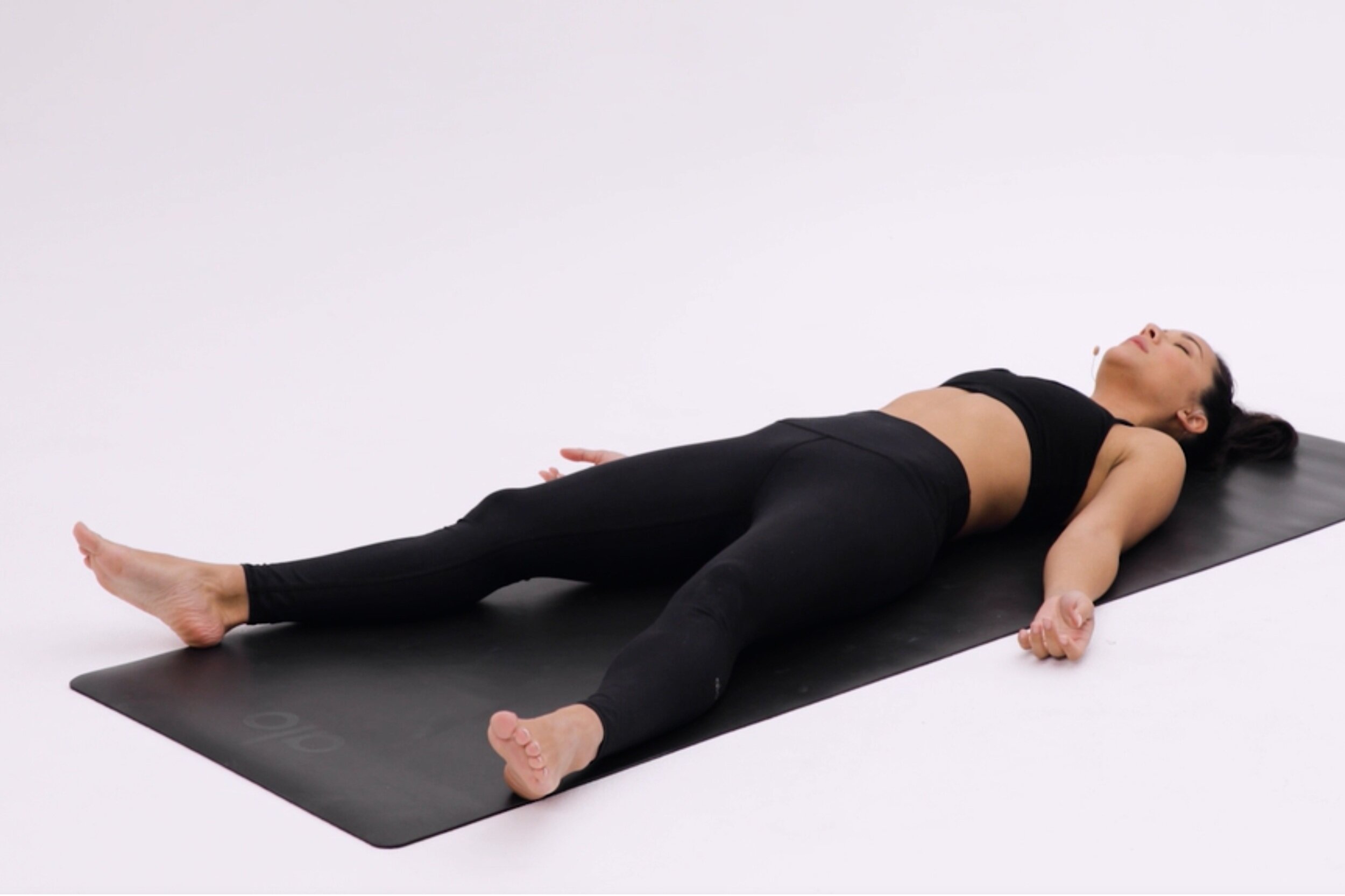
How to do it:
Lie faceup, bringing your legs to the outer edges of your mat. Splay your feet out to the sides. Place arms along your sides, palms facing up. Close your eyes and relax completely.
The benefits:
Every yoga class ends with Savasana. It relaxes the whole body and gives you space to absorb the benefits of the practice.
Intermediate Yoga Poses
12 – Plank Pose (Kumbhakasana)
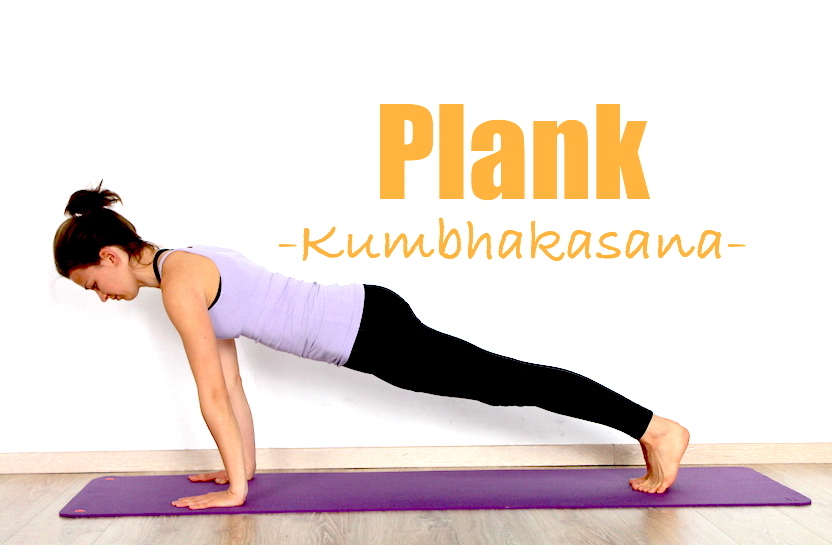
How to do it:
From Downward-Facing Dog, shift forward so your shoulders are stacked over your wrists. Draw your navel in toward your spine. Reach heels back as you lengthen the crown of your head forward. Push the floor away. If it’s too intense, come down to your knees.
The benefits:
Considered one of the best moves for core strength, Plank Pose strengthens your abdominals and promotes stability.
13 – Four-Limbed Staff Pose (Chaturanga Dandasana)

How to do it:
From Plank Pose, shift forward onto your tiptoes. On an exhale, bend your elbows to a 90-degree angle, keeping them hugged into your ribs. Keep your thighs lifted and gaze forward. To exit, lower to your stomach or push back to Downward-Facing Dog.
The benefits:
A key part of Sun Salutations, Chaturanga promotes core stability and strengthens your abdominals and triceps.
14 – Upward-Facing Dog (Urdhva Mukha Svanasana)
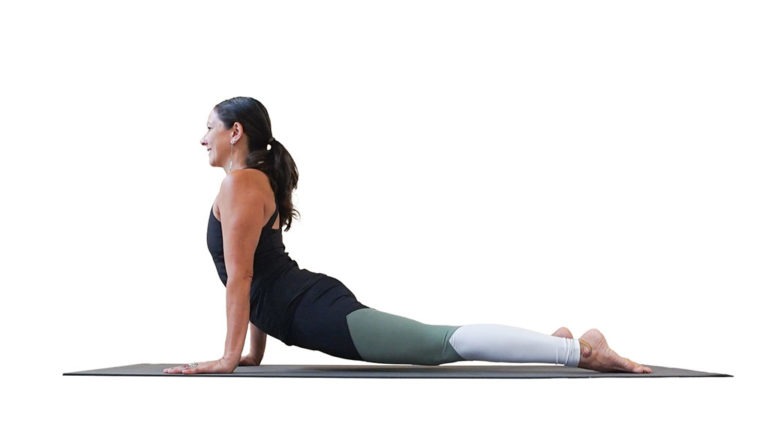
How to do it:
Lie facedown. Bend elbows and place hands on the mat by your lower ribs. As you exhale, push the floor away, straighten your arms, and broaden across the chest, hovering your hips and legs a few inches above the floor. Press the tops of your feet into the mat.
The benefits:
You’ll open up your chest and shoulders, while stretching the abdominals and hip flexors.
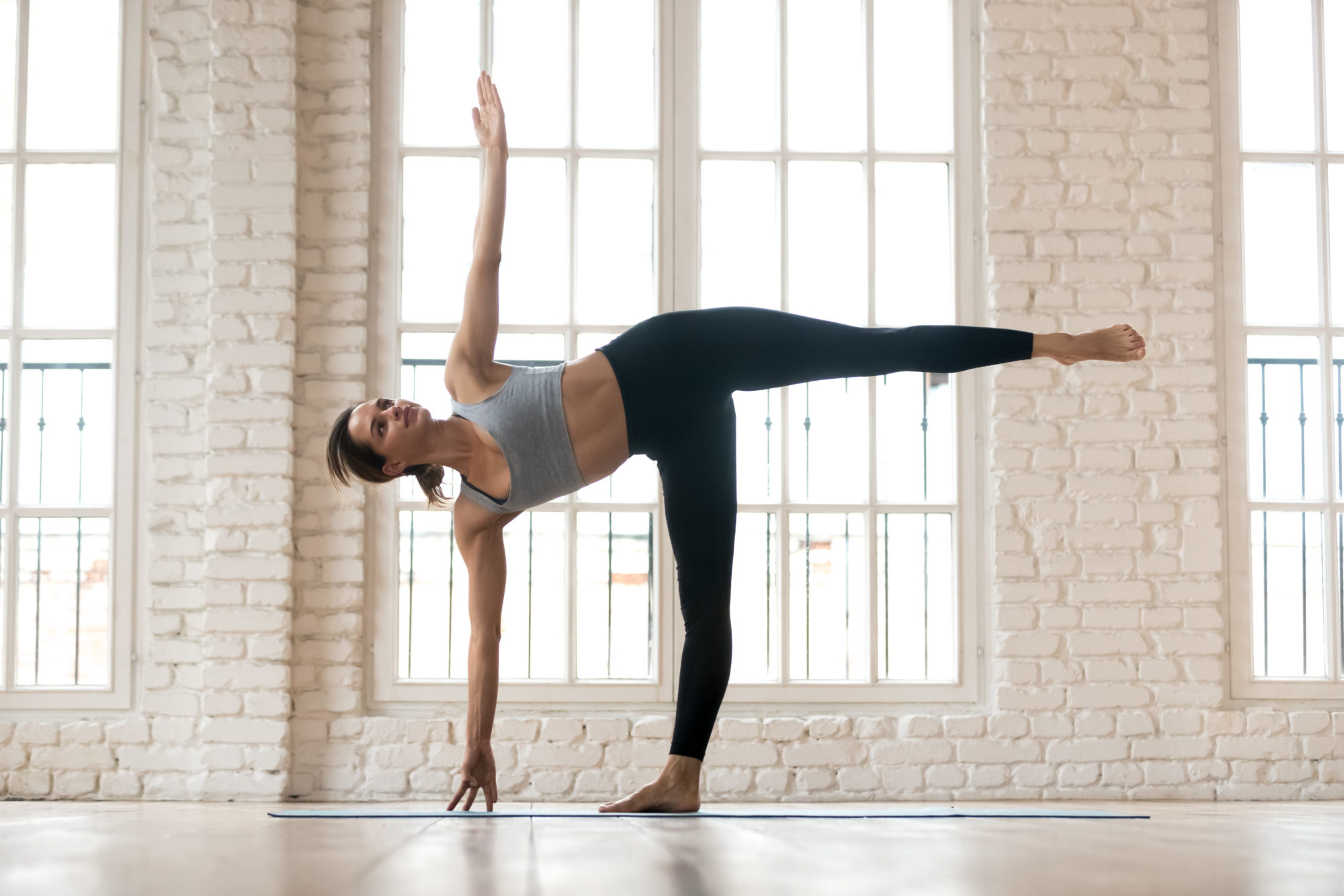
15 – Half Moon Pose (Ardha Chandrasana)
How to do it:
From Triangle Pose, bend your front knee and walk your front hand about 12 inches forward (on the floor or a block). Shift your weight onto your front foot and lift your back foot off the ground. Straighten the front leg. Reach your back leg toward the wall behind you and lift your back arm up toward the sky.
The benefits:
This balancing pose strengthens your legs and outer hips. It also stretches your hamstrings and inner thighs.
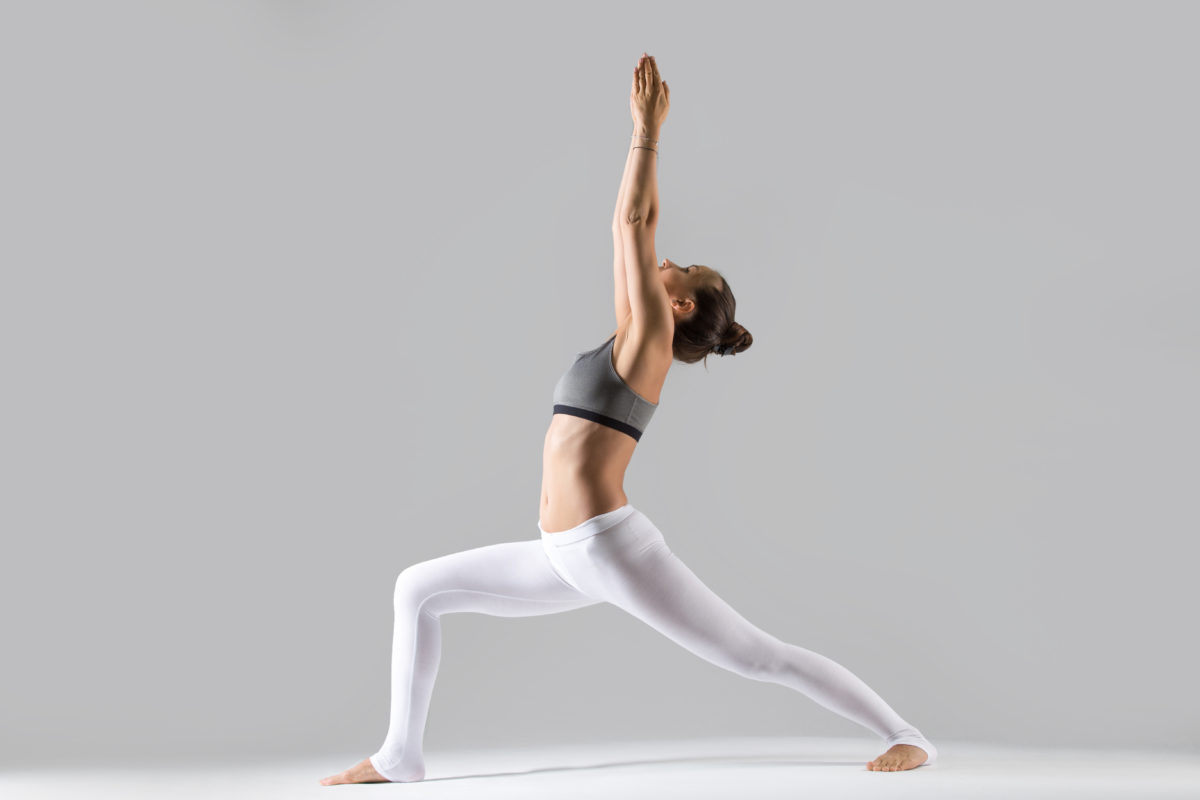
16 – Warrior I (Virabhadrasana I)
How to do it:
From Downward-Facing Dog, step one foot forward. Turn your back foot out 45 degrees and ground the heel. Line up feet heel-to-heel. Bend the front knee over the front ankle. On an inhale, lift your arms up in a V. Rotate your torso toward the front of the room.
The benefits:
This energizing pose strengthens your legs, arms, and back muscles. It also stretches your chest, shoulders, and thighs.
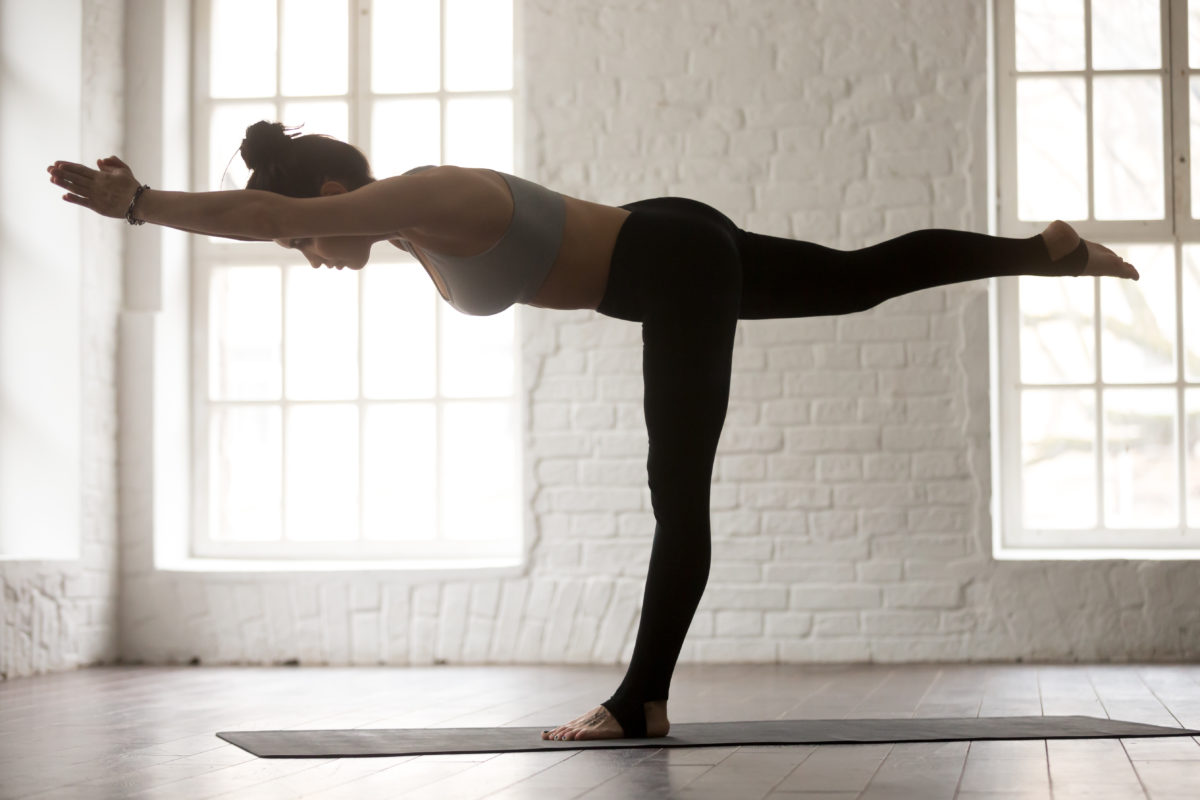
17 – Warrior III (Virabhadrasana III)
How to do it:
From Warrior I, hinge forward at the hips, resting your abdomen on your front thigh. Shift your weight into your front foot. On an inhale, lift your back leg off the ground, straighten it, and reach through your back heel. Bring hands to prayer at your chest or extend them forward.
The benefits:
This heating pose strengthens your legs, outer hips, and upper back. It also helps improve balance and posture.
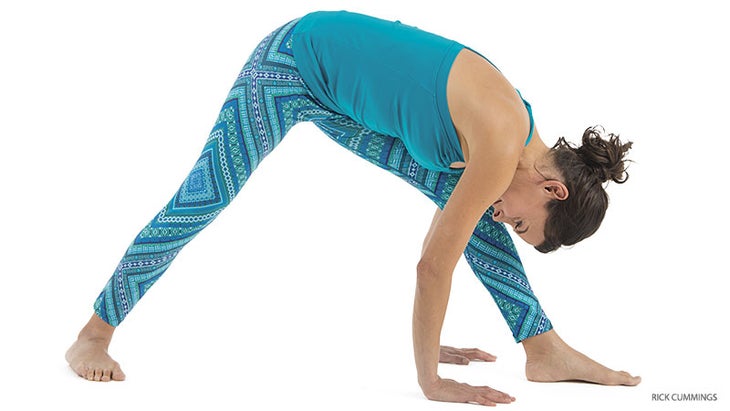
18 – Intense Side Stretch (Parsvottanasana)
How to do it:
From Mountain Pose, step your left foot back (about 3 feet) and place it flat at a 45-degree angle. Ground into both feet. Place hands on your hips, rotate your torso forward. Hinge at the hips and lengthen your spine over the front leg. You can bring hands to prayer behind your back or grab opposite elbows.
The benefits:
The pose helps calm the mind and stretches your spine, shoulders, wrists, hips, and hamstrings.
19 – Dolphin Pose (Ardha Pincha Mayurasana)
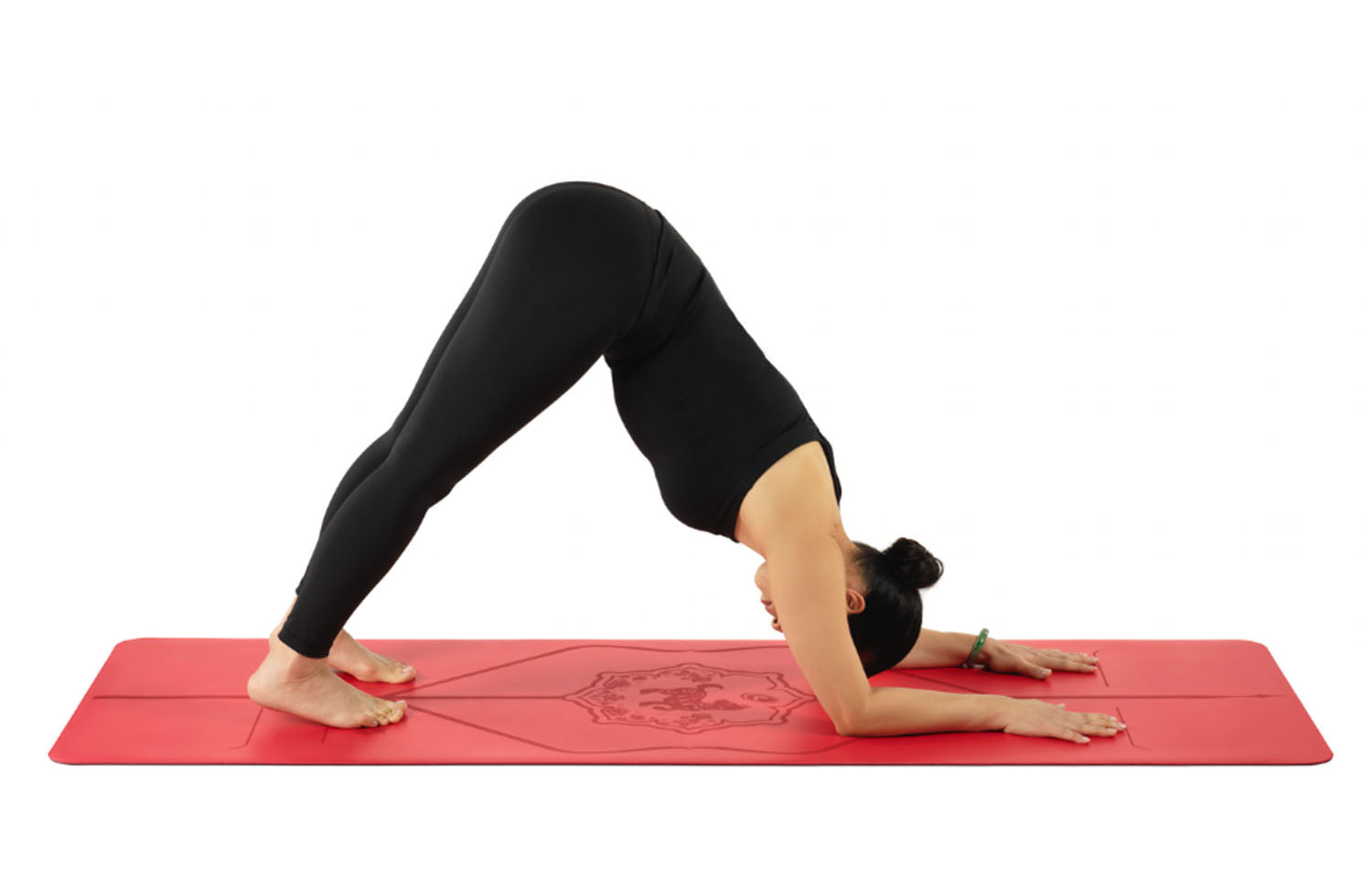
How to do it:
From all fours, come down onto your forearms, elbows shoulder-width apart. Tuck your toes and lift your hips up and back (like Downward-Facing Dog but on forearms). Let your head hang. Press down into your forearms and lift up through your shoulders. Press heels toward the mat.
The benefits:
Builds upper body strength in preparation for headstand and forearm stand. It also calms the mind and relieves stress.
20 – Bow Pose (Dhanurasana)
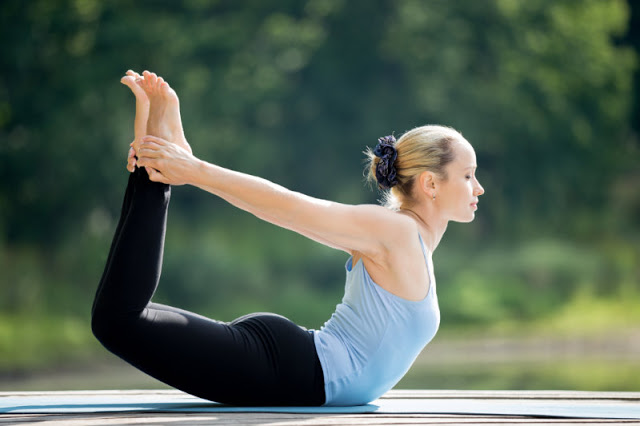
How to do it:
Lie facedown. Send your arms back and bend your knees. On an inhale, lift your upper body and legs, keeping hips grounded. Reach back to grab your outer ankles. Use the leverage to lift your chest up and broaden across the chest.
The benefits:
This backbend stretches the whole front of the body, especially the chest and shoulders, and massages abdominal organs.
21 – Camel Pose (Ustrasana)
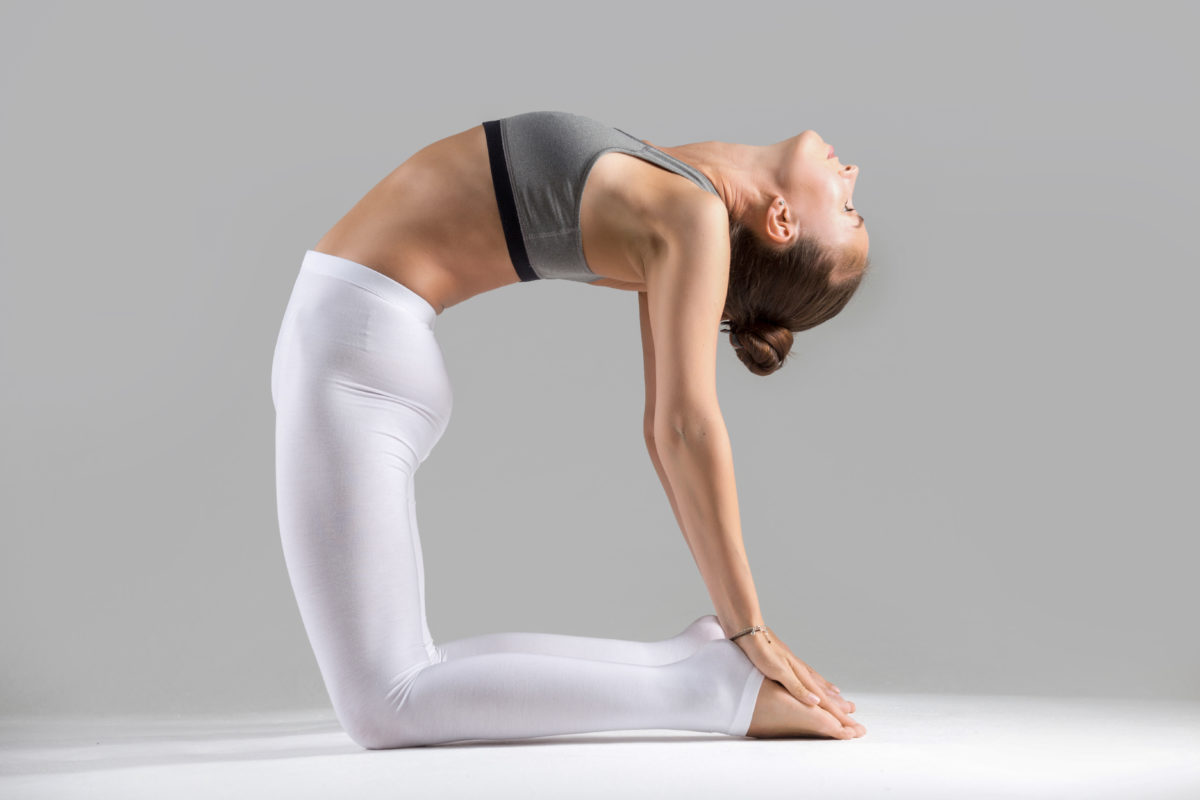
How to do it:
Kneel with shins hip-width apart. Rest hands on your hips. Inhale and press into your shins, elongating the spine. On an exhale, reach your arms back toward your heels. Use the leverage to lift your chest up toward the sky. (Use blocks by your ankles for support if needed).
The benefits:
This backbend stretches the entire front of your body and helps strengthen back muscles.
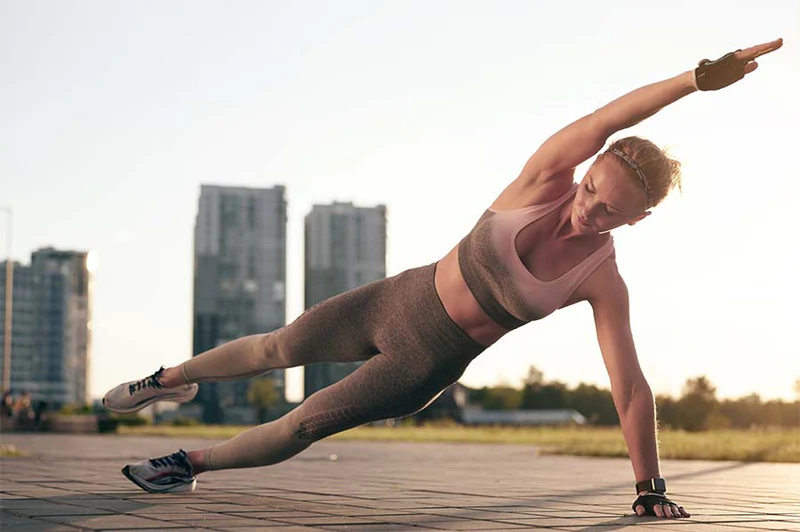
22 – Side Plank (Vasisthasana)
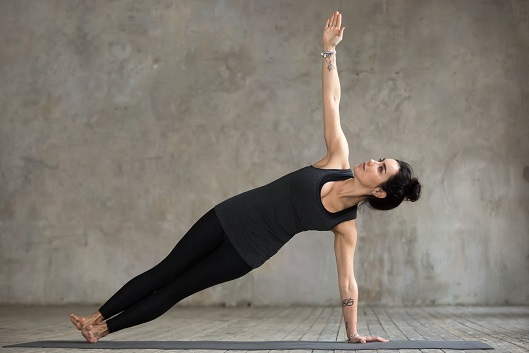
How to do it:
From Plank Pose, turn onto the outer edge of your right foot. Stack your left foot on top. Lengthen through the spine. Once stable, lift your left hand up toward the sky. Press the floor away with your bottom hand.
The benefits:
Strengthens shoulders, upper back, and abdominals. Promotes core and scapular stability.
23 – Revolved Triangle Pose (Parivrtta Trikonasana)
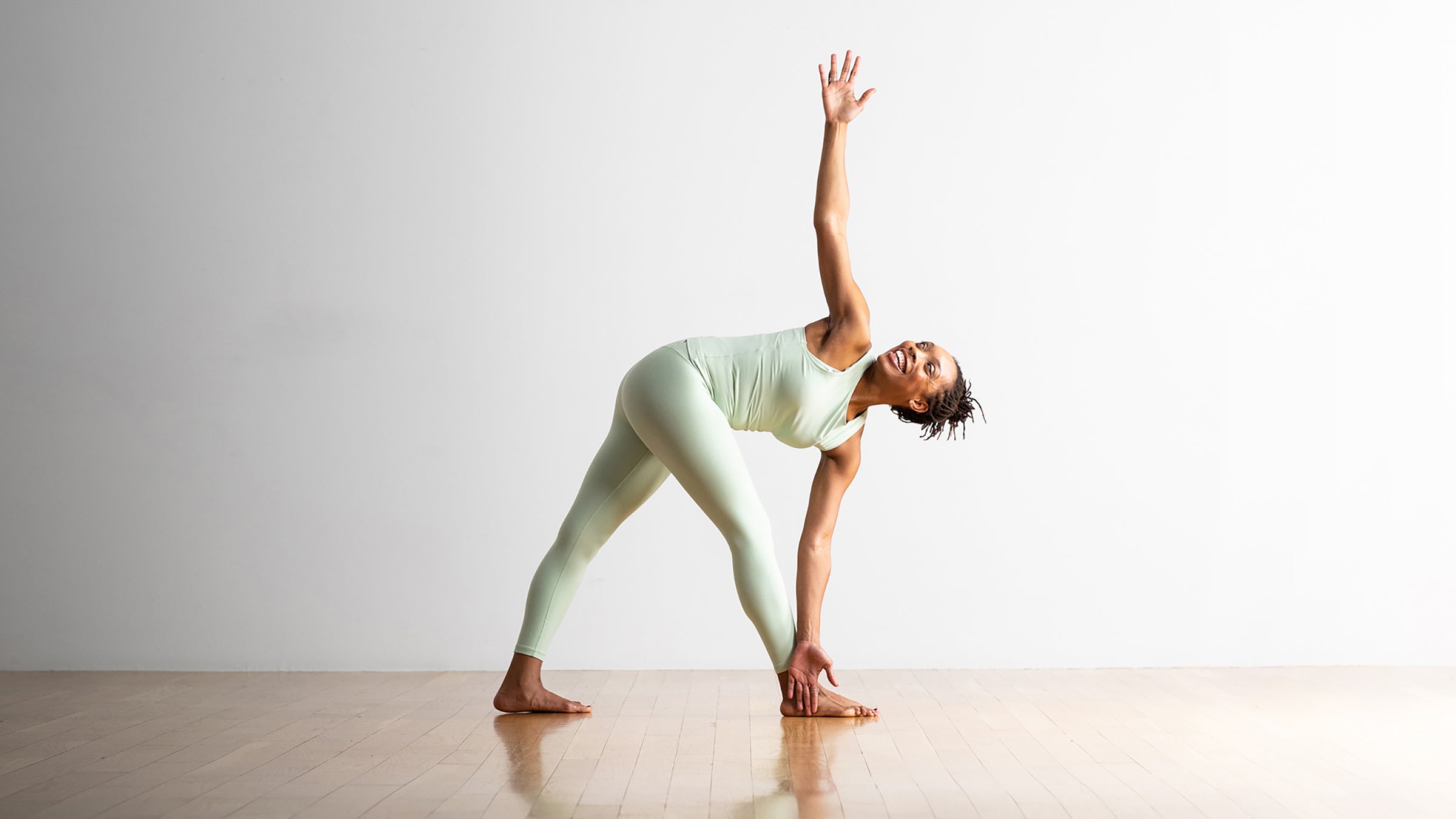
How to do it:
From Mountain Pose, step your left foot back, flat on the floor at 45 degrees. Hinge forward at the hips with a long spine. Release your left hand to a block (on the inside or outside of your front foot). Rotate your torso to the right and stretch your right arm up.
The benefits:
A balancing posture that stretches hamstrings and outer hips. The twist engages obliques and promotes spinal health.
Advanced Yoga Poses
24 – Boat Pose (Navasana)

How to do it:
Sit with knees bent. Place hands under knees. Tip back on your sitting bones and draw your lower back in and up as you hug your abs to your spine. Lift shins parallel to the floor. Stretch arms forward. Finally, straighten knees if you can, creating a “V” shape.
The benefits:
You’ll strengthen your abdominals and hip flexors.
25 – Crow Pose (Bakasana)
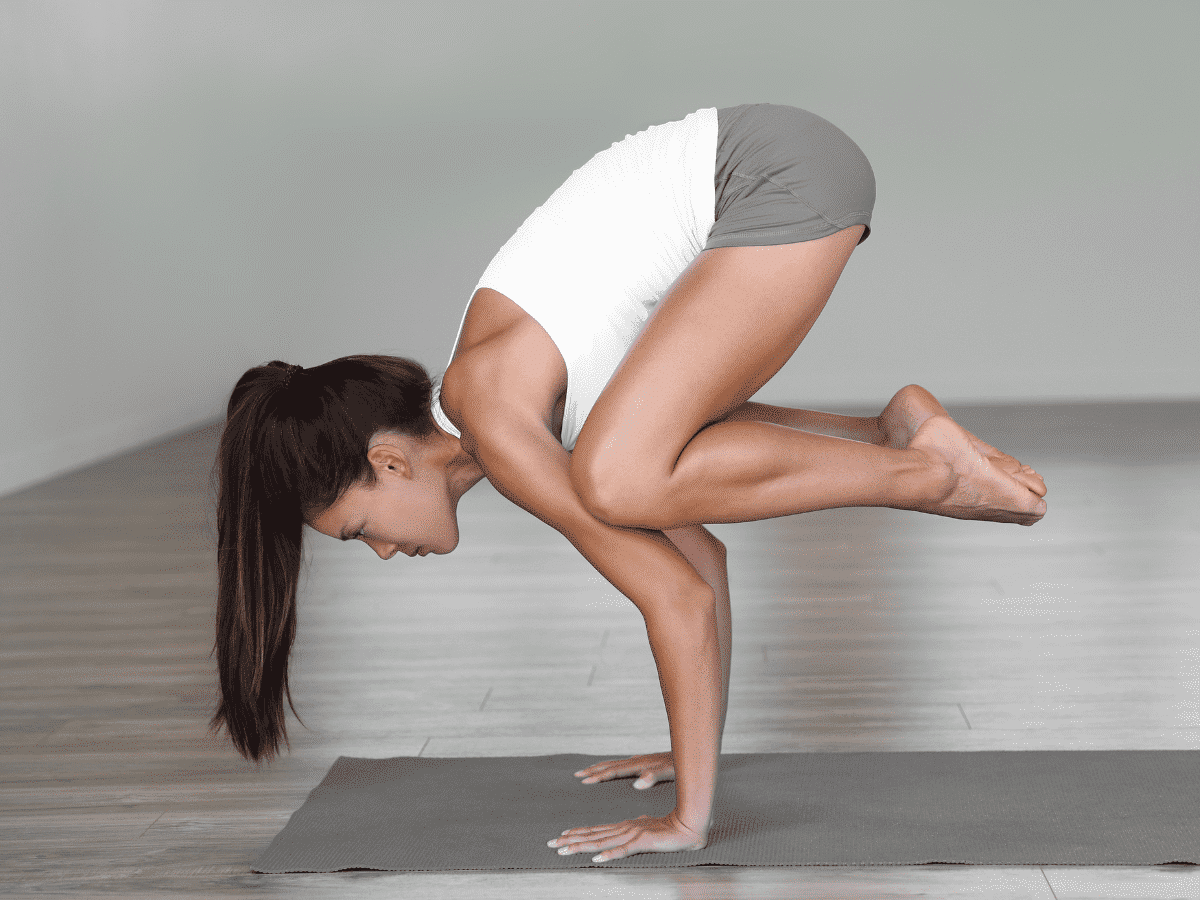
How to do it:
Come down to a deep squat. Make your knees wider than your hips. Bring your palms down in front of you, shoulder-width apart. Hook your shins around your upper arms. Look forward, shift your weight forward onto your hands, and lift your feet off the floor. Pull up through your arms and abs.
The benefits:
Crow Pose builds (and requires) serious strength in your arms, wrists, core, and hip flexors.
26 – Wheel Pose (Urdhva Dhanurasana)
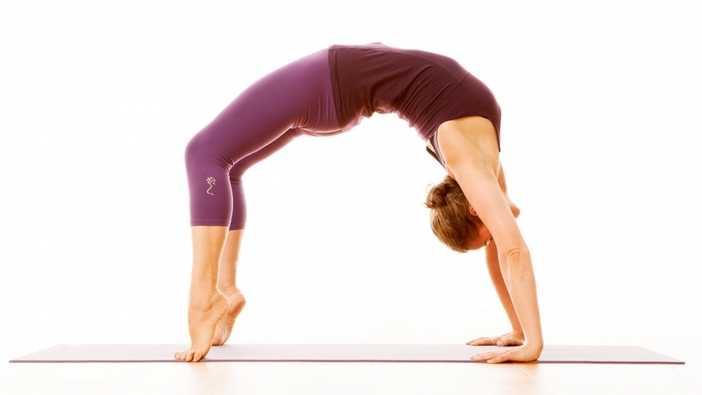
How to do it:
Lie faceup, knees bent, feet flat. Place hands on the floor, framing your ears, fingers facing your heels. On an exhale, press down into your hands and feet. Lift your hips and chest off the floor. Straighten your arms and lift up through your shoulders.
The benefits:
This deep backbend opens the entire front of the body and strengthens the back, shoulders, and hamstrings.
27 – Wall-Assisted Handstand (Adho Mukha Vrksasana)
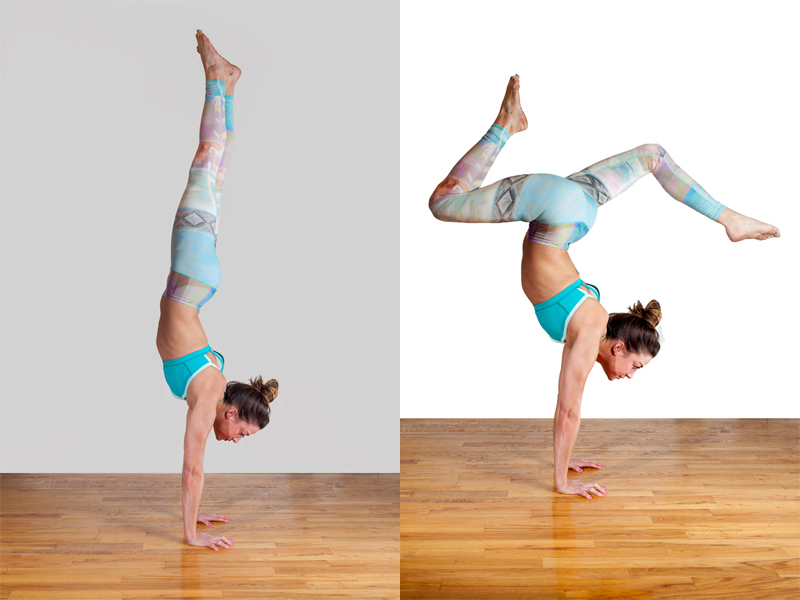
How to do it:
Start in Downward-Facing Dog, facing the wall (hands 6 inches away). Bend one knee, step in, and lift the other leg. Hop off the bottom foot to kick the lifted leg up toward the wall. Bring feet together against the wall. To come out, bend your knees and use your core to slowly draw your legs down.
The benefits:
This energizing inversion strengthens your shoulders, arms, and wrists. It helps promote balance and confidence.
28 – Wall-Assisted Forearm Stand (Pincha Mayurasana)
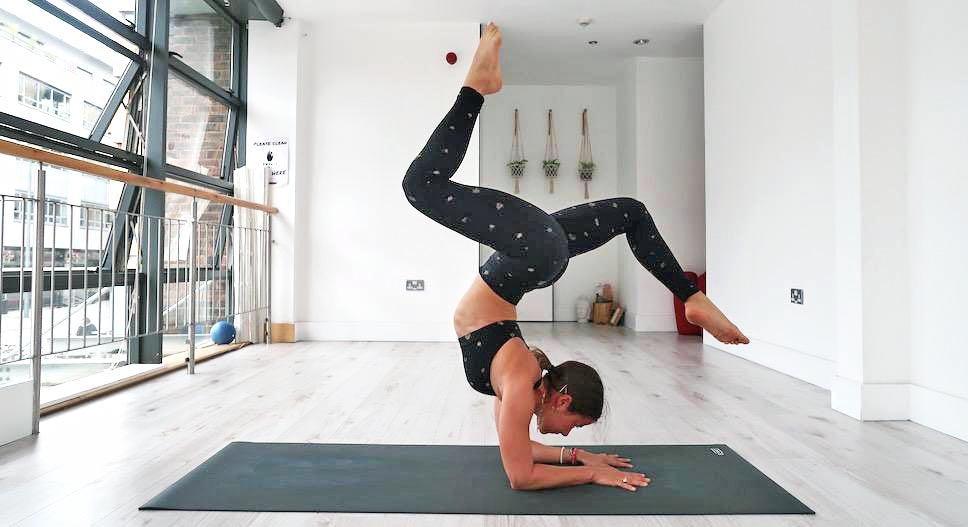
How to do it:
Start on all fours, head facing the wall. Place elbows on the floor, shoulder-width apart, forearms parallel. Tuck toes, lift hips into Dolphin Pose. Walk one foot in, lift the other leg. Bend the knee of your grounded leg, hop off that foot, and send both feet up to the wall. Squeeze inner thighs together.
The benefits:
This is a deep shoulder opener and a great prep pose for backbends. As an inversion, it also helps improve circulation.
29 – Headstand (Sirsasana)
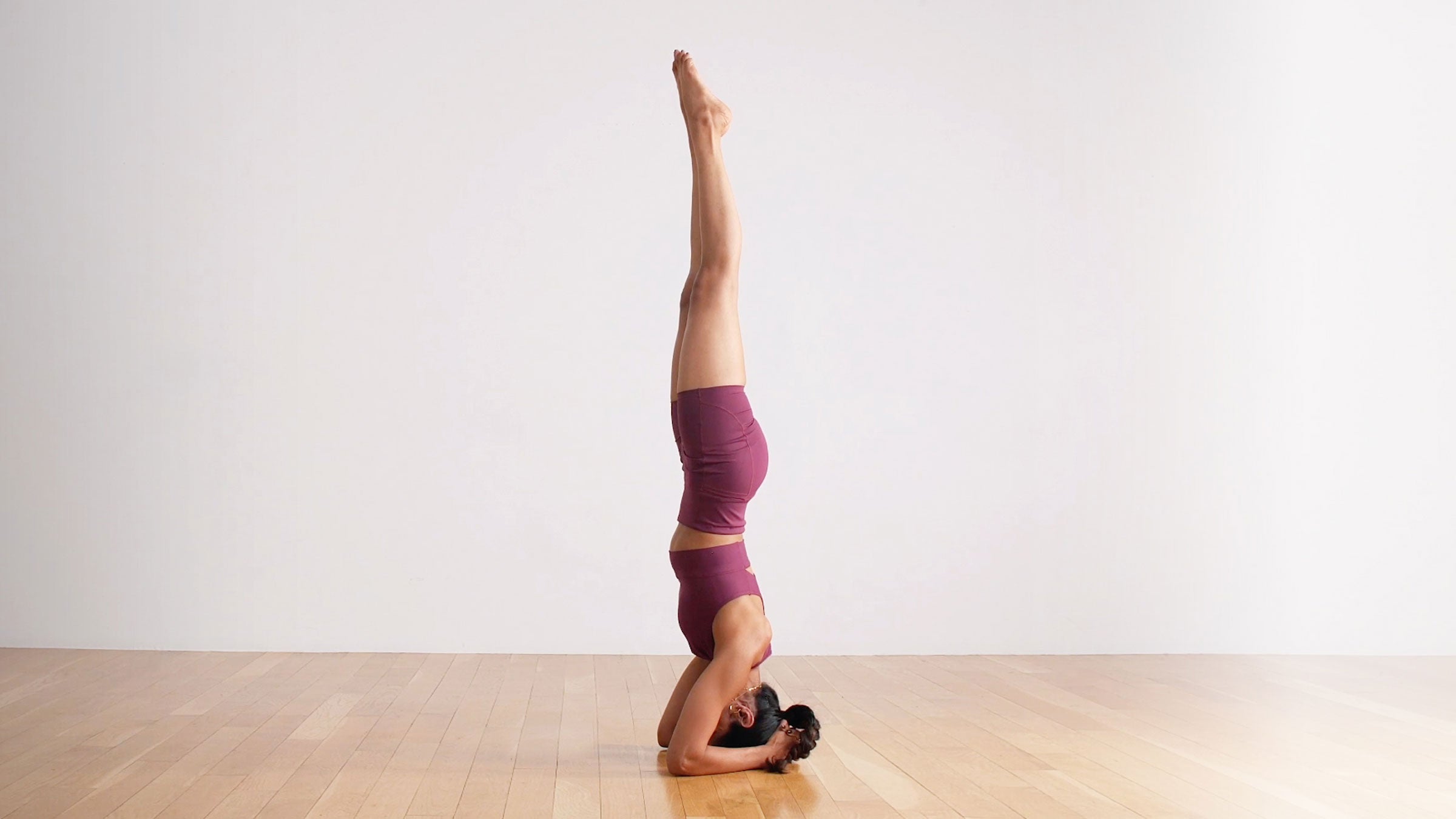
Warning: If you have neck injuries, check with your doctor. This pose is best practiced under the watchful eye of a trusted teacher.
How to do it:
On all fours, interlace your fingers. Place elbows on the floor shoulder-width apart. Place the crown of your head on the floor into the “basket” of your hands. Tuck toes, lift hips, and walk feet in. Most weight should be in your forearms. Draw your knees into your chest with control, then extend legs up.
The benefits:
This advanced inversion strengthens the upper back, shoulders, and arms, and benefits the circulatory and endocrine systems.
30 – Shoulder Stand (Salamba Sarvangasana)

Warning: If you have neck injuries, check with your doctor. This pose is also best practiced with an experienced teacher.
How to do it:
Lie on your back. Stack two folded blankets under your shoulders (head rests on the mat). Bring knees to chest, then straighten legs toward the sky. Place your hands on your lower back to support your posture, with fingertips pointed down. Keep weight on your shoulders, not your neck.
The benefits:
This inversion offers numerous benefits. It’s considered a cooling and energetic way to end your practice.
How to Get Started: Yoga for Beginners
Koya Webb, a certified yoga teacher, believes, “It’s better to start with something and commit than try to bite off too much and never follow through.”
If you’re new to yoga, start small. Add a few of the basic poses to your routine. In the morning, yoga can center and energize you. At night, it can ground you and help you wind down. No matter your reason for starting, you’ll soon experience the benefits.
Final Thoughts
Whatever poses you’re working on, remember this: It’s just yoga. It is not about perfection; it’s about progress. It’s about becoming comfortable with the uncomfortable. It’s about union with the mind and body, and above all, keeping your body safe. Even if all you do is arrive on the mat and lie in Savasana for 15 minutes, you’re still doing yoga. Give it your best and let that be good enough for today. Namaste.