Exercise Guide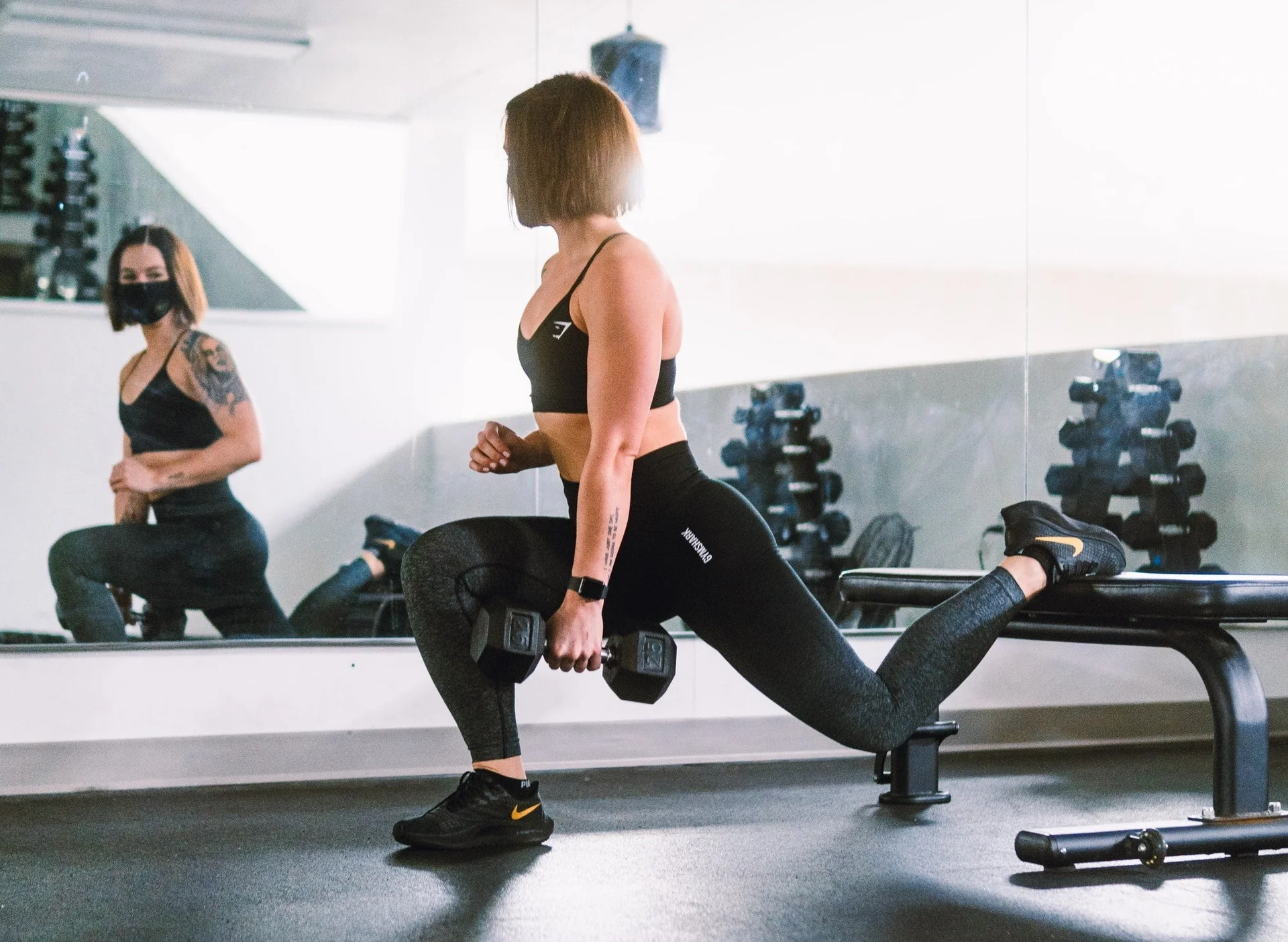
The **Bulgarian Split Squat (BSS)** is widely regarded in strength and conditioning circles as a cornerstone exercise for lower body development. While the conventional squat is an excellent bilateral (two-legged) movement, the BSS is a potent unilateral (single-legged) tool, forcing superior muscle activation, balance, and core stability.
For athletes and general fitness enthusiasts alike, integrating the BSS is crucial for **correcting strength asymmetries**, increasing time under tension (TUT) for hypertrophy, and enhancing hip mobility. This guide provides a detailed breakdown of the proper technique, anatomical focus, progressive variations, and critical safety considerations for maximizing your results.
🛠️ Execution Protocol: How to Perform a Bulgarian Split Squat
The BSS is an intermediate-level lift. Mastery of foot placement and torso angle is essential for targeting specific muscle groups and preventing injury.
Step-by-Step Technique:
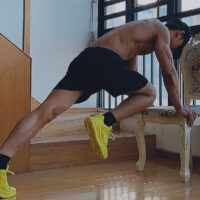
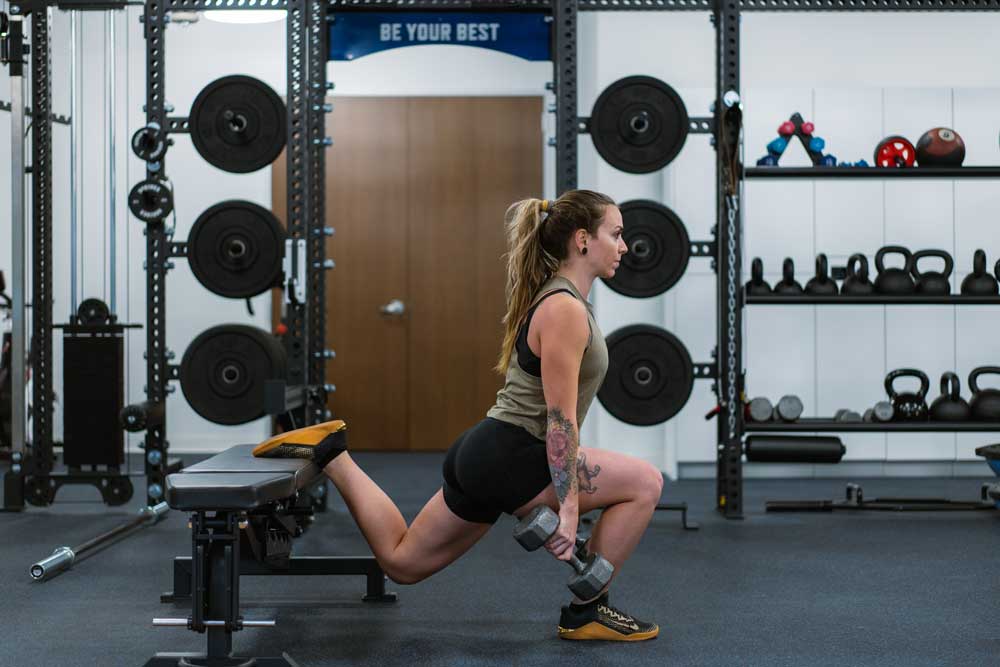
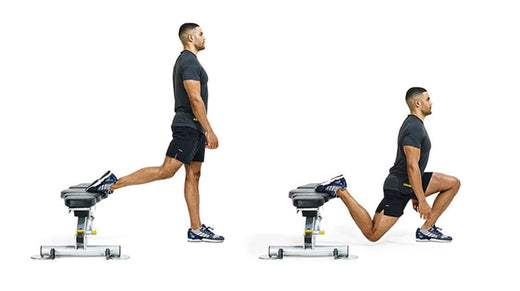
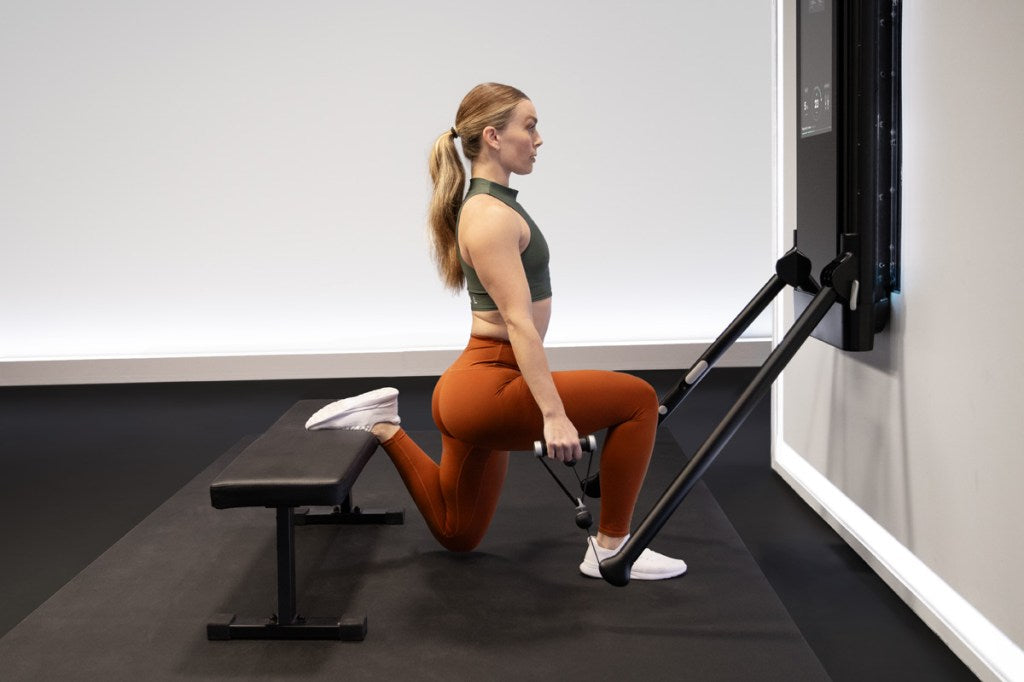
- **Setup and Bench Placement:** Stand 2 to 3 feet in front of a flat, stable platform (bench or box) that is knee-high or lower. The distance should allow your front knee to track over your mid-foot without excessive forward travel when descending.
- **Rear Foot Position:** Place the top of your right foot flat against the surface behind you. Ensure your feet are spaced shoulder-width apart laterally—this wide stance is crucial for stability and hip alignment.
- **Torso and Core Engagement:** Assume a forward lunge position. Engage your core (Transverse Abdominis) intensely to keep the torso upright and the spine neutral. Ensure your hips remain **square** to the front.
- **Descent (Eccentric Phase):** Initiate the squat by bending the left knee and dropping the body straight down. The descent should be controlled and vertical. Continue until the front thigh is approximately parallel to the floor, or slightly below.
- **Ascent (Concentric Phase):** Drive upwards by pushing through the **mid-foot to heel** of the working (left) foot. Focus on contracting the Gluteus Maximus and Quadriceps to return smoothly to the starting position.
Recommended Programming: 2–3 sets of 8–12 repetitions per leg, prioritizing perfect form over load initially.
💡 Advanced Focus Tips:
- **Glute Focus:** Use a slightly shorter stance and lean your torso forward (about 10-15 degrees) during the descent. This increases hip flexion, emphasizing the Gluteus Maximus.
- **Quad Focus:** Use a longer stance and maintain a near-vertical torso. This increases knee flexion and places maximum stress on the Quadriceps.
- **Pace:** Utilize a controlled tempo, such as 3 seconds down (eccentric) and 1 second up (concentric).
🧬 Anatomical Breakdown: Muscles Engaged
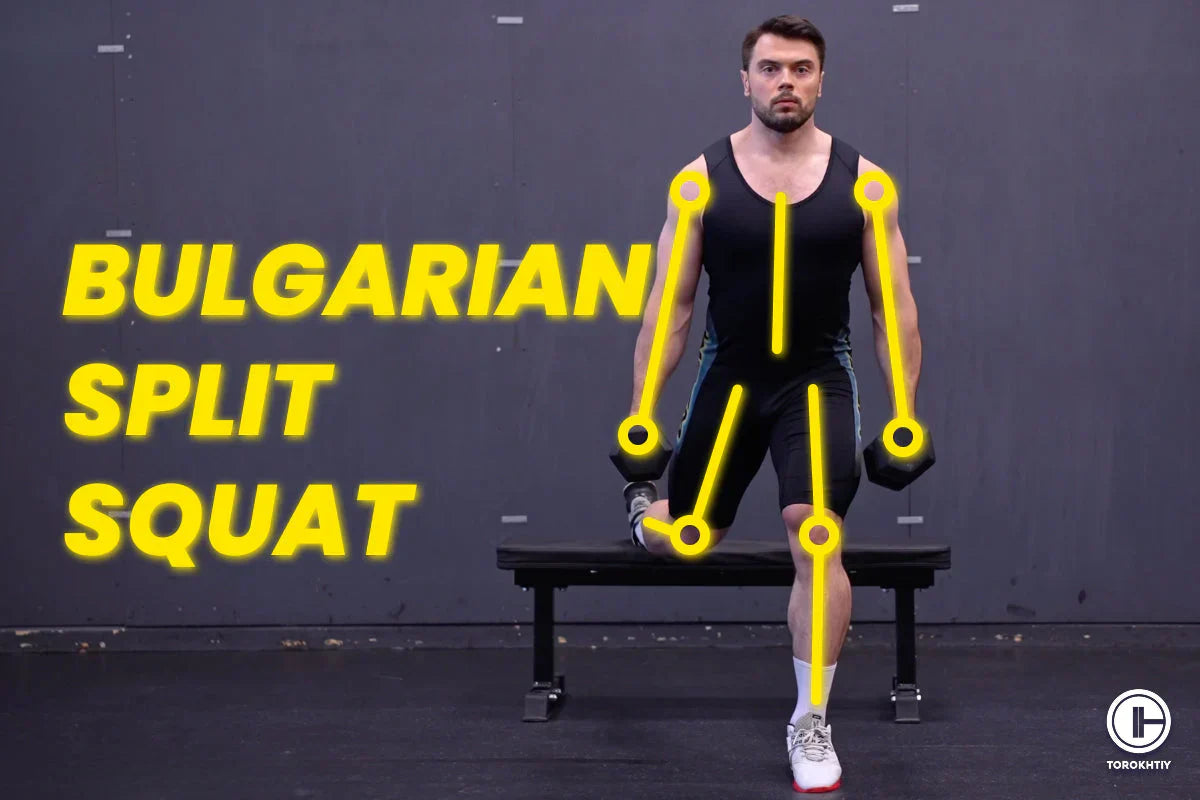
The BSS is a compound movement that recruits a large chain of muscles, making it highly effective for total leg development. It effectively loads both the prime movers and the stabilizing muscles of the hip and knee.
Primary Target Musculature:
- **Gluteus Maximus:** Primary hip extensor and shaping muscle.
- **Quadriceps:** Knee extensors (Vastus Lateralis, Medialis, and Intermedius, Rectus Femoris).
- **Adductors (Inner Thigh):** Stabilize the knee and contribute to hip extension.
- **Hamstrings:** Assist in hip extension and knee stability.
- **Gluteus Medius/Minimus:** Essential for pelvic and hip stabilization (anti-wobble).
- **Hip Flexors (Rear Leg):** Stretched, contributing to improved mobility.
Functional Benefits:
- **Asymmetry Correction:** Studies, including a small 2017 investigation, suggest BSS is superior for evening out strength discrepancies between the dominant and non-dominant leg, crucial for preventing injuries.
- **Core Stability:** The unilateral load demands greater engagement from the core (particularly the Obliques and Transverse Abdominis) to prevent rotation and maintain upright posture.
- **Improved Mobility:** The position of the rear leg promotes a dynamic stretch in the hip flexors, aiding overall lower body range of motion.
🔄 Variations and Progressions

Customize the BSS to match your skill level and training goals, from beginners seeking foundational strength to advanced lifters seeking maximal hypertrophy.
Beginner/Regression Variations:
1. Standard Split Squat (Foot on Floor)
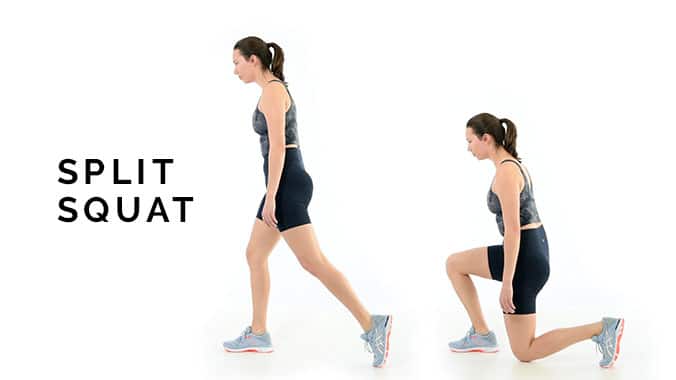
Easier than the Bulgarian version, this variation keeps the rear foot on the floor (lunge stance). It removes the balance challenge and knee flexion of the rear leg, making it a perfect stepping stone to build leg strength and coordination before elevating the back foot.
Advanced/Progression Variations:
2. Weighted Bulgarian Split Squat (Dumbbells/Barbell)
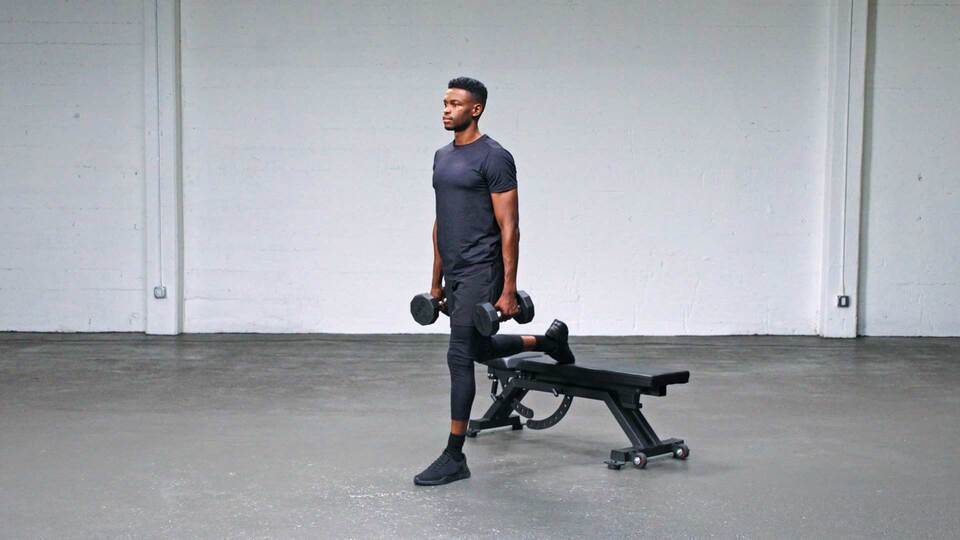
The most common progression. Holding dumbbells at your sides (neutral grip) or utilizing a barbell across your back (high bar position) significantly increases resistance for strength and size gains. **Caution:** Start lighter than you think, as the instability dramatically increases the perceived load.
3. Zercher Bulgarian Split Squat

This variant involves holding a loaded barbell in the crook of your elbows, across the front of your chest. The forward load places high demand on the core’s anti-flexion strength and the upper back, challenging your torso stability throughout the movement.
4. Exercise Ball Bulgarian Split Squat (Instability Focus)

For those prioritizing balance, place the rear foot on an unstable surface like an exercise ball. The instability forces the small stabilizer muscles around the ankle and knee to work overtime, enhancing proprioception and dynamic stability.
5. Eccentric Bulgarian Split Squat (Time Under Tension)
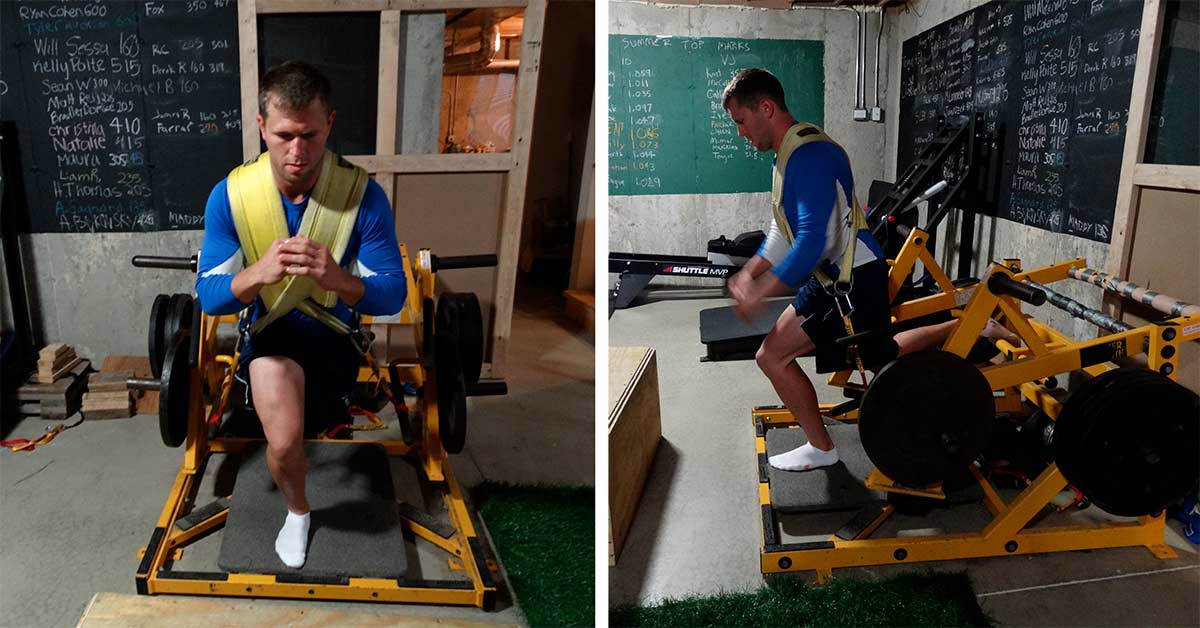
A highly challenging technique emphasizing the negative phase. Lower down as slowly as possible (e.g., 5 seconds count). This dramatically increases the Time Under Tension (TUT), maximizing muscle fiber recruitment and mechanical stress for hypertrophy.
🚫 Risk Management and Safety Considerations
:max_bytes(150000):strip_icc()/60-4589307-Bulgarian-Split-Squat-GIF-e8bd4aa226ed4ddf978aa1a86b46359e.gif)
While safe for most intermediate lifters, the BSS requires proper form to prevent joint strain.
Critical Safety Guidelines:
- **Thorough Warm-up:** Ensure the hip flexors, quads, and glutes are dynamically stretched and warm before loading.
- **Knee Tracking:** Always ensure the working knee tracks in line with the second and third toes. Allowing the knee to collapse inward (valgus collapse) can strain the joint.
- **Footing and Alignment:** Take ample time to set up your stance distance. An incorrect stance will place undue stress on the knee or the hip flexor of the rear leg.
- **Consultation for Joint Issues:** Individuals with a history of patellar (knee) concerns should approach deep squatting with caution or consult a physical therapist.
- **Listen to Your Body:** Do not push past form failure, especially when using external weights. Stop the set immediately if lower back pain or sharp knee pain occurs.
✨ Alternative Unilateral and Bilateral Exercises
If the BSS is temporarily inaccessible or unsuitable, these exercises offer similar benefits for strength and hypertrophy.
1. Classic Barbell Squat (Bilateral Power)
The King of Lifts remains essential for maximal bilateral strength and systemic hormone release. Use it to build foundational strength before transitioning to single-leg variants.
2. Pistol Squat (Balance and Mobility Focus)
An elite single-leg movement that challenges extreme mobility, balance, and single-leg strength simultaneously. An excellent goal-oriented exercise.
3. Curtsy Squat (Gluteus Medius Focus)
By stepping the non-working leg diagonally behind and across the body, the curtsy squat specifically loads the Gluteus Medius and hip abductors, crucial for hip stability and a rounded glute appearance.
4. Reverse Lunge (Knee-Friendly Option)
Starting from a standing position and stepping backward (instead of forward), the Reverse Lunge is often gentler on the knees while still providing high unilateral load on the glutes and quads.
5. Jump Squat (Explosive Strength)
For athletic development, the Jump Squat trains power and explosiveness, improving the rate of force development in the quads and glutes.
📝 Summary (The Takeaway)
The Bulgarian Split Squat is an indispensable exercise for **maximizing lower body strength, correcting muscle imbalances, and achieving hypertrophy** in the glutes and quads.
Its effectiveness stems from its ability to heavily load each leg individually while simultaneously demanding high levels of coordination. Approach the BSS with meticulous attention to form, choose your stance angle based on your training goal (quads vs. glutes), and progress steadily with variations like added weight or slower eccentrics.