Exercise Guide
The kettlebell snatch is a full-body, explosive exercise you can perform just about anywhere. This simple but highly effective move builds power, strength, and cardiovascular endurance simultaneously. Read on to learn how to master the kettlebell snatch, its benefits, and common mistakes to avoid.
What is a Kettlebell Snatch?
The kettlebell snatch is a dynamic, full-body exercise where you lift a kettlebell from the ground (or a backswing) to an overhead position in one fluid motion. Originally a staple in military and strongman training, it has become popular in fitness for its incredible efficiency. It’s a true test of power, stability, and control, combining elements of a swing, a high pull, and an overhead press into a single, seamless movement.
Benefits of the Kettlebell Snatch
The snatch isn’t just a party trick; it’s a foundational lift that offers a host of benefits:
- Full-Body Power: It trains your body to move as one unit, generating explosive power from your hips and transferring it through your core to your upper body.
- Metabolic Conditioning: Performing snatches for reps is incredibly demanding on your cardiovascular system, helping to burn a massive number of calories and boost endurance.
- Builds Strength: It strengthens your glutes, hamstrings, back, core, and shoulders all at once.
- Improves Posture & Core Stability: To stabilize a weight overhead, your core, shoulders, and upper back must work overtime, leading to improved posture and a rock-solid midsection.
- Grip Strength: Holding onto the kettlebell during the explosive swing and catch builds a powerful, functional grip.
What Muscles Does the Kettlebell Snatch Use?
The snatch is a true full-body exercise. Its primary movers and stabilizers include:
- Primary Movers (Power Generators): Glutes, Hamstrings.
- Upper Body Movers: Deltoids (Shoulders), Triceps.
- Stabilizers: Erector Spinae (Lower Back), Trapezius (Traps), Rhomboids (Upper Back), Core (Rectus Abdominis, Obliques), and Forearms (for grip).
How to Do a Kettlebell Snatch (Step-by-Step)
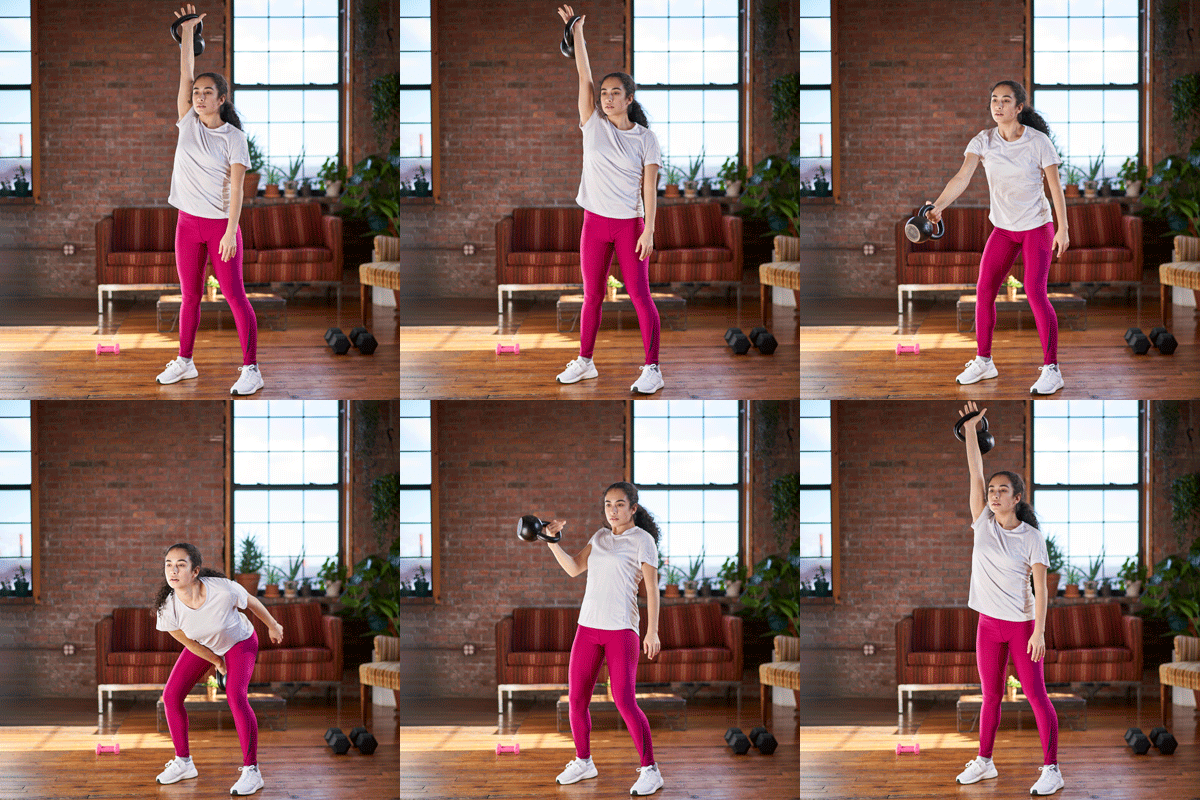
A kettlebell snatch isn’t complicated, but it requires precise technique to be safe and effective. The original article’s description of “letting momentum swing the kettlebell up” is how you get a bruised forearm. The key is an active “punch-through.” Here’s how to do it correctly:
- The Starting Position: Stand with your feet hip-distance apart, with the kettlebell on the floor between your feet.
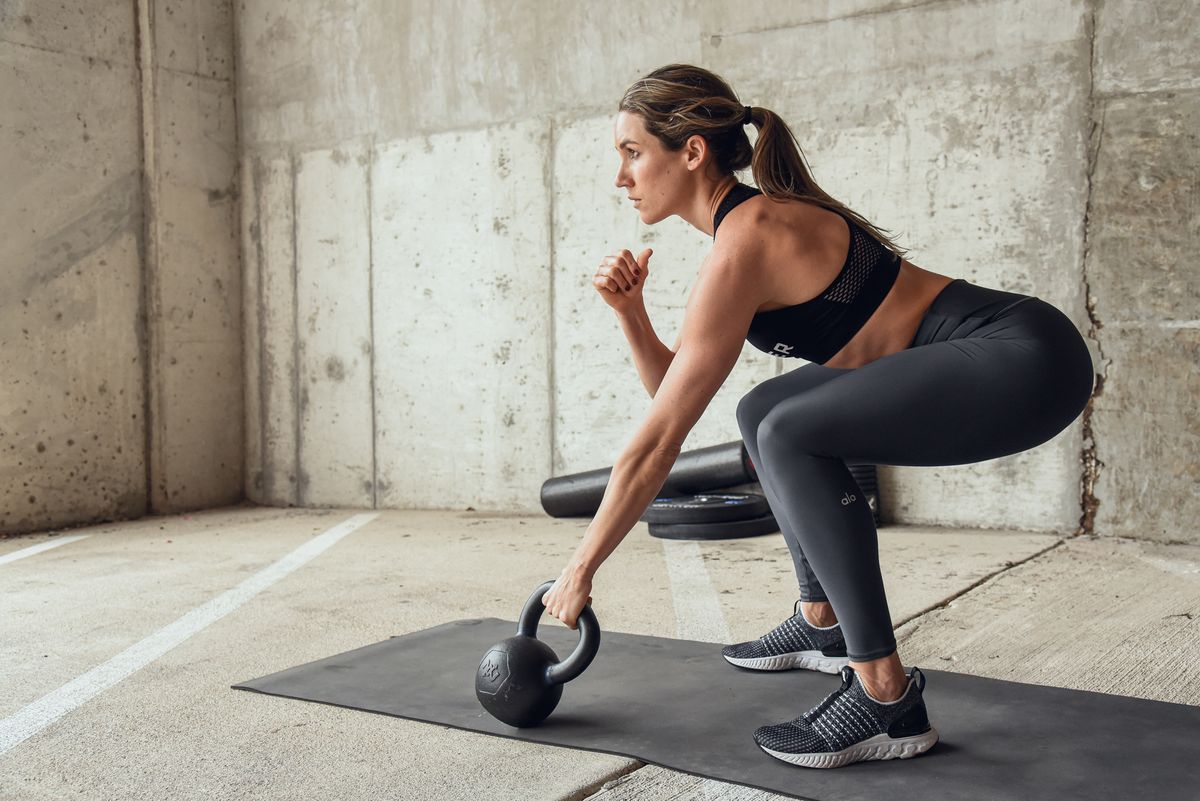
- The Grip & Hike: Hinge at your hips, keeping your back flat (do not squat). Grab the kettlebell handle with one hand. Swing the kettlebell back between your legs, high up toward your groin.
- The Explosive Drive: In one swift motion, drive your hips forward and “snap” them to standing, just like in a kettlebell swing. This hip power is what “floats” the bell upward. Your arm is just guiding it; do not lift with your arm.
- The “Punch-Through” (The Catch): As the kettlebell reaches shoulder height and feels “weightless,” do not let it “flop” over your wrist. Instead, actively punch your hand through the handle. Your hand should rotate around the kettlebell so it lands softly on the back of your forearm.
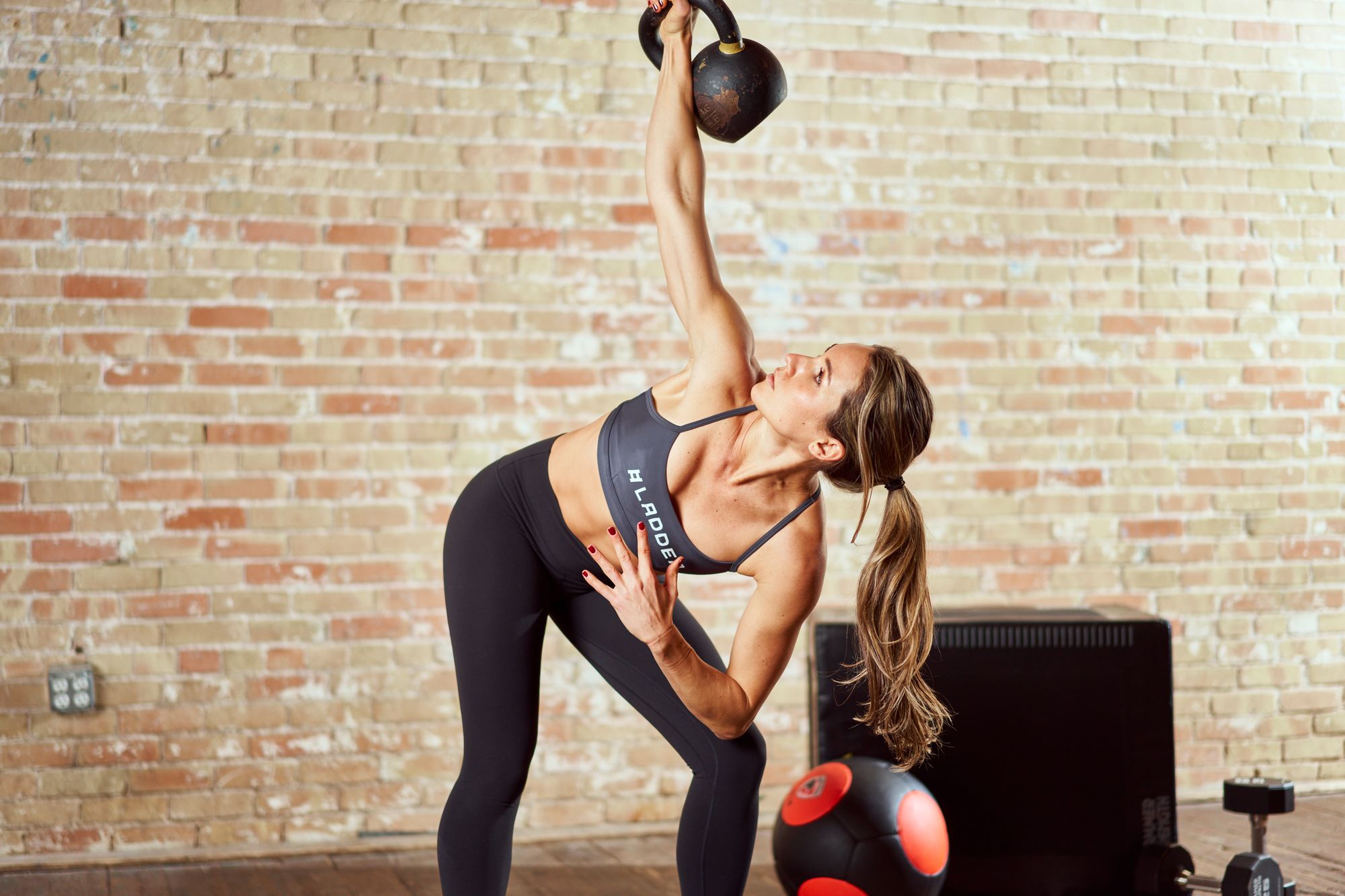
- The Lockout: Complete the press. Your arm, hips, and knees should be fully extended and locked out. Your bicep should be by your ear, with the kettlebell resting comfortably.
- The Return: To bring it down, reverse the motion. Tip the bell over, catch it in the swing, hinge at your hips to absorb the momentum as it swings back between your legs, and smoothly transition to the next rep.
Repetitions and Sets
Aim to perform 8–10 repetitions per set. Start with 3 sets per arm. It’s important to perform all the reps on one arm before switching to the other to ensure balanced strength and muscle development.
Common Mistakes to Avoid
Mistake: The Forearm Slap
The Problem: Letting the kettlebell flop over at the top, slamming into your forearm. This is painful and incorrect.
The Fix: Practice the “punch-through” motion (Step 4 above). Be aggressive. As the bell floats up, punch your hand *through* the handle instead of letting momentum flip it over.
Mistake: Starting with Too Heavy a Weight
The Problem: You can’t learn the complex timing of the snatch if the weight is too heavy. You’ll strain your arm and back.
The Fix: Start with a lighter weight than you think you need. Master the movement, then work your way up.
Mistake: Using Your Arm, Not Your Hips
The Problem: Trying to lift the bell with your shoulder and arm (like a front raise). This will injure your shoulder and is highly inefficient.
The Fix: The power comes 100% from your explosive hip “snap.” Your arm just guides the bell’s path.
Mistake: Crunching the Neck
The Problem: Craning your neck as you press the bell overhead.
The Fix: Keep your chin slightly tucked and your spine neutral. At the top, “push your head through” so your bicep is by your ear.
Mistake: Holding Your Breath
The Problem: Focusing so much that you don’t breathe, which increases blood pressure and instability.
The Fix: Inhale as you swing back, and give a sharp exhale as you “snap” your hips forward and punch the bell overhead.
Modifications and Variations
Need a Modification? (Make it Easier)
- Master the Swing First: Do not attempt the snatch until you have mastered the one-arm kettlebell swing. The snatch is built upon the swing.
- Try a Half Snatch (or “Clean”): Practice the movement but only bring the bell to the “rack” position (resting on your forearm at shoulder height). This teaches you the hip snap and catch without the overhead component.
Up for a Challenge? (Make it Harder)
- Use a Heavier Weight: The most obvious way to progress.
- Try a “Dead Snatch”: Do not use the backswing. From a “dead” stop on the ground, explode directly from the floor to the overhead position in one move. Return the weight all the way to the ground after each rep.
- Double Kettlebell Snatch: Perform the movement with a kettlebell in each hand. This requires significantly more core stability, coordination, and strength.
Takeaway
The kettlebell snatch is a highly effective, full-body exercise that builds explosive power, cardiovascular endurance, and a rock-solid core. While it may take a few tries to master the technique, focusing on the hip-driven swing and the “punch-through” catch will help you perform it safely and efficiently. Start light, prioritize form, and enjoy one of the best “bang-for-your-buck” exercises in fitness.