Exercise Guide
This comprehensive 12-week program is explicitly designed for individuals seeking to build lean muscle mass (hypertrophy) using only **dumbbells and bodyweight**. Perfect for home gym users, frequent travelers, or those transitioning from introductory routines, this plan utilizes a 4-day Upper/Lower split to maximize training volume and efficiency.
The core philosophy centers on high training density—short rest periods—and strategic exercise selection to challenge the body without requiring complex equipment. Success in this program, whether for muscle building or fat loss, hinges entirely on your dedication to **Progressive Overload** and maintaining a consistent nutritional strategy.
📊 Program Summary & Logistics
| Main Goal | Build Muscle (Hypertrophy) |
|---|---|
| Workout Type | 4-Day Upper/Lower Split |
| Training Level | Beginner |
| Program Duration | 12 Weeks |
| Days Per Week | 4 Strength Sessions |
| Time Per Workout | 45–60 minutes |
| Equipment Required | Dumbbells, Bodyweight |
| Recommended Supplements | Whey Protein, Multivitamin, Fish Oil |

🧠 Core Strategy: Maximizing Training Density and Overload
1. Rest Periods and Training Density
Rest intervals are strictly limited to **30–60 seconds** between all sets and exercises. This short rest period is vital because it:
- Increases **Training Density** (volume of work per unit of time).
- Elevates heart rate, enhancing calorie expenditure.
- Promotes the metabolic stress necessary for muscle growth (hypertrophy).
2. Scheduling and Recovery
The program calls for 4 training days per week. To maximize recovery, ensure adequate rest between working the same muscle group:
- **Upper Body:** Allow 48–72 hours rest between Day 1 and Day 3.
- **Lower Body:** Allow 48–72 hours rest between Day 2 and Day 4.
A sample schedule would be: **Day 1 (Upper), Day 2 (Lower), Rest, Day 3 (Upper), Day 4 (Lower), Rest, Rest.**
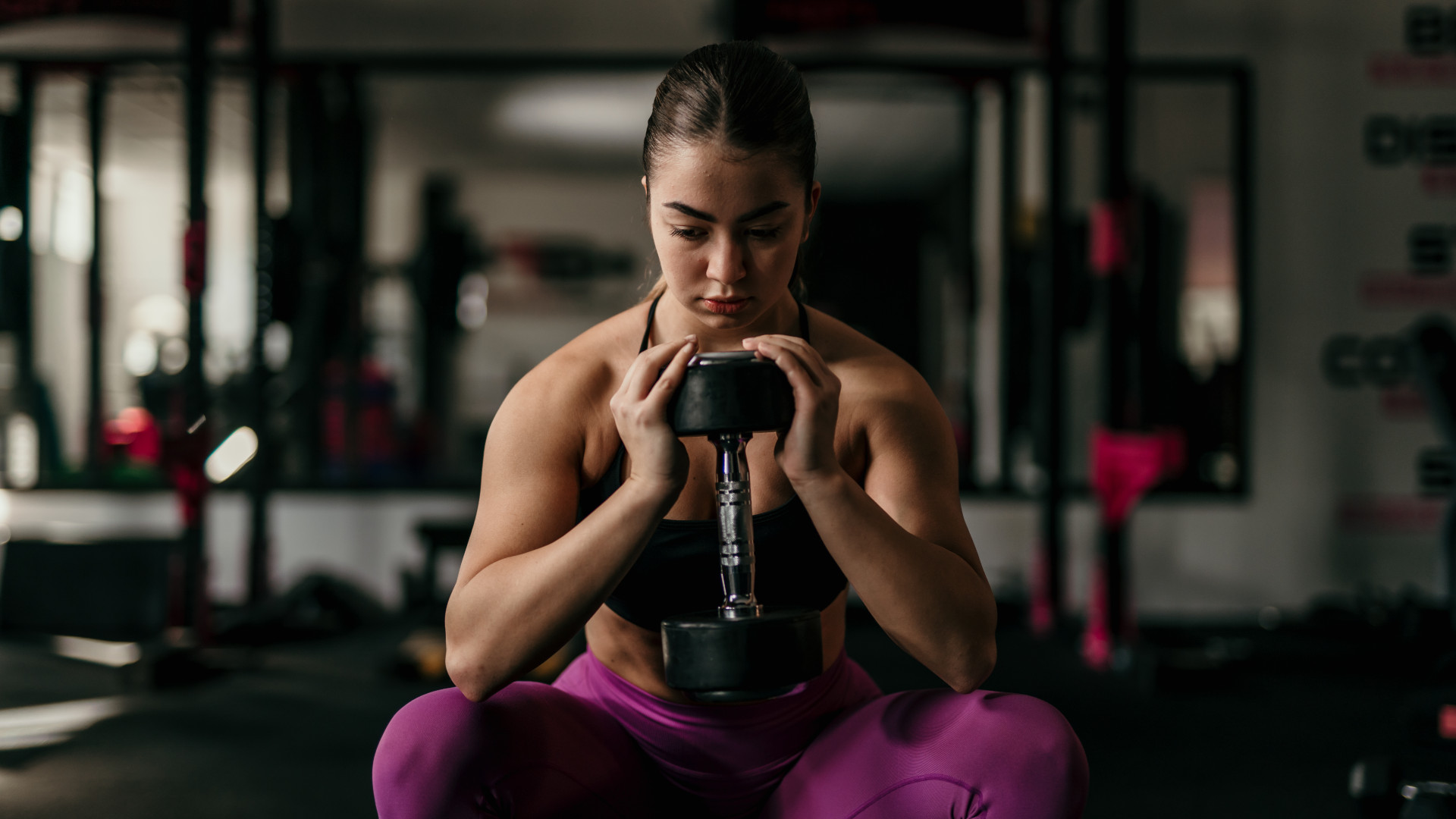
🏋️ The 12-Week Upper/Lower Split Protocol
The program utilizes a push/pull balance in the upper body and a squat/hinge balance in the lower body. Sets and reps are based on the hypertrophy range (8–12 reps). You should be lifting a weight that makes the final 1–2 reps difficult but allows you to maintain perfect form.
Day 1: Upper Body Workout A (Horizontal Pull/Press Focus)
| Exercise | Sets | Reps | Focus |
|---|---|---|---|
| Bent Over Dumbbell Row | 4 | 8–10 | Back Thickness (Lats, Rhomboids) |
| Dumbbell Bench Press | 4 | 8–10 | Chest (Pectorals, Anterior Delts) |
| Dumbbell Lateral Raise | 3 | 8–12 | Shoulders (Medial Delts Isolation) |
| Dumbbell Pullover | 3 | 8–12 | Chest/Lats (Expansion) |
| Dumbbell Bicep Curl | 2 | 8–12 | Biceps Isolation |
| Dumbbell Tricep Extension | 2 | 8–12 | Triceps Isolation |
| Dumbbell Shrug | 2 | 12–15 | Traps (High Rep Finish) |
Day 2: Lower Body Workout A (Squat/Hinge Focus)
| Exercise | Sets | Reps | Focus |
|---|---|---|---|
| Goblet Squat | 4 | 8–10 | Quads, Glutes (Compound Squat) |
| Dumbbell Stiff Leg Deadlift (SLDL) | 4 | 8–10 | Hamstrings, Glutes (Stretch/Hinge) |
| Dumbbell Plie Squat | 3 | 8–12 | Inner Thigh (Adductors), Glutes |
| Dumbbell Hamstring Curl (or Glute Bridge variation) | 3 | 8–12 | Hamstring Isolation |
| Standing Dumbbell Calf Raise | 3 | 8–12 | Calves (Gastrocnemius) |
| Plank | 3 | 20 Secs | Core Stability (Anti-Extension) |

Day 3: Upper Body Workout B (Vertical Press/Unilateral Focus)
| Exercise | Sets | Reps | Focus |
|---|---|---|---|
| One Arm Dumbbell Row | 4 | 8–10 (per arm) | Back Thickness (Unilateral Focus) |
| Dumbbell Shoulder Press | 4 | 8–10 | Shoulders (Deltoid Strength) |
| Incline Dumbbell Bench Press | 3 | 8–12 | Upper Chest (Clavicular Head) |
| Chest Supported Dumbbell Row | 3 | 8–12 | Back (Reduced Spinal Load) |
| Dumbbell Hammer Curl | 2 | 8–12 | Biceps/Forearm (Brachialis) |
| Dumbbell Floor Press | 2 | 8–12 | Triceps/Chest (Shoulder Friendly) |
| Seated Dumbbell Shrug | 2 | 12–15 | Traps (Volume) |
Day 4: Lower Body Workout B (Unilateral/Glute Focus)
| Exercise | Sets | Reps | Focus |
|---|---|---|---|
| Dumbbell Stiff Leg Deadlift (SLDL) | 4 | 8–10 | Hamstrings, Glutes (Heavy Hinge) |
| Dumbbell Rear Lunge | 4 | 8–10 (per leg) | Quads, Glutes (Unilateral Squat Pattern) |
| Dumbbell Hip Thrust | 4 | 8–10 | Gluteus Maximus (Peak Contraction) |
| Dumbbell Split Squat | 3 | 8–12 (per leg) | Quads, Glutes (Unilateral Volume) |
| Seated Dumbbell Calf Raise | 3 | 8–12 | Calves (Soleus) |
| Planks | 3 | 20 Secs | Core Stability |

📈 Progression and Program Conclusion
Progressive Overload with Fixed Equipment
Since the weight of your dumbbells may be fixed, focus on these methods to ensure progress over the 12 weeks:
- **Increase Reps/Sets:** Once you hit the upper end of the rep range (e.g., 10 or 12 reps) comfortably, add a rep or an extra set.
- **Increase Time Under Tension (TUT):** Slow down the eccentric (lowering) phase of each rep to 3–4 seconds. This increases muscle fatigue without adding load.
- **Reduce Rest Periods:** Try cutting rest from 60 seconds down to 45 seconds to increase training density.
After completing 12 weeks, your body will be ready for a change. Consider investing in heavier dumbbells, joining a gym for access to barbells/machines, or moving to a different training structure (e.g., higher frequency or a strength focus) to continue seeing results.